
Who’s who in pumping equipment
We profile leading suppliers of tailor-made pumps to the phosphate, potash and sulphur industries.


We profile leading suppliers of tailor-made pumps to the phosphate, potash and sulphur industries.
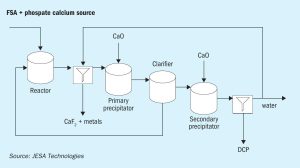
The newly-patented SWIFT process is designed to sequester fluorine at phosphoric acid plants in an environmentally responsible way. It can also offset the costs of fluorine management by generating a saleable dicalcium phosphate (DCP) end-product as an additional revenue stream. A number of capex and opex advantages provide the SWIFT process with highly favourable economics, as James Byrd of JESA Technologies explains.

How does an engineering company complete the basic and detailed engineering for a phosphoric acid plant – and provide the full design for the off-site sections and utilities? Jan Tytgat, De Smet Agro’s Process Engineering Manager, explains an approach based on partnership with the technology licensor and client that combines engineering expertise with experience.

More than 370 delegates from over 150 companies and 40 countries gathered at the Hilton Warsaw City Hotel, Warsaw, Poland, 26-28 February, for CRU’s Phosphates 2024 conference.

2024 is my tenth year as editor of Fertilizer International magazine. But, having joined CRU in January, it’s also a fresh start.

We look at current progress towards the greater use of recovered phosphorus, and whether there are lessons to learn from the success of the fast-growing carbon capture industry. We also highlight two pioneering European companies, EasyMining and Glatt, who are racing to bringing recovered phosphorus products to market.

CRU Events will convene the 2024 Phosphates International Conference & Exhibition in Warsaw at the Hilton Warsaw City Hotel, 26-28 February.
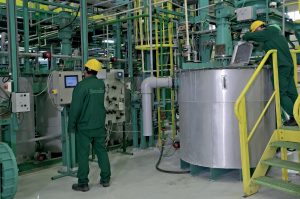
Kevin De Bois of Prayon Technologies describes an innovative process for removing magnesium from phosphate rock. Increasingly, phosphoric acid producers are looking to consume low-grade phosphate rock as a feedstock due to the prohibitive costs of high-grade rock sources. This has potentially negative consequences as the presence of impurities such as magnesium can negatively affect both the phosphoric acid process and the quality of the acid produced.

Fertilizer International presents a global round-up of phosphate rock, phosphoric acid and finished phosphates projects.

Brazil is a powerhouse agricultural economy, ranking as a top three global exporter of soybeans, corn and sugar. It is also the world’s number one producer and exporter of oranges and orange juice – as highlighted in our current issue (p18).