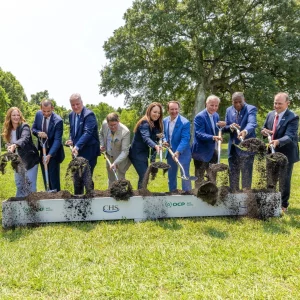
OCP and CHS plan to build Louisiana phosphate plant
CHS and OCP North America have unveiled plans to build the first major US phosphate fertilizer plant since 1984.


CHS and OCP North America have unveiled plans to build the first major US phosphate fertilizer plant since 1984.
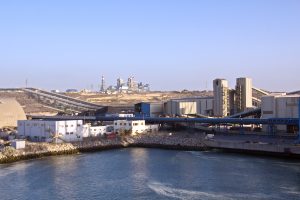
Koch Ag & Energy Solutions is buying a 50% share in Jorf Fertilizers Company I (JFC I) as part of a second joint venture with OCP Nutricrops.

President Donald Trump has declared an emergency over fertilizer supply and authorised the temporary suspension of certain anti dumping and countervailing duties on phosphate fertilizer imports from Morocco.
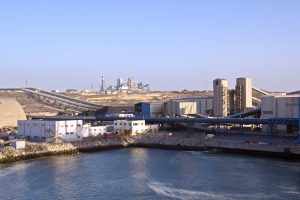
Stephen B Harrison of sbh4 consulting outlines the options for decarbonising diammonium phosphate (DAP).

Morocco's OCP is bringing forward its maintenance schedule and expects a reduction of up to 30% in output for the second quarter of 2026, the company said 2 April, with some plants beginning maintenance next week.
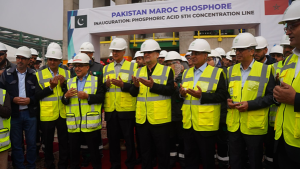
The new line was inaugurated on the 2 April and has a capacity of 400 tonnes per day.

The government of Morocco has signed an agreement with the ORNX consortium to advance a $4.5 billion green ammonia project in the southern city of Laayoune, as part of Morocco’s ambitions to become a global hub for green hydrogen and derivatives. The development combine wind and solar electricity generation with hydrogen from electrolysis to feed green ammonia production. Under the terms of the agreement, more than 2 GW of renewable energy capacity will be installed, feeding 900 MW of electrolysers producing green hydrogen. To ensure operational stability and continuous output, the facility will also incorporate battery energy storage systems. In addition, a seawater desalination plant will be constructed to provide the purified water required for hydrogen production, addressing resource constraints in the arid coastal region. During its initial phase, the complex is expected to generate around 100,000 t/a of green hydrogen, which will allow the production of 560,000 t/a of green ammonia. The ammonia will be used both domestically in ammonium phosphate production as well as being exported internationally.
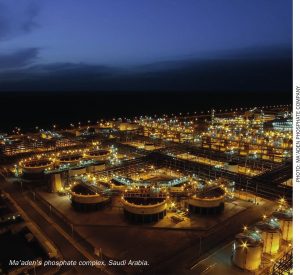
Flash floods in the Moroccan port city of Safi killed at least 37 people in December and injured many others, with knock on effects also likely to impact exports from phosphate producer OCP. Jorf Lasfar is the phosphate giant's main export hub for phosphate fertilizers and phosphoric acid, while Safi exports smaller volumes of phosphoric acid, TSP and animal feed products. Phosphate rock exports are largely concentrated at the port of Casablanca further north. OCP produces around 420,000 t/a triple superphosphate and 1.63 t/a phosphoric acid at Safi, as well as around 62,000 t/a dicalcium phosphate and 70,000 t/a monocalcium phosphate.

Does artificial intelligence (AI) really herald a revolution in fertilizer production and, if so, what are the practical examples of this?
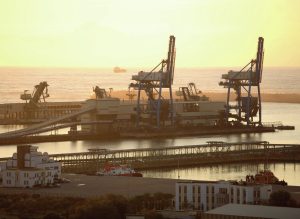
North Africa remains a major centre of global phosphate production, with significant production in Algeria, Tunisia and Egypt as well as Morocco, and sulphur and sulphuric acid consumption continuing to increase.