
Chilling headwinds
A lot of low-carbon ammonia projects have been announced in recent years – so many, in fact, you’ve probably lost count.


A lot of low-carbon ammonia projects have been announced in recent years – so many, in fact, you’ve probably lost count.

Sulphur plays an important role in crop nutrition. Indeed, sulphur is increasingly being recognised as the fourth major crop nutrient alongside N, P and K. However, a combination of intensive agricultural practices, increasing application of high-analysis fertilizers and tighter air quality regulations has led to increasing sulphur deficiency in soils. In this insight article, CRU’s Peter Harrisson looks at what’s driving sulphur deficiency and whether there’s a gap in the market for sulphur fertilizers.

Urease and nitrification inhibitors are cost efficient and easy to implement solutions for improving the nitrogen use efficiency (NUE) of urea ammonium nitrate (UAN). The use of inhibitors enables farmers to substantially reduce nitrogen losses and achieve their environmental targets, explains Thomas Profitt , Syensqo’s Global Enhanced Efficiency Fertilizer Manager, while improving crop yields and generating a positive return on investment.
The phosphate industry, the dominant consumer of sulphuric acid worldwide, has grown to its present size on the back of fertilizer consumption. And while this has seen considerable growth over the past decades, especially in countries like China, India and Brazil, it has generally been fairly steady and – subject to the annual vagaries of weather and the commodity cycle – relatively predictable. However, the world economy is now in the throes of a major transformation towards less carbon intensive generation and use of energy, and that is disrupting many markets, including that for phosphates.
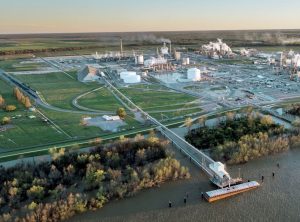
Mark Brouwer and Jo Eijkenboom of ureaknowhow.com examine the major shifts in global urea production. They also discuss the future of the urea industry and, in particular, how the sector is being affected by the increasing focus on low-carbon ammonia production.

We review potash mining and mineral processing methods. Advances in equipment technology and major project investments are highlighted.
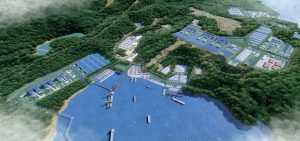
The nickel market has been through a period of unprecedented change over the past few years due to demand for batteries for electric vehicles, with Indonesia becoming a centre for production via high pressure acid leaching.

KBR outlines some of the key modules of the KBR end-to-end digitalisation solution developed to overcome the challenges in green ammonia operation and achieve best in class, safe and reliable plant operation.

OCI Global says that it has reached an agreement for the sale of 100% of its interest in its large-scale nitrogen fertilizer subsidiary the Iowa Fertilizer Company LLC, located in Wever, Iowa, to Koch Ag & Energy Solutions for $3.6 billion. Completion of the transaction remains subject to US anti-trust approval and other customary closing conditions. The transaction is expected to close in 2024. Morgan Stanley & Co. International plc is serving as financial advisor to OCI on the transaction. IFCO produced 1.2 million t/a of urea ammonium nitrate (UAN) in 2021 and 700,000 t/a of anhydrous ammonia, as well as 700,000 t/a of diesel exhaust fluid (DEF).

Brazil is a powerhouse agricultural economy, ranking as a top three global exporter of soybeans, corn and sugar. It is also the world’s number one producer and exporter of oranges and orange juice – as highlighted in our current issue (p18).