Fertilizer Industry News Roundup
ICL Group has launched an interactive online advisory forum for farmers and agronomists.
West Texas Intermediate (WTI) forward oil prices for May dropped into negative territory during mid-April, on fears of lack of storage capacity to deal with the excess production. Forward prices for June were also nosing to equally unprecedentedly low levels.Elsewhere, Brent Crude spot prices dropped to $20/bbl, a fall of $50/bbl from the start of 2020.
Shell Global Solutions International BV (Shell) has awarded Worley two contracts for PT Pertamina EP Cepu’s (PEPC) new sulphuric acid plant in Indonesia. This plant is part of the Jambaran-Tiung Biru utilised gas field project for PEPC, which is a subsidiary of PT Pertamina-Indonesia’s state-owned energy company. Under the contracts, Worley will supply be supplying Chemetics’ cooled oxidation reactor (CORE) technology. This is the first time that CORE will be paired with Shell’s Cansolv SO2 capture technology. Worley gained the Chemetics technology as part of its Jacobs Energy, Chemicals and Resources acquisition last year. Cansolv controls the emissions and captures additional by-product value from the sulphur dioxide emitted from various refinery flue gas streams (such as cracking units, process heaters and boilers), sulphur plants and spent acid regeneration units. Sulphur dioxide can be recycled to the sulphur recovery unit to be produced as marketable sulphur or converted to sulphuric acid.
When producing from shale reservoirs, technologies such as horizontal drilling and hydraulic fracturing have been used successfully to access hydrocarbons that otherwise could not be. A less publicised issue in producing from certain hot shale gas reservoirs (T > 100°C) is the presence of H2 S and organo-sulphur compounds in the production fluids. In trying to understand the non-biogenic sources of H2 S, Alberta Sulphur Research Ltd has been involved in studying the decomposition of chemicals used in hydraulic fracturing when exposed to high temperature and high pressure.R.A. Marriott, J.J. Marrugo-Hernandez and R. Prinsloo of ASRL discuss the findings of the study.
Methanex has said that, in light of the uncertainty in the global economy from the Covid-19 pandemic, it will defer approximately $500 million of previously announced capital spending on its $1.4 billion Geismar 3 methanol project for up to 18 months. Geismar 3, which is intended to eventually produce 1.8 million t/a of methanol, will be placed on temporary “care and maintenance” for up to 18 months, enabling the company to complete the project when market conditions improve. Methanex says it will spend $100 million in Q1 2020 and a further $200 million from April 1, 2020 to September 30, 2021 on the project, the majority of which is spending that occurred or was committed during Q1 2020. This is approximately $500 million lower than the $800 million that was expected to be spent over that same period. Construction activity and procurement of non-critical equipment and bulk materials will be suspended until market conditions allow the Geismar 3 project to restart.
Imagine an industry that only uses carbon-free fuels and does not have any carbon footprint. Assume this is feasible within a decade. Now wouldn’t that be an ambition worth pursuing? Duiker believes this is achievable. A. Lanser provides Duiker’s view on how its SCO technology can act as an enhancer for reducing industrial carbon footprint.
The devastating effects of the Covid-19 pandemic continue to be felt around the world. At time of writing, nearly 4 million cases have been recorded, and at least a quarter of a million people have died, with the suspicion of many more, either from accidental or deliberate undercounting. Figures for excess deaths above a normal seasonal baseline show that places such as Turkey, Ecuador and Indonesia have probably been far worse affected than the official statistics show. There are nevertheless finally hopeful signs that Europe, so far the worst affected region, is beginning to follow the pattern of East Asia and Oceania and that cases are falling. The infection also seems to have peaked in North America, though in the US there is a long tail of infections. Elsewhere, cases are still rising in countries such as Brazil and Mexico.
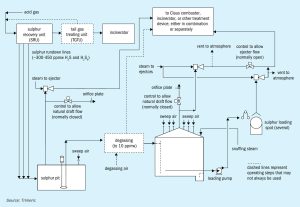
Applied Analytics discusses potential improvements made possible with data and analytical measurements fed into improved mathematical models to produce a more proactive approach to control and better performance of sulphur recovery units, AMETEK Process Instruments explains the benefits of feed forward control, SICK reports on reliable continuous emission monitoring systems and WIKA introduces a new purge-free system to measure refractory temperature in the Claus reaction furnace.
Kuwait is in the middle of a major overhaul and expansion of its refining capacity, as well as boosting LPG output and sour gas processing.
The Abu Dhabi National Oil Co. (ADNOC) has awarded two EPC contracts with a total value of more than $1.65 billion for the offshore Dalma sour gas development, 190 km northwest of Abu Dhabi city. Dalma is one of the fields in the offshore Ghasha ultra-sour gas concession, which ADNOC views as central to the UAE achieving self-sufficiency in domestic gas supplies.