
Ammonia industry accidents
A look at fatal incidents in the ammonia industry over the past two decades.

A look at fatal incidents in the ammonia industry over the past two decades.
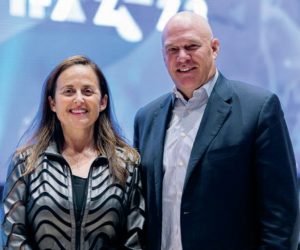
The International Fertilizer Association (IFA) has announced that Tony Will has been elected as the new Chair of the Association. Will is president and chief executive officer (CEO) of CF Industries, a global manufacturer of hydrogen and nitrogen products for fertilizer, clean energy, emissions abatement and other industrial applications.

There is growing acceptance and integration of biostimulants into the wider fertilizer and agricultural markets. This is illustrated by rocketing sales, the spate of new product launches, and merger and acquisition activity.
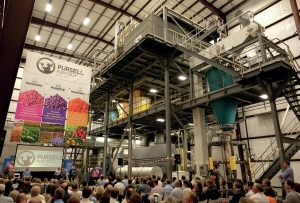
Technological innovation is vital to solving the global food challenge and delivering the transition to a low-carbon economy. Pejman Djavdan, Stamicarbon’s CEO, sets out his vision for a future-proof fertilizer industry – one that will enable the sustainable intensification of agriculture while also protecting the environment.
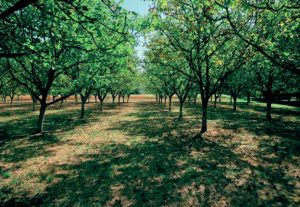
Tessenderlo Kerley International recently published a tree nut crop brochure. This article draws on the brochure to highlight the importance of two essential nutrients, calcium and sulphur, as part of a balanced fertilization programme for nut crops.
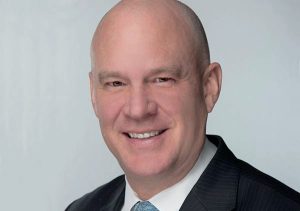
Tony Will, the president and CEO of CF Industries, is the new chair of the International Fertilizer Association (IFA). He was elected in June alongside a number of other executive board members and board directors.
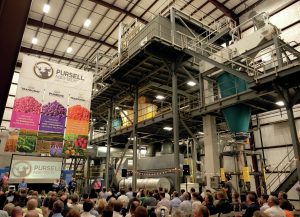
Pejman Djavdan , CEO of Stamicarbon looks at the ways in which the fertilizer industry must grapple with issues such as decarbonisation, sustainability and more efficient use of nutrients.
In 1967 Stamicarbon revolutionised the urea process by the invention of the high-pressure CO2 stripper by Petrus J. C. Kaasenbrood. The high-pressure CO2 stripper led to following benefits:
Last year, in the wake of Russia’s invasion of Ukraine and the associated disruption to fertilizer and grain exports from both countries, there were dire predictions of the impact upon global food supply. That the worst of these predictions have not so far come to pass is in no small part due to the deal brokered by the United Nations and Turkey in July 2022 to allow exports of grain and fertilizers from Black Sea ports. According to the UN, since last July, some 29.5 million tonnes of grain and foodstuffs have been exported from Ukraine via the Black Sea, including nearly 600,000 tonnes in World Food Programme vessels for aid operations in Afghanistan Ethiopia, Kenya, Somalia and Yemen. Before the war, Ukrainian grain fed the equivalent of up to 400 million people worldwide, and the deal ensured that Ukrainian grain exports ‘only’ fell by 5 million t/a over the past year.
Mining, metals and fertilizer business intelligence company CRU has launched a new low-emissions ammonia (LEA) price assessment in its Fertilizer Week price reporting service. The price takes a value-based approach, whereby a premium on the Northwest European ammonia price is calculated on an emissions-mitigated basis, and leverages CRU’s proprietary nitrogen asset emissions data combined with weekly European carbon prices to calculate the value of emissions mitigated. CRU says that it has leveraged its Emissions Analysis Tool to develop the premiums on an emissions-mitigated basis as opposed to a cost basis, allowing end-users to assess how the switch to LEA can deliver value to their business while contributing to their decarbonisation strategies. The Emissions Analysis Tool is a comprehensive asset-byasset emissions dataset for the nitrogen industry.