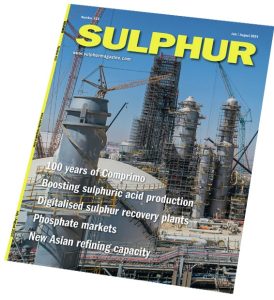
Enhancing sulphuric acid production
In this case study, CS Combustion Solutions presents a comprehensive strategy for the capacity enhancement and optimisation of a sulphuric acid plant that was facing several operational challenges.
China’s acid production continues to grow as new smelters come on-stream. But high domestic demand from phosphate production as export restrictions are lifted and a shortage of copper concentrate may limit the potential for acid exports.
Saudi Aramco has sold another tranche of 1.54 billion shares, amounting to 0.64% of the company’s total ownership. The sale, at 27-29 riyals per share, was oversubscribed by a factor of five, making it more popular than the previous IPO, in 2019, which sold 1.5% of the company’s shares for a total of $29.4 billion. Foreign take up of shares was also higher this time, with more than half of sales to foreign investors, compared to 23% for the 2019 sale. However, it remains relatively small in scale compared to Saudi Arabia’s ambitions as part of its Vision 2030 plan to encourage more foreign direct investment and wean the country off its dependence on oil. Aramco is the world’s largest oil company in terms of both daily crude production and market cap, and remains 82% in the hands of the government and 16% held via the country’s sovereign wealth fund, the Public Investment Fund (PIF).
Brazilian phosphate producer Galvani says that it has begun work on its major phosphate expansion in Bahia state, including a new production plant at Ceará, in partnership with Indústrias Nucleares do Brasil (INB). The company aims to reduce Brazil’s northern and northeastern regions’ reliance on imported fertilizers. The first phase includes $133 million of investment, including $76 million for new phosphate mining at Irecê, and $38 million for Luís Eduardo Magalhães factory, also in Bahia. This expansion will take capacity from 600,000 t/a to 1.2 million t/a by 2026. The expansion at Luís Eduardo Industrial Complex includes expansion of sulphuric acid capacity from 165,000 t/a to 250,000 t/a.
Intermittent supply from China due to export restrictions and US duty changes have kept markets guessing over the past couple of years, and there is no sign of that changing.
While the events of the past few years have been difficult for Europe on many fronts, including a wholesale realignment of its energy sources with the restriction of access to Russian oil and gas, the effect on Europe’s sulphur production seems likely to be just as profound.
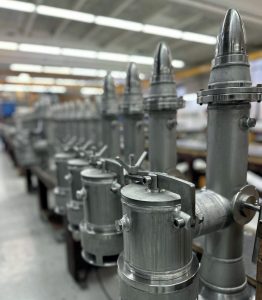
Pres-Vac Engineering's innovative high-velocity methanol valves offers shipbuilders unique options in creating more efficient and compliant dual-fuel systems.
With all of the focus on low carbon ammonia and methanol developments, one could occasionally be forgiven for forgetting that most of the syngas industry relies upon natural gas as a feedstock, and that gas pricing and availability remain the key determinants of profitability for producers. As our article this issue discusses, even low carbon ammonia is likely to be largely based on natural gas, albeit with carbon capture and storage, at least for the remainder of this decade.
The fertilizer market is full of contradictions and caveats. What applies to some markets is irrelevant to others, seasonality trends can be thrown off track by a single tender or government decision, and we remain at the often shaky intersection of food, energy and mining market fundamentals.
In a major milestone, Yara International has officially opened its renewable hydrogen plant at Herøya Industrial Park, Porsgrunn, Norway.