
Towards a sustainable nitrogen fertilizer industry:
Georgy Eliseev , Principal Analyst at Fertecon for IHS Markit, looks at the medium to long term outlook for both ‘green’ and ‘blue’ ammonia production.


Georgy Eliseev , Principal Analyst at Fertecon for IHS Markit, looks at the medium to long term outlook for both ‘green’ and ‘blue’ ammonia production.
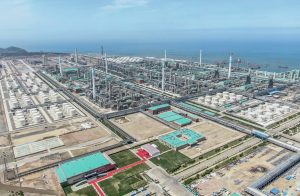
The profound demand shock caused by Covid-related lockdowns has had a major impact upon the refining industry. Run rates have been at low levels in North America and Europe, and a new wave of rationalisation is under way, at the same time that capacity continues to grow in Asia. Will this spur diversification into petrochemicals and low carbon options for Atlantic basin refiners?

It can’t have escaped anyone’s notice that the question of the carbon intensity of ammonia and downstream nitrogen compound production has been one of the main industry talking points for the past year. Everyone seems to be talking about ammonia of different colours – green ammonia, blue ammonia, and all shades of turquoise in between. If you are confused, it may not be surprising, as these words have come to cover a wide variety of different methods and technologies for producing ammonia, and their green credentials consequently come in a whole range of different shades.
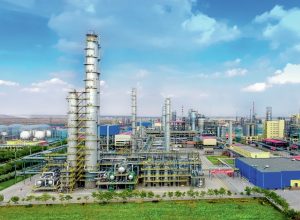
Johnson Matthey (JM) has secured a multiple licence for China’s Ningxia Baofeng Energy Group’s latest project to develop five of the largest single train methanol plants in the world. Located at Baofeng’s Ordos City complex in Inner Mongolia, the five plants each have a planned capacity 7,200 t/d. Under the agreement Johnson Matthey will be the licensor of all five plants and supplier of associated engineering, technical review, commissioning assistance, and catalyst. The plants will take synthesis gas as a feed and use JM radial steam raising converters in a patented series loop. Within the design, there is potential for 1-2% more feedstock efficiency over the life of the catalyst. Thanks to JM’s methanol loop synthesis technology, the plants will provide enhanced energy savings along with low OPEX, CAPEX and emissions. When complete, the plants will represent JM’s 13th operating license in China for a mega-scale plant (>5,500 t/d) and the fourth JM methanol design licensed by Ningxia Baofeng Energy.
Building on its long experience and leading position within global ammonia production, logistics and trade, Yara says that it aims to capture opportunities in green shipping, agriculture and industrial applications; a market expected to grow by 60% over the next two decades. A major first step includes plans to fully electrify its ammonia plant at Porsgrunn, Norway, with the potential to cut 800,000 t/a of CO 2 , equivalent to the emissions from 300,000 passenger cars.

In a carbon-constrained world, carbon capture and utilisation or storage (CCUS) installed on a methanol plant is a necessary and feasible solution. The new, patented AdWinMethanol CC® technology, jointly developed by thyssenkrupp Industrial Solutions AG and GasConTec GmbH, integrates carbon capture into large-scale, natural gas-fuelled methanol production to yield a drastically reduced carbon footprint. U. Koss and W. Balthasar of GasConTec and J. Wagner of thyssenkrupp Industrial Solutions discuss how it removes CO 2 emissions in an efficient, cost effective, and environmentally friendly manner, taking advantage of the design features of AdWinMethanol ® .
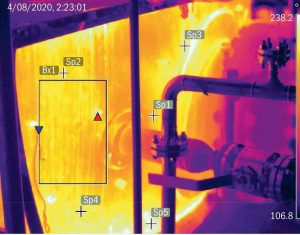
New approaches and novel processing schemes employing oxygen enrichment in sulphur recovery units have been developed and commercialised. In this feature Siirtec Nigi, Linde, Blasch, Fluor and RATE report on their latest developments.
Illinois-headquartered CF Industries has made a long-term commitment to low-carbon ammonia production and net-zero emissions.

Johnson Matthey and KBR have announced that they have signed a global strategic alliance agreement to license a new ammonia-methanol co-production process that combines the companies’ ammonia and methanol process technologies. The companies say that the co-production process makes the most of synergies between the two technologies, maximising savings while offering the highest levels of safety, flexibility and reliability.
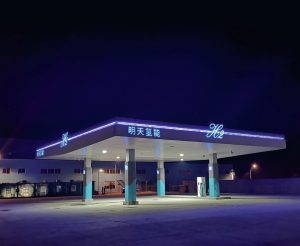
Every five years since 1955, the Chinese government has prepared its ‘Five Year Plan’ for the country’s economy over the coming half decade. This year, the 14th Five Year Plan is being drafted, and given the influence of the Chinese economy over the global chemical sector, its conclusions will be eagerly awaited.