SulGas® Mumbai 2026
The 8th SulGas® Mumbai sulphur recovery and gas treating conference and exhibition, organised by Three Ten Initiative Technologies LLP, took place on 5 and 6 February 2026. We report on some of the key topics on the agenda.


The 8th SulGas® Mumbai sulphur recovery and gas treating conference and exhibition, organised by Three Ten Initiative Technologies LLP, took place on 5 and 6 February 2026. We report on some of the key topics on the agenda.
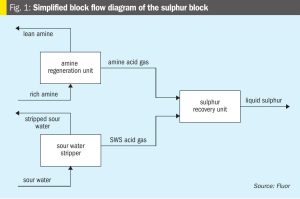
Efficient sulphur recovery is essential for modern refineries to meet stringent environmental regulations and support sustainability goals. Fluor examines the key design considerations, smart design strategies and flexible sulphur block configurations that are essential in achieving an overall optimised design. Together, these strategies enhance efficiency, reduce emissions, improve reliability, and provide flexibility for changing crude qualities, ensuring compliant and economically robust refinery operations.
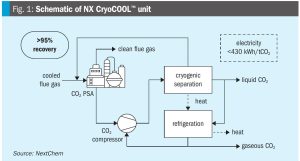
The selection of the post-combustion carbon capture technology to be implemented for a decarbonisation project is a crucial element during the early feasibility phases and it is strongly affected by the characteristics of the plant on which it has to be installed. NextChem highlights the comparative advantages of absorption technologies and the alternative opportunities of using a cryogenic configuration to reach the desired carbon capture rate.
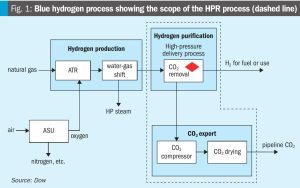
A novel high-pressure regeneration (HPR) process for carbon capture in blue hydrogen applications is introduced by Dow as a new offering for reducing costs. The process combines a specially formulated solvent with a heat integration network to deliver the separated carbon dioxide at high pressure while reducing capital costs and equipment sizes.
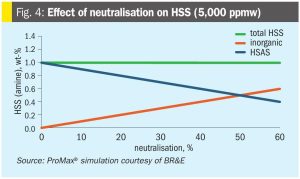
Bryan Research & Engineering (BR&E) and INEOS GAS/SPEC continue their review of neutralisation of heat stable salts. Part 2 focuses on how caustic (NaOH) affects amine chemistry and corrosion and the effects of adding too much NaOH.
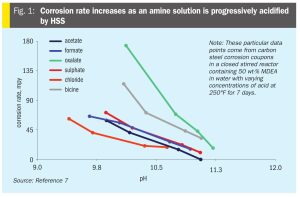
Joel Cantrell of Bryan Research & Engineering and Clay Jones of INEOS GAS/SPEC re-evaluate the historical practice of intentionally adding strong base such as caustic (NaOH) to amine with the purpose of improving performance and reducing corrosion by “neutralising” heat stable amine salts (HSAS) which have accumulated in the amine.
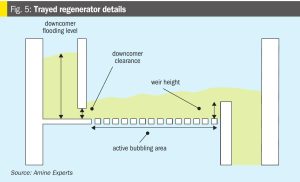
Preventing regenerator amine carryover to the sulphur recovery unit can have catastrophic consequences and must be avoided at all costs. B. Spooner and M. Sheilan of SGS Amine Experts detail how by correctly interpreting operating data, having proper instrumentation and good chemical analysis, amine carryover can be prevented.
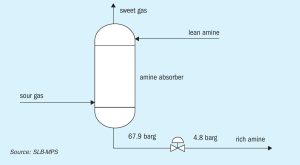
Aparna Saiju and Nishevitha U G of SLB-MPS explore the concept of energy optimisation using power recovery turbine (PRT) technology in amine sweetening units, focusing on its potential benefits, implementation strategies, and environmental implications.
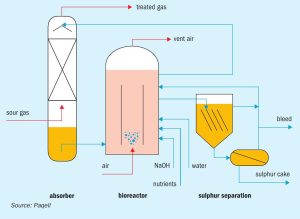
As environmental SO2 emission regulations become more stringent, tail gas treating options become limited. To potentially achieve lower opex and improved plot plan, utilising a biological desulphurisation process as an alternative to a conventional amine-based TGT unit is becoming of increased interest in the oil and gas industry. At the same time, demands for increased SRU capacity and reliability favour the use of medium and high-level oxygen enrichment.