Process optimisation with AI – hype or reality?
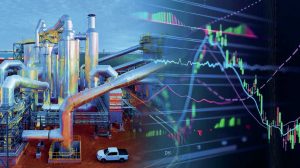
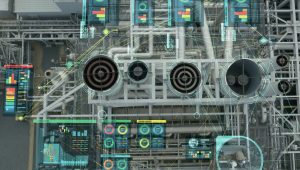
Navigance, delves into the world of artificial intelligence (AI) and discusses its potential to enhance process optimisation in syngas plants.
CITGO Petroleum Corporation has named Dennis Willig as the company’s new Vice President of Refining, where he will oversee operations at the company’s three refineries located in Lake Charles, Louisiana.; Lemont, Illinois; and Corpus Christi, Texas. Willig most recently served as Vice President and General Manager of the Corpus Christi Refinery, and prior to that was the Vice President and General Manager of the Lemont Refinery, where he spent the majority of his 28-year career with CITGO. Replacing Willig as the new Vice President and General Manager Corpus Christi Refinery is Ryan Vining , who spent the last 24 years at the CITGO Lake Charles Refinery, most recently as General Manager Operations, Maintenance and Reliability. Both appointments are effective from February 1st, 2024.
Plant digitalisation can contribute to increase the profitability of chemical plants by optimising performance of operation as well as maintenance. Available digital products range from visualisation of plant data for increased transparency to closed-loop AI controllers based on digital twins.
A reader wrote to me recently asking if I had considered the impact of general artificially intelligent systems like ChatGPT on the publishing industry. As a matter of fact I had, but only, somewhat narrowly and selfishly, on how it might impact my own job in the future. But the dramatic shift in AI capabilities that we have seen in the past couple of years is certainly food for thought, and I’ve seen no end of articles predicting the death of the creative industries.
The ammonia industry has always dealt with fluctuations in supply and demand as well as volatile feedstock and energy costs. The unexpected global pandemic that started in 2020 has injected a higher degree of uncertainty for ammonia manufacturers’ operating costs and product demand for fertilizer. W. Poe of AVEVA discusses how advanced process control systems can help ammonia producers turn economic uncertainty into a competitive advantage.
Dr MP Sukumaran Nair, policy analyst and director of the Centre for Green Technology & Management in Cochin, India, discusses the ways that digitisation is improving fertilizer plant operation.
Nitrogen+Syngas asked some of the industry’s leading EPC companies what they are doing to make construction sites safer around the world in pursuit of the goal for zero incident safety performance. Read on to find out what approaches have been taken by Maire Tecnimont Group, thyssenkrupp, Toyo Engineering Corporation and Saipem.
Digitalisation and the analysis of big data are playing an increasing role in fertilizer production. Innovative digital and cloud-based services are being offered by a range of technology companies, including Casale, tkIS, Topsoe and TOYO.
Applied Analytics discusses potential improvements made possible with data and analytical measurements fed into improved mathematical models to produce a more proactive approach to control and better performance of sulphur recovery units, AMETEK Process Instruments explains the benefits of feed forward control, SICK reports on reliable continuous emission monitoring systems and WIKA introduces a new purge-free system to measure refractory temperature in the Claus reaction furnace.