Sulphur in central Asia
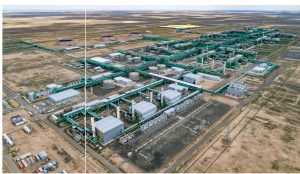
The Caspian Sea region is home to extensive sour gas reserves which produce large volumes of sulphur. Exports are difficult, but the Kazakh uranium industry is consuming an increasing amount.

The Caspian Sea region is home to extensive sour gas reserves which produce large volumes of sulphur. Exports are difficult, but the Kazakh uranium industry is consuming an increasing amount.
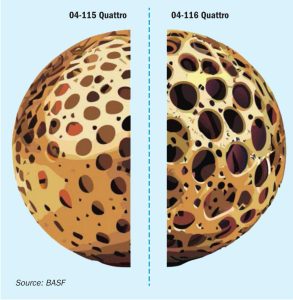
Due to ever stricter legislation towards lower SO2 emissions, superior catalyst shape and composition has become ever more important. Jochen Willersinn of BASF SE explains how BASF’s high-performance catalyst O4-116 Quattro combines the benefits of an increased surface area with a superior caesium-promoted active phase composition enabling significantly lower ignition and operating temperatures and thus reducing SO2 emissions.

This study introduces a new platinum-promoted honeycomb catalyst for sulphur dioxide oxidation, designed to enhance energy efficiency and reduce emissions in sulphuric acid production. Compared to conventional vanadium oxide based catalysts, the platinum-based catalyst demonstrates higher catalytic activity, lower ignition temperature, and significantly reduced toxicity.
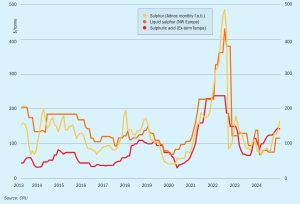
Sulphur prices may remain stable before decreasing on muted demand and transactions may increase in frequency contributing to price decreases in the first half of 2025.
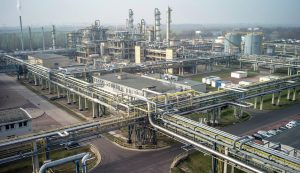
Continuing growth in Chinese ammonium sulphate production is leading to a continuing flood of exports, as greater awareness of the utility of sulphur as a fertilizer leads to increasing global demand.
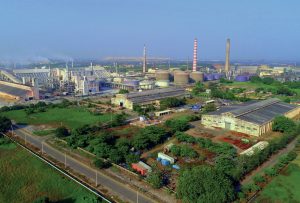
India’s phosphate production is using increasing volumes of sulphuric acid, but new domestic smelter and sulphur burning acid capacity may mean reduced imports in future.

The development and implementation of modern process instruments and control systems in sulphur recovery units has increased significantly over the last decade. In this article, the impact of BTEX on sulphur plant operations and how the BTEX concentrations can be measured are discussed.
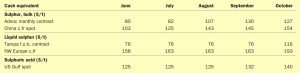
Global sulphur prices underwent increases in some key benchmark markets during October, but spot activity nevertheless remained muted, with demand subdued and availability tight. Market participants continue to closely track geopolitical developments.

Marcus Weber of Fluor discusses degassing units for large scale sulphur recovery units, evaluating the pros and cons of various available commercial technologies with the emphasis on mega size sulphur recovery units and focussing on how technology can lower degassing capex via economy of scale for new facilities or existing facilities undergoing expansion.
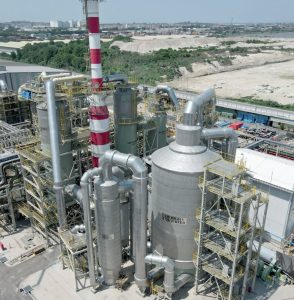
Short term supply constraints are dominating acid markets at present, but increasing smelter production across Asia may lead to oversupply in the longer term.