Refineries and the energy transition
As the world looks to a lower carbon future, refineries are having to examine their operating models, and look to, for example, renewable hydrogen production for desulphurisation technologies.
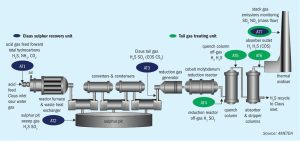
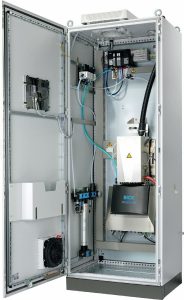
N. A. Hatcher, D. R. Jensen , and P. L. Ott of Optimized Gas Treating Inc. provide a technology overview of ProBot™ – a unit monitoring system developed by OGT to digitalise the sulphur processing assets in a facility in a manner that facilitates knowledge retention, rapid optimisation, and plant troubleshooting. ProBot™ has been built to allow rapid access to a virtual plant platform that provides advice, training and, monitoring to enable more efficient, safe, reliable, and environmentally friendly plant operations.
Import duties on phosphates from Morocco and Russia imposed by the US government in 2021 have compounded a lack of availability of phosphate fertilizer caused by Chinese export restrictions and led to higher prices for US farmers. Are there knock-on effects possible for sulphuric acid demand?
A look at papers presented at CRU’s annual Sulphur + Sulphuric Acid conference, which was once again held virtually, in November 2021.
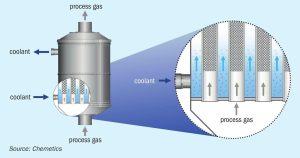
Catalytic converters are the heart and hub of sulphuric acid plants. Converter replacement of equipment that has come to the end of its life is an opportunity to make improvements to the performance, productivity, reliability, durability and plant emissions. NORAM discusses design and project execution considerations for SO2 catalytic converter replacement and Chemetics considers the challenges and opportunities of converter retrofits.
Sulphur processing from sour gas fields dominates regional production, but the geographical remoteness of the area from end use markets and restrictions on sulphur storage means that producers often opt to reinject acid gas into oil and gas wells.
As sulphur recovery units operate at progressively higher temperatures, creep stress in the furnace refractory lining can lead to deformation or even failure of the bricks and require the shutdown of the SRU. UK-based DSF Refractories have developed a product which minimises creep stress damage at high temperatures, for a longer-lived furnace lining.
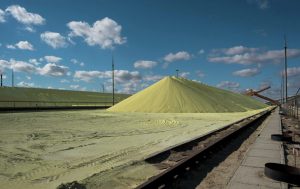
Sulphur is becoming an increasingly important crop nutrient, due to a combination of lower airborne sulphur emissions, the increasing prevalence of high analysis fertilizers, and higher cropping intensities.
RSK and its subsidiary ADAS have developed a sustainable solution for the disposal of sulphur waste generated from a natural gas processing facility in Iraq. C. Teulon of RSK reports on the research that was carried out to test whether the waste sulphur from a biological sulphur removal process could be applied in agriculture to increase the quality and quantity of crops in Iraq.
Although the number of new sour gas developments has slowed in recent years compared to the large boost of the previous decade, sour gas projects continue to be a major source of new sulphur production.