Section: CRUNS Industry News

World’s largest integrated green hydrogen-ammonia-methanol project

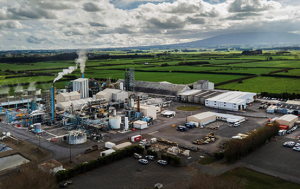
The first 320 MW phase of what China Energy Engineering Corporation Ltd says will ultimately become the world’s largest integrated green hydrogen-ammonia-methanol project HyFlow has officially begun operation in Songyuan City in Jilin Province. With a total investment of nearly $4.30 billion, the Songyuan project uses a “wind-solarhydrogen-ammonia-methanol” integration model, creating an industrial chain that includes hydrogen production and storage, as well as hydrogen-derived chemicals such as ammonia and methanol, hydrogen energy equipment, and scientific research. The project eventually plans to develop 3 GW of renewable energy capacity from wind and solar power, alongside a target production capacity of 800,000 t/a of green ammonia and methanol. The annual production of green hydrogen in the project’s first phase is expected to be equivalent to approximately one-fifth of China’s current total annual green hydrogen production.

Synthetic natural gas project for Nebraska

A consortium consisting of TotalEnergies, Osaka Gas, Toho Gas, and ITOCHU have signed a joint development and operating agreement, granting the Japanese companies a combined 33.3% stake in the Live Oak project – a large-scale facility to produce renewable synthetic natural gas, also referred to as e-NG or e-methane, initiated by TES and TotalEnergies and currently under development in Nebraska. Following the agreement, TES and TotalEnergies will each maintain a 33.35 % stake in the project.

Dynamic green ammonia plant starts operations

A consortium including Danish companies Skovgaard Energy, Topsoe and Vestas says that it has reached an important milestone with the startup of operations in what they describe as the world’s first-of-its-kind green ammonia plant. The plant, owned by Skovgaard Energy and located in Ramme Denmark, is a demonstrator for a dynamic approach to green ammonia production, which means that the plant will adapt to the inherent fluctuations in power output from the renewable power sources in integration with the plant’s electrolysis and ammonia synthesis loop. This, say the developers, will ensure optimal production and improve the cost-effectiveness of green ammonia, ensuring less need for costly storage solutions of green hydrogen or renewable power. Production capacity is 5,000 t/a of green ammonia, with an associated CO2 reduction of 9,600 t/a. The partnership has received euro 11 million in funding from the Danish Energy Technology Development and Demonstration Program (EUDP).

EU tackles rising fertilizer costs under CBAM through targeted tariff relief

Recent developments show the Carbon Border Adjustment Mechanism (CBAM) remains active for fertilizers, but the European Commission proposes tariff reductions to offset import costs. Tariff suspension details The Commission will temporarily suspend remaining Most-Favoured-Nation (MFN) tariffs on ammonia, urea, and certain other fertilizers. Import tariffs from most-favoured nations stand at 6.5%, excluding higher staged tariffs […]