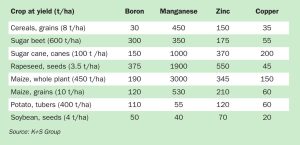
Micronutrients – their unquestionable crop benefits
Dr Setareh Jamali Jaghdani and professor Jóska Gerendás of K+S Group outline how micronutrient management, by positively influencing plant physiology and development, helps maximise crop yields.


Dr Setareh Jamali Jaghdani and professor Jóska Gerendás of K+S Group outline how micronutrient management, by positively influencing plant physiology and development, helps maximise crop yields.

Some 1,265 delegates from 552 companies and 72 countries gathered in Singapore for the 9Ist International Fertilizer Association (IFA) Annual Conference, 20-22 May 2024. Claire Newell, IFA’s Director of Communications & Marketing, reports on the main highlights of this three-day flagship event.
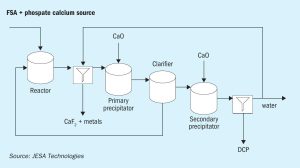
The newly-patented SWIFT process is designed to sequester fluorine at phosphoric acid plants in an environmentally responsible way. It can also offset the costs of fluorine management by generating a saleable dicalcium phosphate (DCP) end-product as an additional revenue stream. A number of capex and opex advantages provide the SWIFT process with highly favourable economics, as James Byrd of JESA Technologies explains.
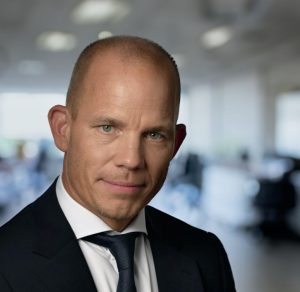
Marc Hechler is EuroChem Group’s new CEO, replacing Samir Brikho who held the position since August 2022. Mr Hechler brings with him more than 20 years of global fertilizer industry experience. He has led EuroChem’s European business operations for the past five years. His leadership experience includes the successful execution of restructuring projects.

The production and use of nitrogen fertilizers are responsible for around five percent of global greenhouse gas (GHG) emissions. The fertilizer industry will need to drastically cut these emissions by 2050 as part of its contribution to the 1.5 °C global warming target. Yet around 48 percent of the global population rely on crops grown with nitrogen fertilizers. Guaranteeing food security, by continuing to supply affordable crop nutrients at scale, while transitioning to a low-carbon future, is therefore the collective challenge for the global fertilizer industry and world agriculture.

We highlight recent innovations, including fertilizers recovered from industrial residues, novel controlled-release coatings, and products that incorporate biological components designed to benefit both crop nutrition and soil heath.

A lot of low-carbon ammonia projects have been announced in recent years – so many, in fact, you’ve probably lost count.

The need for immediate climate action and cuts in carbon emissions has never been more urgent, especially in a world where ecosystems are increasingly under threat. The production of green fertilizers offers a clear route to achieving these goals by decreasing the chemical industry’s reliance on fossil fuels. Stamicarbon’s Carmen Perez, Rolf Postma and Nikolay Ketov outline the company’s innovative and integrated approach to green fertilizer technology.
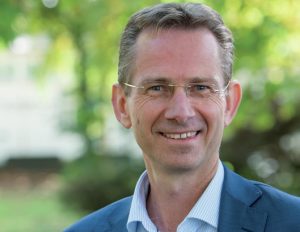
Nadja Håkansson became thyssenkrupp Uhde’s new CEO on 1st May.

We compare and contrast the 2023 financial performance of selected major fertilizer producers following the publication of fourth quarter results.