
Fertilizer Industry News Roundup
ICL Group has launched an interactive online advisory forum for farmers and agronomists.

ICL Group has launched an interactive online advisory forum for farmers and agronomists.
Shell Global Solutions International BV (Shell) has awarded Worley two contracts for PT Pertamina EP Cepu’s (PEPC) new sulphuric acid plant in Indonesia. This plant is part of the Jambaran-Tiung Biru utilised gas field project for PEPC, which is a subsidiary of PT Pertamina-Indonesia’s state-owned energy company. Under the contracts, Worley will supply be supplying Chemetics’ cooled oxidation reactor (CORE) technology. This is the first time that CORE will be paired with Shell’s Cansolv SO2 capture technology. Worley gained the Chemetics technology as part of its Jacobs Energy, Chemicals and Resources acquisition last year. Cansolv controls the emissions and captures additional by-product value from the sulphur dioxide emitted from various refinery flue gas streams (such as cracking units, process heaters and boilers), sulphur plants and spent acid regeneration units. Sulphur dioxide can be recycled to the sulphur recovery unit to be produced as marketable sulphur or converted to sulphuric acid.

Methanex has said that, in light of the uncertainty in the global economy from the Covid-19 pandemic, it will defer approximately $500 million of previously announced capital spending on its $1.4 billion Geismar 3 methanol project for up to 18 months. Geismar 3, which is intended to eventually produce 1.8 million t/a of methanol, will be placed on temporary “care and maintenance” for up to 18 months, enabling the company to complete the project when market conditions improve. Methanex says it will spend $100 million in Q1 2020 and a further $200 million from April 1, 2020 to September 30, 2021 on the project, the majority of which is spending that occurred or was committed during Q1 2020. This is approximately $500 million lower than the $800 million that was expected to be spent over that same period. Construction activity and procurement of non-critical equipment and bulk materials will be suspended until market conditions allow the Geismar 3 project to restart.

Nutrien has temporarily shut down one of the four ammonia plants at its Trinidad production site.

We profile the US ‘big three’ North American phosphate producers, Mosaic, Nutrien and Simplot, and disruptive market entrant Itafos.
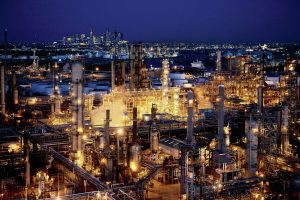
Although North America is no longer the world’s largest sulphur exporter, it remains a major producer and consumer, and there are still significant exports and imports of sulphur into and out of the region.
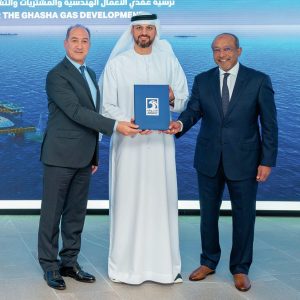
The Abu Dhabi National Oil Co. (ADNOC) has awarded two EPC contracts with a total value of more than $1.65 billion for the offshore Dalma sour gas development, 190 km northwest of Abu Dhabi city. Dalma is one of the fields in the offshore Ghasha ultra-sour gas concession, which ADNOC views as central to the UAE achieving self-sufficiency in domestic gas supplies.
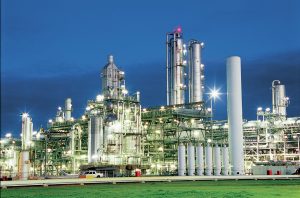
The UK’s Department for Business, Energy and Industrial Strategy has awarded £28 million ($36 million) of government funding to five demonstration projects for low carbon hydrogen production, as part of a larger stimulus package to cut industrial carbon emissions. The projects targeted for funding include:

At the Nitrogen+Syngas Conference 2020, held in The Hague, Netherlands, Haldor Topsoe launched its new TITAN ™ series of steam reforming catalysts. The company says that the new series, which consists of the RC-67 TITAN and RK-500 TITAN catalysts, offers improved performance and longer catalyst lifetime thanks to the hibonite-rich composition. The addition of titanium promoters adds exceptional mechanical strength while a seven-hole cylindrical shape yields both a very low pressure drop and a high surface area. Pressure drop build-ups in syngas plants can cause unscheduled downtime and cost millions of dollars, while thermal instability during operation can lead to operational risk and reduce plant lifetime. Topsoe says that the catalysts can mitigate these risks, ensuring lower operating costs, increased profit margins, and reduced energy usage.
The grave economic and human health consequences of the global spread of coronavirus (Covid-19) deepened in March.