Category: Europe

Cooperation agreement for e-fuels demonstration plant

Sasol and Topsoe have signed a cooperation agreement with the German Aerospace Centre (DLR) and EPC contractor Griesemann for the construction, operation and research and development activities of DLR’s sustainable aviation fuels demonstration plant at the Leuna Chemical Complex, Germany. The demonstration plant is currently under construction and expects to produce 2500 t/a of e-fuels, starting in Q4 2027. The e-fuels produced will comprise mainly of kerosene, using renewable feedstocks such as biogenic CO2 and green hydrogen. With €130 million of funding secured from the German Federal Ministry for Transport, the plant will be the largest demonstration and research facility globally for the production of e-fuels.

Feasibility study on sustainable methanol plant

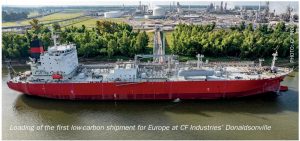
NextChem subsidiary MyRechemical has been selected by Mana Group and Equinor to conduct a feasibility study for a waste-to-methanol plant at Norway's Mongstad refinery. The project will use NX Circular™ technology to convert urban and industrial waste into chemical grade syngas which will be further processed to produce low-carbon methanol. The facility is expected to produce circular methanol with a low carbon footprint, eligible under the EU Renewable Energy Directive criteria. This methanol could initially replace marine bunker fuel to meet the targets of the FuelEU Maritime regulation, exempting final users from buying ETS credits and paying penalties, and potentially later be used as feedstock for methanol-to-jet facilities to produce sustainable aviation fuel (SAF) compliant with FuelEU Aviation regulation.

Aurubis completes major maintenance at Pirdop plant

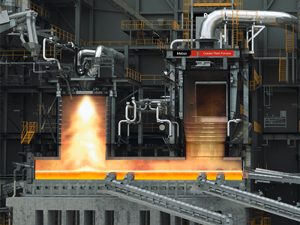
Aurubis says that it has successfully completed scheduled maintenance at its Pirdop plant on time. The two-month operation marked the largest planned maintenance shutdown at the site in the past 30 years. With an investment of €115 million, Aurubis says the work ensures the long-term reliability and performance of the facility. Key upgrades included a full overhaul of the flash smelter, replacement of two electrostatic precipitators, and a major modernisation of the sulphuric acid production line. This modernisation involved installing a new converter and replacing six heat exchangers.

Lyten acquires Northvolt

Lyten, a global leader in lithium-sulphur batteries has entered into a binding agreement to acquire Northvolt’s assets in Sweden and Germany. The acquisition includes Northvolt Ett and, Northvolt Labs in Sweden and Northvolt Drei in Germany. Additionally, Lyten is acquiring all remaining Northvolt intellectual property. The financial terms of the agreement were not disclosed. In total, Lyten’s acquisition includes assets valued at approximately $5 billion, including 16 GWh of existing battery manufacturing capacity, more than 15 GWh of capacity under construction, the infrastructure and plans to scale to more than 100 GWh, and the largest and most advanced battery R&D centre in Europe.

Is the world ready for CBAM?

At the end of this year, the European Union’s Carbon Border Adjustment Mechanism (CBAM) will move from its transitional phase into its ‘definitive’ phase, whereby the carbon costs of goods entering the EU will need to be priced in. CBAM requires suppliers to calculate the carbon emissions of their fertilizer (and other, e.g. steel) products, including indirect emissions, for example from electricity consumed in the process, and emissions of precursor or raw materials. They will then need to purchase CBAM certificates to cover embedded emissions above the established free allowance benchmark rates determined by the European Commission: 1.57 tonnes CO2e/tonne ammonia and 0.23 tCO2e/t nitric acid.

EIB loan agreed for Villeta project

ATOME says that the European Investment Bank (EIB), the lending arm of the European Union, has approved financing in-principle of up to $135 million for the company’s flagship Villeta Project. EIB is one of ATOME’s senior debt providers for Villeta and the announcement follows the Green Climate Fund approval earlier this month. Details of the financing will be finalised in early course, following closing of the debt package with the consortium of leading international development finance institutions. Based on the progress with financing, ATOME is projecting a final investment decision by the end of September 2025.

Nitrogen dioxide release caused by loading error

An explosion at the FrieslandCampina site in Borculo in July 2025 this year was reportedly caused by an error in the discharge of hydrochloric acid. The explosion released a mix of chlorine gas and nitrogen oxides. A truck driver reported to the wrong unloading point at the dairy company in Gelderland on 4th. Both the driver and a factory employee failed to properly check the cargo’s paperwork, resulting in the hydrochloric acid being unloaded into a nitric acid tank. Furthermore, an incorrect coupling was used during the unloading process, the company reported after its own investigation. An orange cloud containing chlorine gas and nitrogen dioxide was released and spread throughout the surrounding area. Around 21:00, the site was evacuated and the fire department was alerted. At 22:13, the tank exploded. The tank lid was later found in a meadow near the factory.

Funding for green hydrogen plant

Linde has received a e4.3 million ($4.7 million) funding commitment to build a new 5MW alkaline electrolysis plant in Leuna, Saxony-Anhalt, adding to the region’s growing hydrogen infrastructure. The project, which complements Linde’s existing 24 MW facility, is scheduled for commissioning by the end of 2026 and is expected to produce 450 t/a of green hydrogen for local industrial customers via pipeline distribution. The funding was formally awarded on August 13 by Saxony-Anhalt’s Economics Minister Prof. Dr. Armin Willingmann, backed by the state’s “Future Energy” programme and the EU’s European Regional Development Fund (ERDF).