
Nextchem buys Ballestra
NEXTCHEM has signed a binding agreement to acquire Ballestra Group for around €126.5 million. The announcement was made by Maire – Nextchem’s parent company – on 24th December.

NEXTCHEM has signed a binding agreement to acquire Ballestra Group for around €126.5 million. The announcement was made by Maire – Nextchem’s parent company – on 24th December.
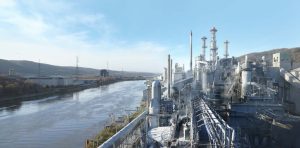
Prayon has officially opened a new sodium hexametaphosphate (SHMP) production unit at its Engis complex in Belgium. The €30 million investment is designed to strengthen the company’s position in the food and technical phosphates market.

Trade body Fertilizers Europe says the EU’s new carbon border adjustment mechanism (CBAM) package “will significantly weaken the mechanism and prevent it from delivering on its promises”.
Barents Blue AS has announced Proton Ventures as a new partner in the Barents Clean Ammonia Project (project formerly known as the Barents Blue project). Barents Blue says that the Dutch engineering and project development company, a pioneer in the clean ammonia industry, “will bring significant resources and industry expertise to the project and the value chain for clean ammonia, important for the realisation of Europe’s largest clean ammonia production plant located in Finnmark, Northern Norway”.
Uralchem JSC and three Indian fertiliser companies; Rashtriya Chemicals and Fertilizers Ltd (RCF), National Fertilizers Ltd (NFL), and Indian Potash Ltd (IPL) have signed a memorandum of understanding to set up a joint venture to construct a urea plant in Russia. The signing ceremony was held in New Delhi in December during a state visit by Russian president Vladimir Putin to India.
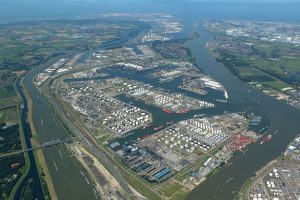
Europe is likely to become an increasing ammonia importer over the coming years as low global ammonia prices and high European gas prices squeeze producer margins, but CBAM remains a wild card.
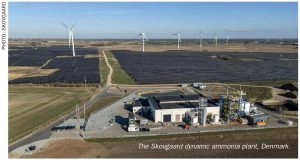
A consortium including Danish companies Skovgaard Energy, Topsoe and Vestas says that it has reached an important milestone with the startup of operations in what they describe as the world’s first-of-its-kind green ammonia plant. The plant, owned by Skovgaard Energy and located in Ramme Denmark, is a demonstrator for a dynamic approach to green ammonia production, which means that the plant will adapt to the inherent fluctuations in power output from the renewable power sources in integration with the plant’s electrolysis and ammonia synthesis loop. This, say the developers, will ensure optimal production and improve the cost-effectiveness of green ammonia, ensuring less need for costly storage solutions of green hydrogen or renewable power. Production capacity is 5,000 t/a of green ammonia, with an associated CO2 reduction of 9,600 t/a. The partnership has received euro 11 million in funding from the Danish Energy Technology Development and Demonstration Program (EUDP).
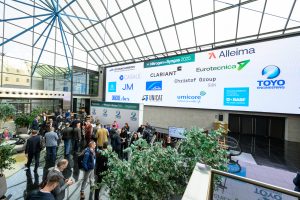
The 2026 Nitrogen+Syngas Expoconference will take place in Barcelona, Spain, from 9-12 February. Join us at this industry leading event where leading market and technology experts and producers will gather to connect, share knowledge and learn about the latest developments in operations, technology, processes and equipment.
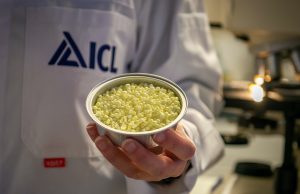
Ronald Clemens, ICL's Global Portfolio Manager, explains how new fertilizer technologies are boosting yields, cutting losses and supporting sustainability.
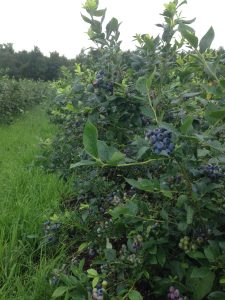
Supplying nitrate with iodine has been shown to deliver blueberry yield and quality improvements, says Katja Hora, SQM’s Research Manager.