
Clean ammonia projects and technologies
New methods for low-carbon ammonia production are emerging, while project activity is also rising rapidly.


New methods for low-carbon ammonia production are emerging, while project activity is also rising rapidly.
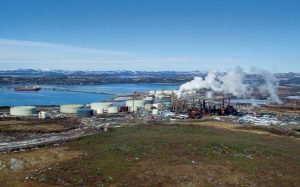
Liquid fuels will be with us for decades to come, but refiners will be pushed to decarbonise their activities, via greater use of biofuels, and green/blue hydrogen use.
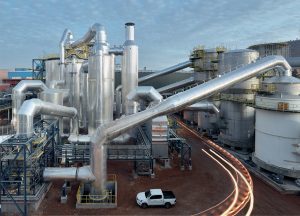
The sulphuric acid process is virtually carbon free and, as such, it is important to consider the energy requirements of the associated industrial complex before deciding upon what form the energy should be exported from the acid plant. In this article, Stefan Braeuner, Stefan Mohsler and Anne Mohsler of Metso Outotec use case studies to exemplify the need to fully analyse the local conditions at site before a decision is taken on a specific flowsheet.
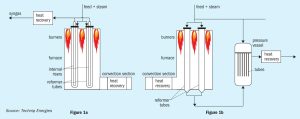
Previously, recuperative reforming has been mostly applied for capacity increase revamps, but nowadays it is a key enabler for efficient low carbon hydrogen and syngas production. Jan-Jaap Riegman of Technip Energies, Francesco Baratto of Casale and Stefan Gebert of Clariant discuss the benefits of recuperative reforming for reducing the carbon footprint of existing assets.
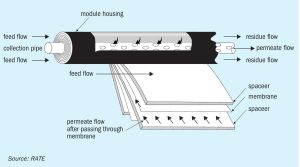
CO2 emission abatement strategies have become increasingly important as the world strives to combat global climate change. RATE discusses carbon capture options available for sulphur recovery units.
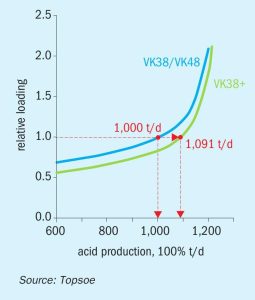
With energy prices skyrocketing, sulphuric acid plant operators face a heightened challenge to improve plant efficiency. Martin Alvarez from Topsoe discusses how the company’s new high-activity catalyst, VK38+, can help acid plants maximise energy efficiency to secure important economic benefits while simultaneously reducing their carbon footprint.

Industry focus on technologies to reduce the carbon intensity of ammonia and methanol production has been intensifying. In this article thyssenkrupp Uhde, Proton Ventures, Toyo Engineering Corporation, Stamicarbon, BD Energy Systems and KBR report on some of their latest technology developments towards decarbonisation.
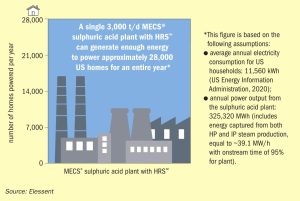
By recovering waste heat as process steam or electrical energy, technologies are available that can help sulphuric acid plants meet their energy goals. Colin Shore of Elessent Clean Technologies discusses how MECS® HRS™ technology can offer a sustainable solution to enhance sulphuric acid plant performance, while lowering its carbon emissions.
The recently-published IEA Ammonia Technology Roadmap sets out a future pathway for decarbonising the nitrogen industry. New technology options for low-carbon ammonia production are emerging and project activity is on the rise.

Heat recovery systems at sulphuric acid plants have been providing carbon-free energy for decades now and continue to improve. There is also potential to combine the clean power generated at acid plants with hydrogen production from water electrolysis. This could provide the basis for green fertilizer production.