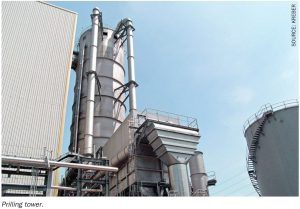
Sulphur fertilizers – the processes, the products
UreaKnowHow.com reviews the main production options for incorporating sulphur into urea, the world's most widely applied commodity fertilizer.

UreaKnowHow.com reviews the main production options for incorporating sulphur into urea, the world's most widely applied commodity fertilizer.

MEScon 2025 took place in Abu Dhabi from 19-22 May 2025, providing delegates with renewed energy, new connections, and fresh ideas to apply across the sulphur value chain.
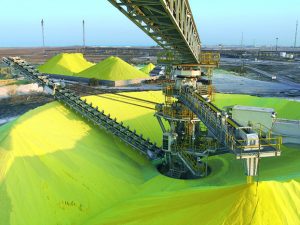
IPCO highlights the reasons for converting sulphur into a solid form, and compares two of the technologies most commonly used to achieve this.
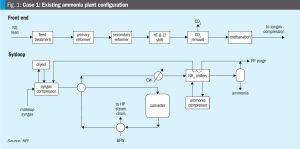
VK Arora of KPI examines the technical and operational challenges of decarbonising legacy and new ammonia plants, drawing on a European case study of full-scale conversion supported by robust process and integration design. It also presents three US case studies exploring partial strategies, such as green hydrogen blending and oxygen enrichment, to reduce CO2 emissions and improve throughput. Together, these examples highlight a phased, cost-effective approach to decarbonisation, with blue hydrogen serving as a near-term transitional feedstock.
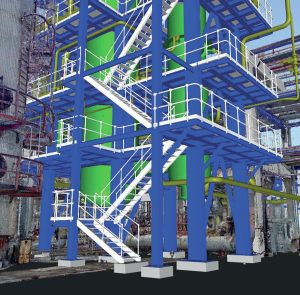
Casale is specialised in revamping natural gas-based methanol plants. Decarbonisation of methanol plants is a goal for many producers achievable with a proper revamping strategy. Pietro Moreo of Casale discusses how Casale’s innovative technologies and extensive experience ensure reliable efficient capacity and performance enhancements together with CO2 emissions reduction tailored to meet revamping project targets.

This article describes an unusual tube failure incident which resulted in fire escaping the furnace box during normal operation of a hydrogen plant. Ken Wohlgeschaffen of Chevron Products Company shares the sequence of events leading up to the incident, the extent of damage caused by the incident, and most importantly the causes and lessons learned from this incident to prevent recurrence.
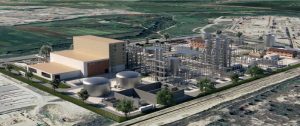
The production of methanol from waste offers a groundbreaking solution for sustainable urban waste management as well as producing an alternative renewable fuel for maritime transport. Giacomo Rispoli, Andrea Angeletti and Alessia Borgogna of Nextchem provide an overview of the waste conversion process and its application.

No longer viewed as only a chemical feedstock, methanol is increasingly being regarded as a low-carbon energy carrier. Zinovia Skoufa of Johnson Matthey discusses the role of sustainable methanol as a multi-pathway fuel for the energy transition.
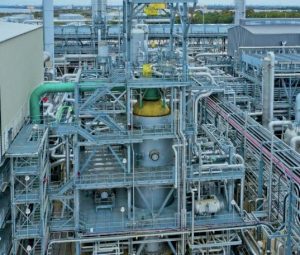
By combining oxygen-blown Lurgi™ autothermal reforming (ATR) technology with Cryocap™ H2 carbon capture technology, Air Liquide offers an innovative plant configuration to meet the need for a central production facility offering flexible product diversification with hydrogen and ammonia at a scale that satisfies extensive decarbonisation targets.

Green urea is urea based on green ammonia produced from renewable power via electrolysers and bio-based carbon dioxide and its colour is the same as normal urea. But in this round table discussion we discuss the possible causes for urea turning a green colour as found by the initiator of this discussion. We will learn that the colour of urea can be reddish or brownish in certain conditions where corrosion rates are high and/or oil fouling is high. But what can cause urea to turn green? n