Author: lisaconnock

Challenges in the conversion to clean ammonia

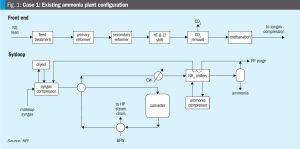
VK Arora of KPI examines the technical and operational challenges of decarbonising legacy and new ammonia plants, drawing on a European case study of full-scale conversion supported by robust process and integration design. It also presents three US case studies exploring partial strategies, such as green hydrogen blending and oxygen enrichment, to reduce CO2 emissions and improve throughput. Together, these examples highlight a phased, cost-effective approach to decarbonisation, with blue hydrogen serving as a near-term transitional feedstock.

Problem No. 74: Is green urea really green?

Green urea is urea based on green ammonia produced from renewable power via electrolysers and bio-based carbon dioxide and its colour is the same as normal urea. But in this round table discussion we discuss the possible causes for urea turning a green colour as found by the initiator of this discussion. We will learn that the colour of urea can be reddish or brownish in certain conditions where corrosion rates are high and/or oil fouling is high. But what can cause urea to turn green? n

Cracking confidence: Perceived risks for industrial investors

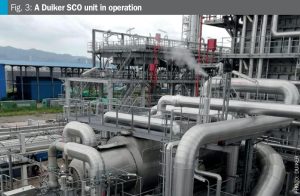
Common risks of ammonia cracking as a new technology and how these risks can be recognised and mitigated by applying an innovative approach of the technology maturation process is described as seen through the eyes of an end user/investor. Addressing those risks is pivotal to enable end users to choose the best technology for their needs. Albert Lanser of Duiker Clean Technologies discusses some of these risks and how they have been addressed in its novel technology for producing the lowest levelised cost of hydrogen via its unique ammonia cracking process.