Decarbonisation
18 February 2026
Kapuni project reaches financial close in Taranaki
Written by Natalie Noor-Drugan
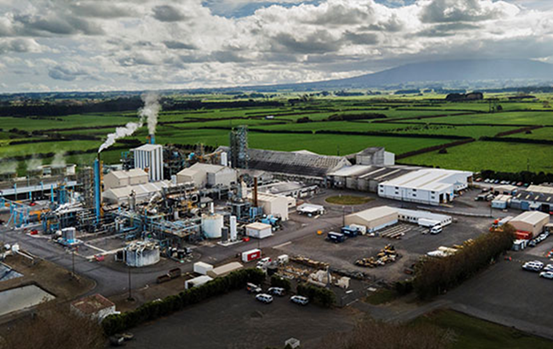
Ballance Agri‑Nutrients and its partners say that the Kapuni Project has reached financial closure, unlocking an integrated renewable electricity and green hydrogen development in South Taranaki, New Zealand. The consortium includes Ballance, Hiringa Energy, Todd, Parininihi ki Waitōtara (PKW) and the New Zealand Ministry of Business, Innovation and Employment (MBIE).
The project integrates four 6.4 MW wind turbines (25.6 MW installed) with a 5 MW hydrogen electrolyser linked to Ballance’s Kapuni plant. The partners say that the wind farm is expected to generate around 100 GWh per year, with power used to supply Ballance’s site operations, produce hydrogen for transport via Hiringa’s refuelling operations, and export electricity to the national grid to support Hiringa and Ballance’s operations and supply the Todd network. They also say green hydrogen can augment some of the natural gas feedstock at the Kapuni plant. Hiringa is due to start construction in early March 2026, beginning with civil enabling works, with first renewable electricity and green hydrogen production expected in 2027. The project is backed by non‑recourse project financing from Westpac.
Ballance chief executive Kelvin Wickham said: “Ballance… has supported the Kapuni Project from day one because we know how important reliable, low‑emissions energy is for the future of agriculture in New Zealand… This project is an important step forward. It opens up new options for the future.”
The move follows Ballance’s wider repositioning over the past year, after the co‑operative entered consultation in 2025 on a proposal to cease sulphuric acid and single superphosphate (SSP) manufacturing at its Mount Maunganui site, while retaining nutrient storage and distribution and continuing urea production at Kapuni.