Africa
4 February 2026
Kore seeks new owner for Kola potash project
Written by Natalie Noor-Drugan
Kore Potash Plc, a company incorporated in the UK, has opened a formal sales process (FSP) and reported tangible early‑works progress at its coastal Kola potash project in the Sintoukola basin, Republic of Congo (RoC), the company said in its quarterly update for the period ended 31 December 2025.
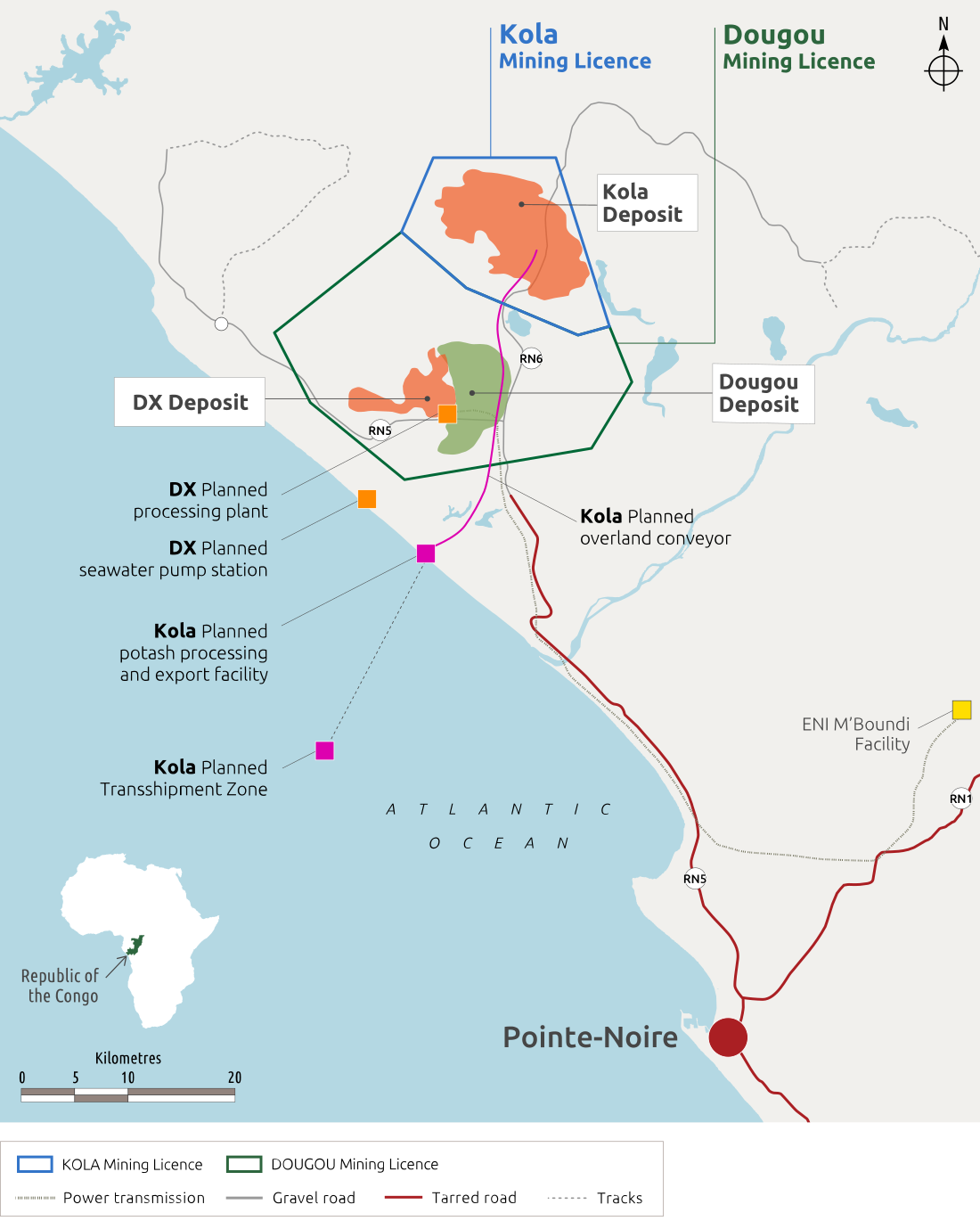
The filing confirms the FSP was launched on 4 November 2025 and that two parties have approached Kore and are conducting due diligence and site visits. The project has continued to progress under the early-works agreement (EWA) with PowerChina International Group Limited: beneficiation tests in China were completed with an independent Canadian potash expert in attendance, and geotechnical, geophysical and engineering surveys around the planned shafts were finished. Marine mobilisation for the jetty began in December 2025 and RoC approvals to start offshore work were received in January 2026. The company says work on the project’s environmental and social impact assessment (ESIA) will resume in April 2026.
On financing, Kore confirmed term sheets with OWI‑RAMS GMHB and ongoing engagement with two development finance institutions; a c.$12.2m placement closed on 20 November 2025 and cash stood at about $10.5m at 31 December 2025. No production or construction took place in the quarter; exploration spend was $2,953,000.
Industry context
The RoC is generally viewed as higher risk for potash development, with little commercial potash activity since the 1970s. Some market models (including CRU’s) do, however, now list an RoC project in their base‑case scenarios. CRU analyst Alexander Chreky has also highlighted rising Chinese project interest and broader investor activity in the RoC, a consequence of waning potash production from established domestic producers in China. This heightened interest and China’s bid to secure extra potash supply means the progress of the Kola project and its potential sale are of market interest.
What to watch
Immediate milestones, such as the outcome of the FSP, the confirmation of a contract operator/strategic partner and the completion of the ESIA, will determine whether or not the Kola potash project advances to construction readiness.