Nitrogen+Syngas 399 Jan-Feb 2026

Clariant catalysts selected for waste-to-methanol plant


SPAIN

Clariant catalysts selected for waste-to-methanol plant

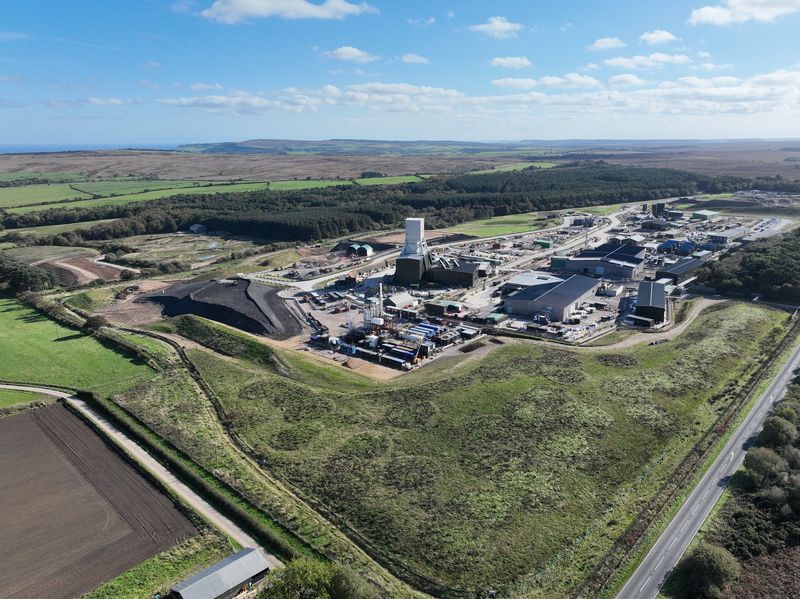
Clariant says it is collaborating in Repsol’s pioneering methanol plant in El Morell near Tarragona, Spain. The Ecoplanta project will be the first of its kind in Europe to convert municipal waste into renewable methanol, using Enerkem’s advanced waste gasification process, supported by a range of Clariant’s syngas purification catalysts and its highly active MegaMax methanol synthesis catalysts. Scheduled for completion in 2029, the plant will use 400,000 t/a of non-recyclable solid municipal waste to produce 240,000 t/a of methanol.

Georg Anfang, Vice President Syngas and Fuels at Clariant Catalysts, commented, “We are proud to collaborate with Repsol and Enerkem in the prestigious Ecoplanta project to support Europe’s energy transition. Leveraging our decades of innovations in methanol synthesis catalysts, Clariant is uniquely positioned to drive the large-scale deployment of low-carbon methanol technologies that will play a decisive role in decarbonising hard-to-abate industries.”

Michel Chornet, CEO of Enerkem, added, “We are excited to contribute to the Ecoplanta project and set an inspiring example for others on the path to decarbonisation. Our technology not only enables large-scale production of low-carbon methanol and the reduction of waste in landfills but also avoids substantial greenhouse gas emissions. According to estimates, abatement will be equivalent to 3.4 million tons of CO2 in the first 10 years of operation.”

After gasification of municipal waste, the trap and guard catalysts will be used to efficiently remove all types of impurities, such as metals, halogens, and sulphur species. The purified syngas will then be converted to methanol using the MegaMax series catalysts. Due to its high activity, the catalyst can optimise methanol yield while significantly reducing operating costs. It also offers enhanced selectivity, which reduces the formation of by-products and thus improves the sustainability and economics of bio-methanol production.

Latest in Europe

BASF to supply hydrogen-based ammonia to OCI’s Geleen fertiliser plant

BASF and OCI Global have agreed for the first deliveries of renewable ammonia produced at BASF’s site in Ludwigshafen in order to produce low-carbon fertilizers at OCI’s site in Geleen. This initiative expands OCI’s low-carbon portfolio and introduces the “Pure” product line, delivering the same fertilizer quality at a substantially reduced carbon footprint without compromising on performance. BASF says that its renewable ammonia is certified according to ISCC PLUS and is produced using a mass balance approach, through which renewable energy-derived hydrogen is attributed to the renewable ammonia grades.

Technology selected for green hydrogen projects

Nel ASA says that it has entered into an agreement with GreenH to be the technology provider for the Enova-supported projects in Kristiansund and Slagentangen. GreenH develops, builds, owns, and operates hydrogen production facilities based on renewable energy. The company aims to establish a network of distributed hydrogen production sites to enable decarbonisation in the maritime, transport, and industrial sectors. GreenH focuses on scalable solutions located close to end users, reducing logistics costs and supporting the development of efficient, regional hydrogen value chains. The facilities in Kristiansund and Slagentangen are intended to supply green hydrogen to industrial and maritime users and form part of GreenH’s broader efforts to establish a network of distributed hydrogen production in Norway.

Drone attack on Acron

Acron’s fertilizer complex at Veliky Novgorod was reported to be on fire following a Ukrainian drone strike on December 10th. At least five explosions were reported at the facility, according to Ukrainian media. Novgorod Governor Alexander Dronov confirmed the attack and said the air defence system intercepted 19 drones over the region. Earlier, on December 4, Ukrainian drones struck the Nevinnomyssk Azot plant in Russia’s Stavropol region, a major facility that produces over 1 million t/a of ammonia and 1.4 million t/a of ammonium nitrate annually.