Fertilizer International 530 Jan-Feb 2026
23 January 2026
Advanced sulphur nutrition for soybean-maize systems in Brazil
VALUE-ADDED MARKET
Advanced sulphur nutrition for soybean-maize systems in Brazil
Recent field research conducted in Goiás and Mato Grosso in Brazil’s Cerrado region provides fresh evidence on how advanced sulphur sources, such as patented Micronized Sulphur Technology (MST® ) from Sulvaris, influence nutrient availability, crop uptake, and yield in high-output soybean maize systems. Mark Howell, Head of Agronomy & Product Development at Sulvaris, provides some new insights.
Sulphur – a critical role
Sulphur (S) availability has become an increasingly important determinant of crop productivity in Brazil’s major grain-producing regions. In the Cerrado, a region where soybean–maize cropping systems dominate, the interaction between soil properties, climate, and fertilizer inputs creates conditions in which sulphur supply frequently limits yield.
Brazilian Cerrado soils are typically highly weathered, acidic, and low in organic matter. Sulphate – the form of sulphur absorbed by plants – is weakly retained in these soil profiles and readily lost through leaching during periods of high rainfall, with significant consequences for yield and farm income. Sulphur plays a critical role in nitrogen metabolism, protein synthesis, and biological nitrogen fixation. Improved sulphur availability therefore supports more effective nitrogen use and contributes to higher yield potential.
Sulphur transformation in soil
Elemental sulphur fertilizers must first be converted to sulphate through microbial oxidation in the soil. The efficiency of this process is strongly influenced by particle size, as oxidation occurs at the particle surface. If elemental sulphur particles are too large, crop productivity can be impaired if only partial oxidation occurs within the season of application.
Micronized Sulphur Technology (MST® ) strikes a balance by engineering elemental sulphur into ultrafine particles, with 95% of particles ranging from 1–12 microns (average size 7 microns). This dramatically increases surface area and microbial access, accelerating oxidation while maintaining a sustained nutrient release profile. The result is sulphur that becomes available rapidly enough to support the crop in the year of application, yet gradually enough to reduce leaching losses.
Phosphate+MST®
Importantly for fertilizer producers, MST® is not a coating but a co-granulated technology. Valuably, this eliminates the accumulation of sulphur dust, provides a greater ability to scale production, and prolongs sulphur release.
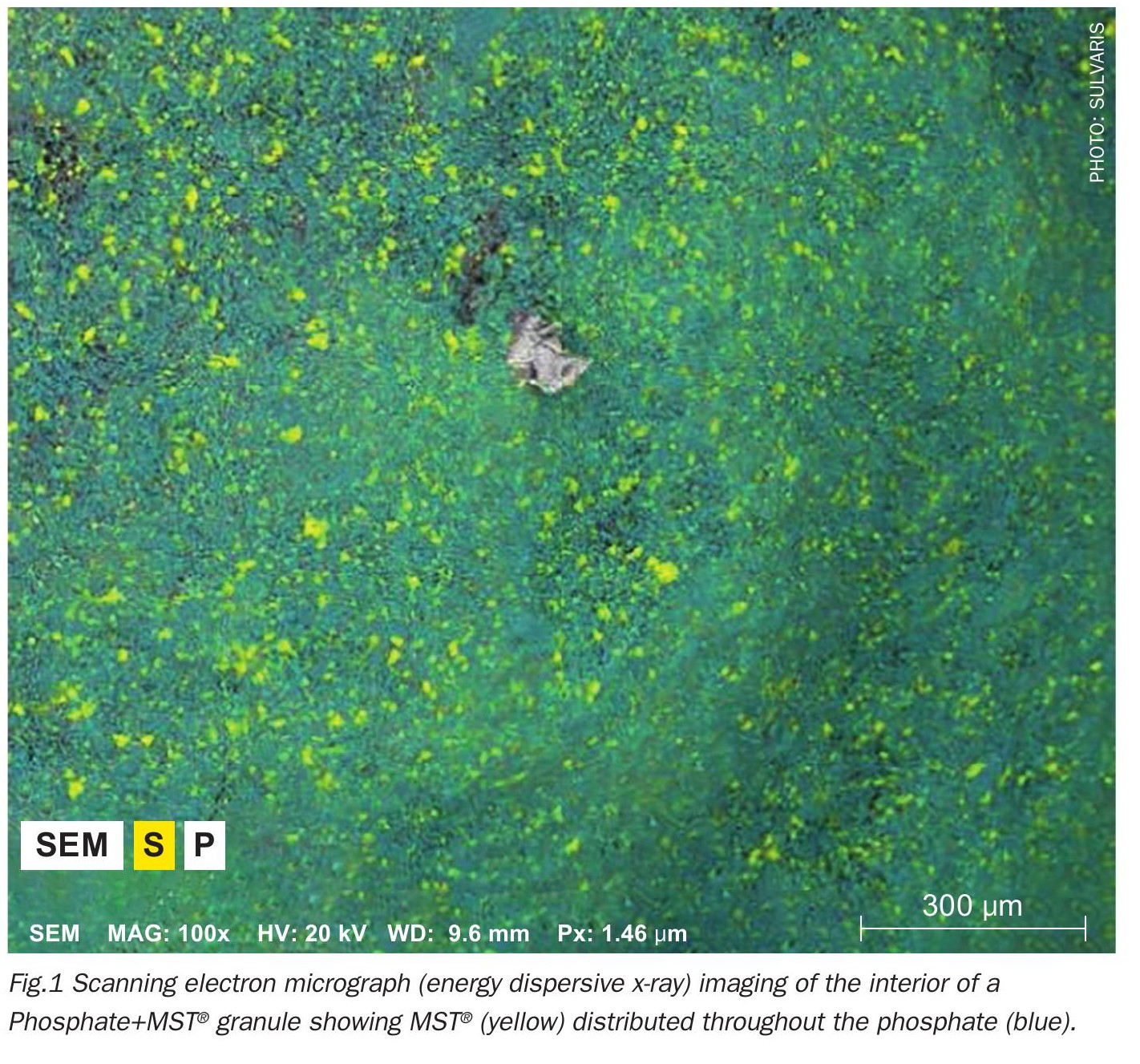
Scanning electron microscopy confirms the uniform distribution of MST® throughout phosphate granules (Figure 1). While there is considerable market acceptance for sulphur enhanced phosphate products, MST® through its flexibility and efficacy is one of the few technologies well-suited to triple superphosphate (TSP) production.
Field trial design and conditions
High cropping intensity is one of the defining characteristics of Brazil’s production systems, with maize planted immediately following soybean harvest. Under these conditions, the reduced leaching risk during the rainy season associated with MST®, combined with its nutrient carryover abilities, become particularly valuable – as these properties support sulphur availability beyond the soybean crop and provide sulphur nutrition to the maize crop as well. Fertilizer inputs applied ahead of soybean can extend their value from the first crop to the subsequent maize crop by using two of the 4R principles: right source, and right rate.
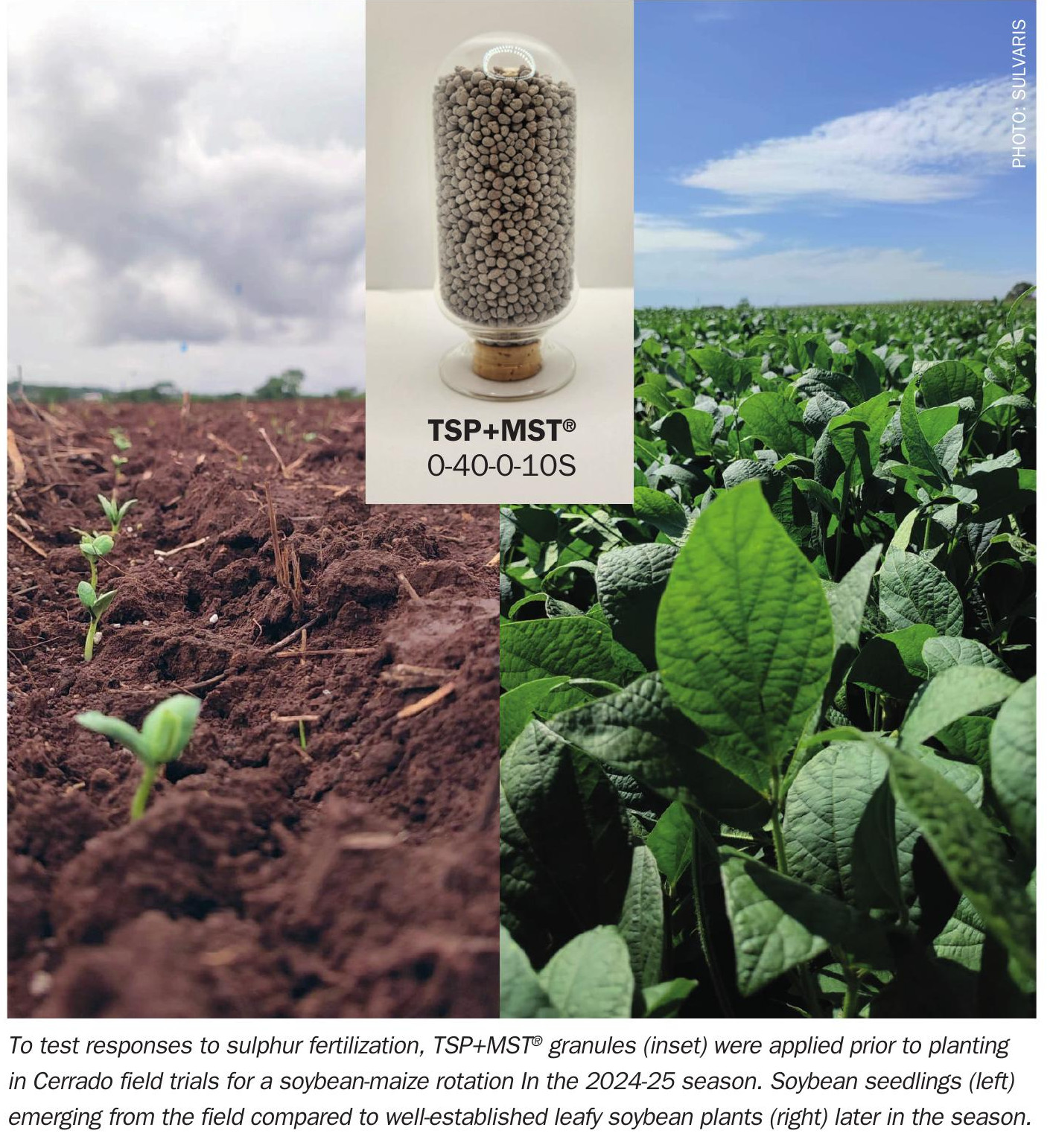
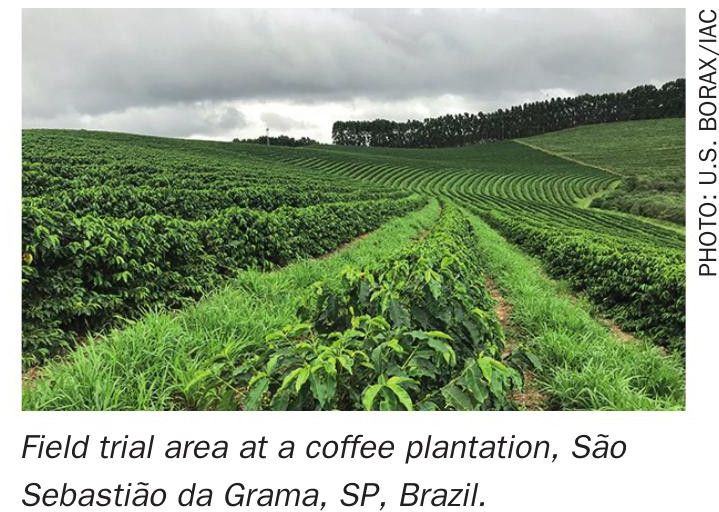
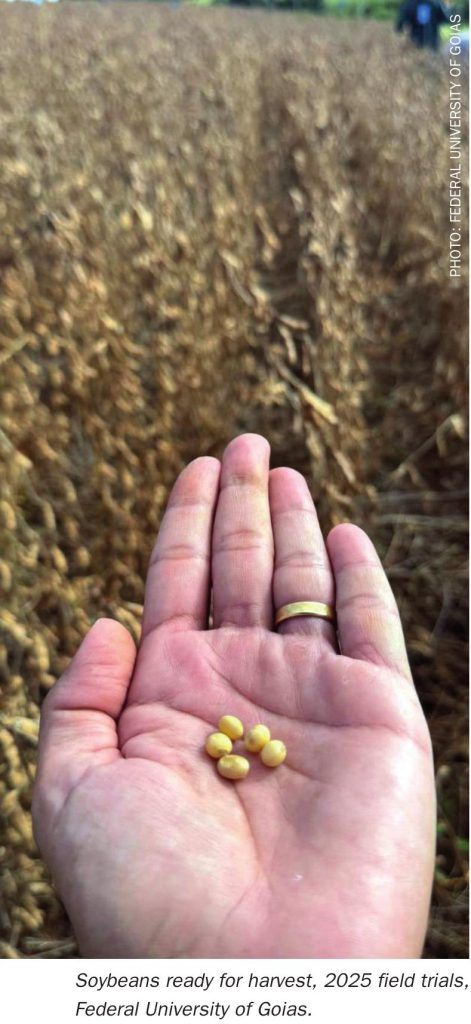
Field trials assessed sulphur fertilizer efficacy for a soybean-maize rotation in the 2024-25 cropping season. These were established by several research organisations, including the Mato Grosso Foundation and the Federal University of Goiás. At these locations, phosphorus and sulphur were applied prior to soybean planting (30 kg S/ha), a strategy designed to reduce the number of application passes on the field and focus soil fertility investments on the highest value crop.
Available soil sulphur concentrations ranged from 7 to 9.5 ppm, with soil pH between 5.2 and 5.5 and organic matter levels of 1–2%. These values are representative of many Cerrado soils classed as marginal to deficient in sulphur. Other nutrients were balanced across treatments to allow differences in crop performance to be attributed primarily to sulphur source effects. Measurements included grain yield and sulphur uptake at key growth stages.
Crop response to sulphur fertilization
Across the trial locations, both soybean and maize exhibited clear positive yield responses to sulphur fertilization. The largest impact was shown by TSP+MST® in Mato Grosso, with a 16% yield increase in soybeans followed by 17% for maize.
Results confirm sulphur as a limiting nutrient under these field conditions – conditions which are therefore effective for efficacy testing of sulphur fertilizers. While yield improvements varied by site, reflecting differences in soil properties and environmental conditions, sulphur-responsive locations consistently demonstrated the importance of adequate sulphur supply (Figure 2 & 3).
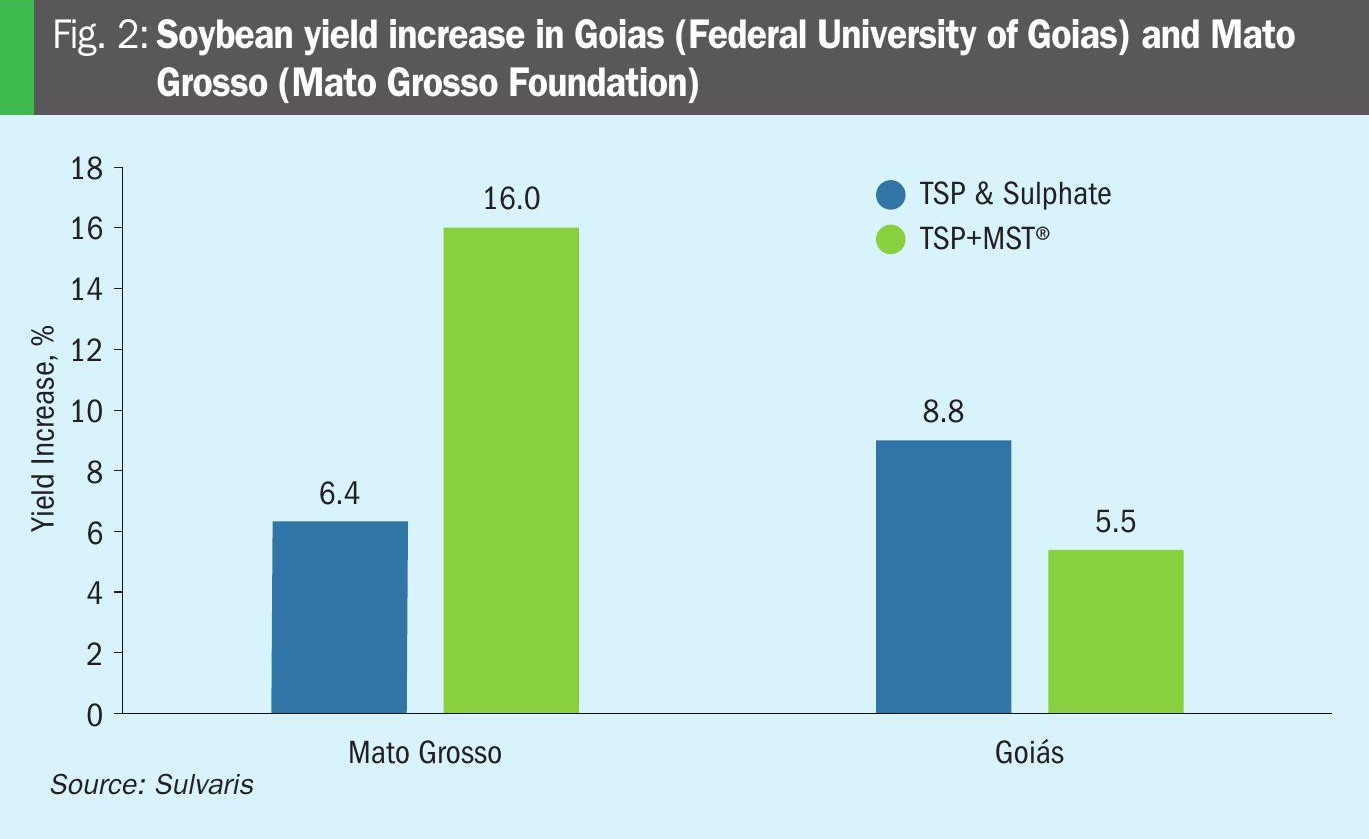
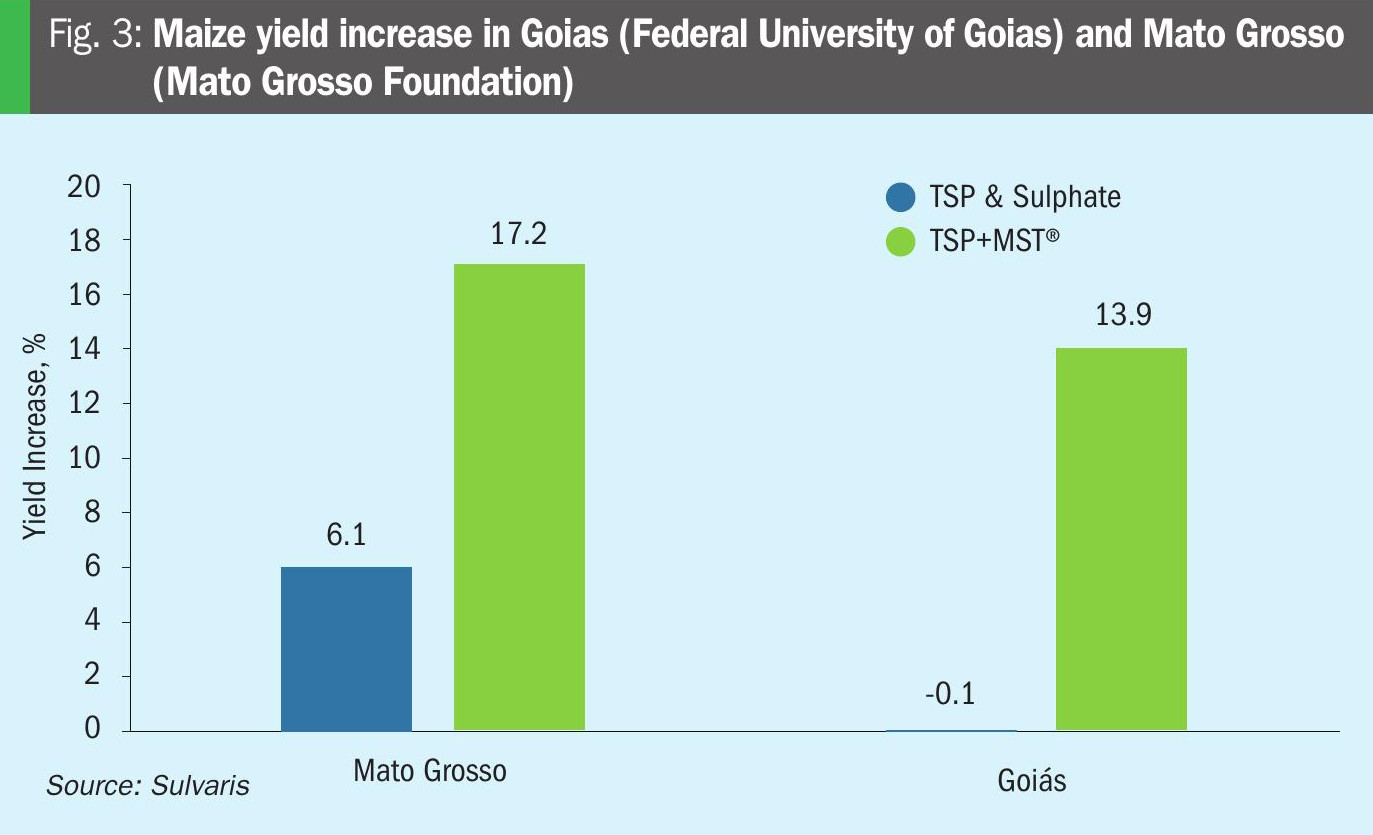
Treatments containing MST® produced positive yield responses in soybean across different soil types. Responsive sites showed an average yield increase of approximately 14% with TSP+MST®, based on all Brazilian trials conducted in 2025 (including soybean only trials). There was a clear difference between TSP+MST® and other sulphate sources, with the latter consistently demonstrating lower yield in the following corn crop, an impact we would expect from losses due to nutrient leaching and immobilisation. These results confirm that MST® can effectively enhance the agronomic value of TSP by incorporating a high efficiency sulphur source that functions throughout the dominant cropping sequence in Brazil.
Sulphur uptake over two crops
It is critical for crops to have access to sulphur to support grain yield and quality, particularly when growth is most rapid in late vegetative and early reproductive stages.
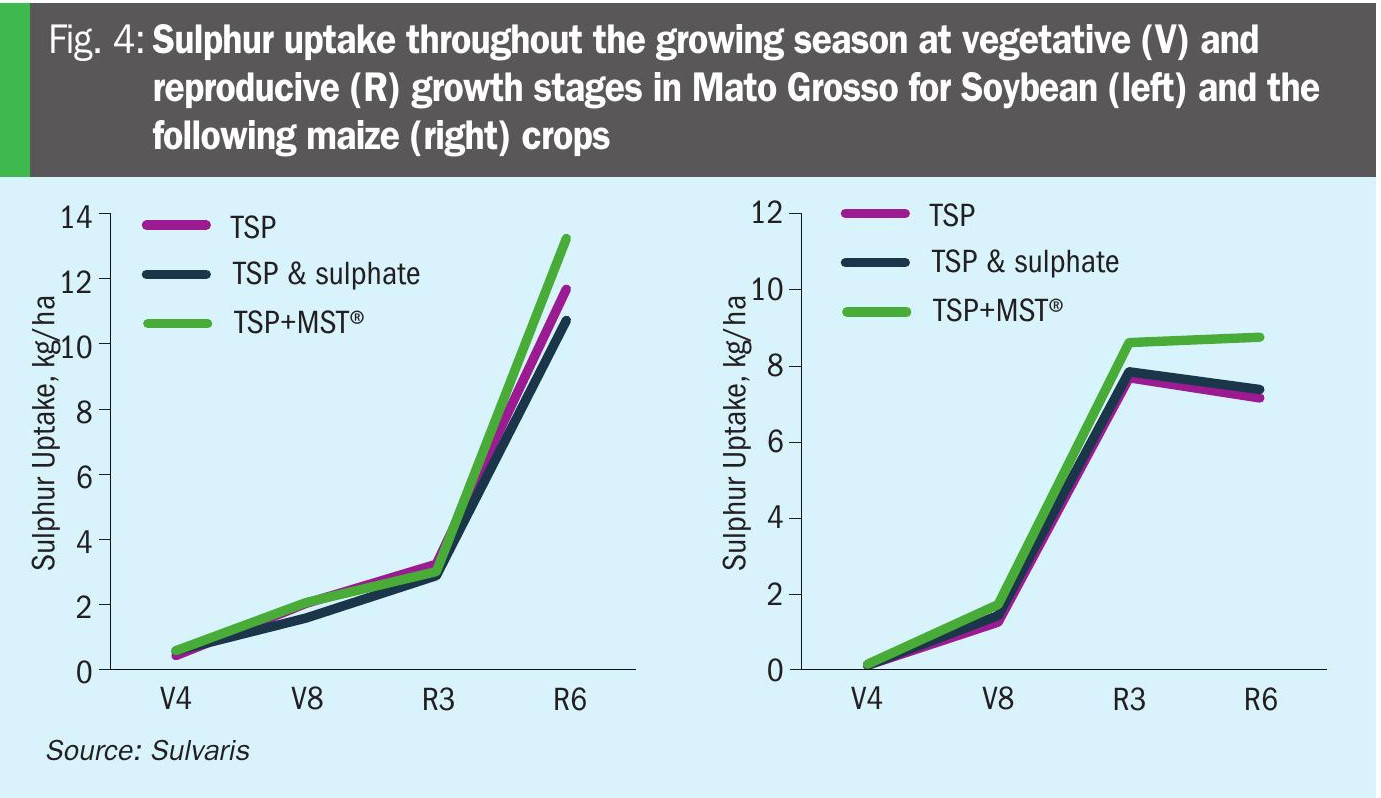
Therefore, in addition to yield, total sulphur uptake in biomass was measured at different critical vegetative and reproductive growth stages at the Mato Grosso location throughout the soybean and maize seasons (Figure 4). Results show a clear differentiation in sulphur uptake between sulphur sources. These confirm that having less sulphur in the crop affects the ability to produce grain yield – as well as other critical biochemical processes that impact everything from photosynthesis to plant defenses.
Implications for fertilizer management
Effective sulphur fertilization requires a balance between timely availability and retention within the root zone. Fertilizers that deliver sulphur availability through progressive oxidation help mitigate leaching losses while simultaneously maintaining crop access to sulphur throughout critical growth stages – this being especially evident in these trials.
This observation, which is not unique to Brazil, has international nutrient management implications and offers opportunities with global impact. Sulvaris has already explored the benefits of effective sulphur fertilization in over 400 agronomic trials globally on a wide range of crops and conditions.
Integrating sulphur directly into phosphorus fertilizers such as TSP also supports more economical and efficient nutrient delivery in regions where logistics and transport costs are significant. Higher nutrient density reduces the volume of material required to supply crop demand, while co-granulated formulations simplify application and improve handling characteristics.
About Sulvaris
Sulvaris is a leading provider of agricultural technology solutions. Through proprietary process technologies like MST® and CCT®, and field-ready systems like SAGE™, Sulvaris drives system-wide improvements in productivity, field-performance, and environmental impact. At Sulvaris, we are committed to Elevating Agriculture by Making Good Better™.