Asia

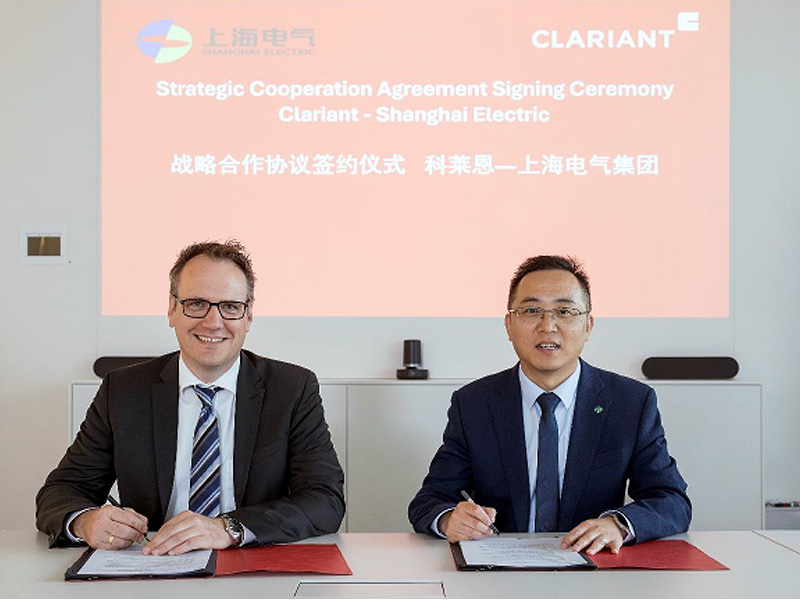
Signing in CIC, Frankfurt. Stephan Eckle, Clariant, Ni Jianjun, Shanghai Electric - copyright Clariant

Press Release: Clariant Catalysts and Shanghai Electric launch alliance to advance China’s energy transition


Clariant Catalysts’ Press Release: Munich, 29 July 2025

  • Shanghai Electric’s biomass-to-green methanol plant in China, started up successfully using Clariant´s MegaMax™ methanol synthesis catalysts
  • The project’s success has now evolved into a strategic cooperation agreement between Clariant and Shanghai Electric to foster China´s energy transition
  • Goal of the partnership is to facilitate and expand the production of green methanol, green ammonia, and sustainable aviation fuel in China

Clariant, a sustainability-focused specialty chemical company, today announced that it has signed a strategic cooperation agreement with Shanghai Boiler Works, a full subsidiary of Shanghai Electric, specializing in energy conversion and the development of new energy applications, to jointly foster innovation in sustainable energy solutions. The partners will combine their expertise to advance green energy projects in China. The agreement is the result of close and successful cooperation in Shanghai Electric’s new biomass-to-green methanol plant in Taonan, Jilin Province, China. In addition to supplying its MegaMax catalysts, Clariant provided technical on-site support during the successful startup of the 50,000 tons/y plant. The second phase of the project, with a capacity of 200,000 tons/y green methanol and 10,000 tons/y SAF, is expected to start production in 2027. The ceremony for the official signing of the partnership contract took place last week at the Clariant Innovation Center in Frankfurt, Germany.

Georg Anfang, Vice President at Clariant, commented, “We are proud to add China’s first biomass to green methanol plant in Taonan to a strong series of facilities that are already producing green methanol with our high-performance MegaMax catalysts. As China is becoming one of the frontrunners in the energy transition, our strategic alliance with Shanghai Electric will further strengthen Clariant´s footprint as a key enabler to produce clean energy, chemicals, and fuels.”

Qiu Jiayou, Vice President at Shanghai Electric, added, “We are proud of the successful launch of our new project and are equally delighted about our strategic agreement with Clariant, a company which understands and shares our vision for the future. Our teams look forward to joining forces to develop exceptional, sustainable energy solutions for customers around the globe.”
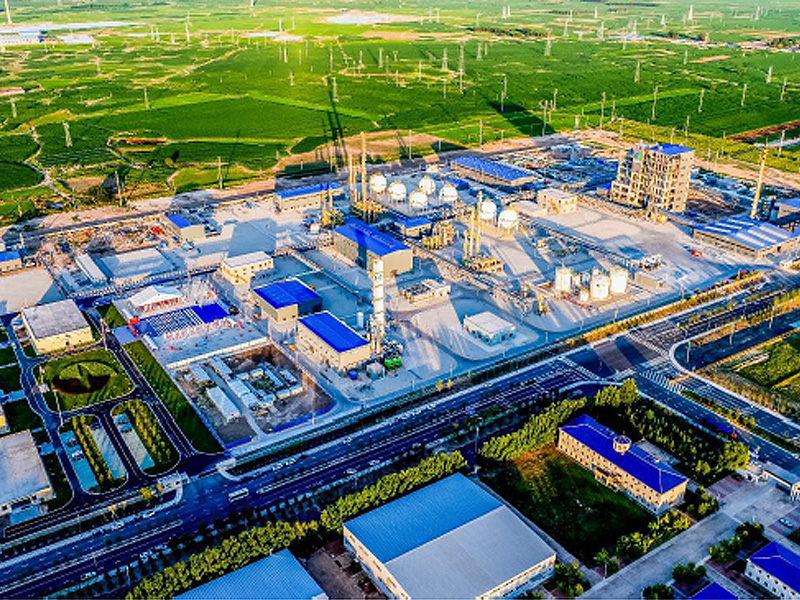
Green methanol plant Taonan, China. © Shanghai Electric

Shanghai Electric is a global leader in industrial and energy solutions, specializing in power generation and transmission, intelligent manufacturing, and automation systems.

The company leverages cutting-edge technological innovations to empower industries and deliver sustainable value.

The strategic cooperation agreement will unite Shanghai Electric’s process competence and plant design capabilities with Clariant’s catalyst expertise. The scope of the agreement includes collaborative research and development, engineering design services, supply of chemical equipment, and turnkey solutions. Clariant will share its extensive knowledge and advanced catalysts for producing green methanol, e-methanol, green ammonia, and sustainable aviation fuel, as well as for gas purification.
Latest in Asia

Manyar smelter faces supply issues

Freeport Indonesia may be forced to suspend operations at its Manyar smelter at the end of October due to a lack of copper concentrate, according to local press reports. The news follows the mudslide at the Grasberg mine in September, which killed seven workers. Grasberg, which represents almost 3% of global copper mine production, has halted production and Freeport says that it may not return to pre-accident operating rates until 2027. Stocks of copper concentrate at Grasberg were estimated to be only sufficient to operate the Manyar smelter until the end of October. The $3.7 billion Manyar smelter only resumed operations in May after a fire broke out in October last year, damaging the plant.

Government to limit new nickel projects

The Indonesian government has moved to limit new licenses for nickel projects in an attempt to correct overdevelopment of the industry and the subsequent crash in global nickel prices. The permit restriction applies to new nickel processing companies that produce intermediate products, both with pyrometallurgical (RKEF) and hydrometallurgical (HPAL) technologies. Currently, Indonesia already has 54 nickel processing plants operating, 38 in the construction stage, and 45 are still under planning.

Paradeep plans additional phosphoric acid capacity

Paradeep Phosphates Ltd (PPL) has announced a $400 million capacity expansion program, following its October 13th merger with Mangalore Chemicals & Fertilizers Limited (MCFL). This company says that the move aims to strengthen PPL's market position and enhance its production capabilities. The investment will involve increasing granulation capacity by 1.0 million t/a at the Paradeep site, as well as an additional 250,000 t/a of phosphoric acid and 750,000 t/a of sulphuric acid capacity at the company’s new Mangalore site. The expansion is expected to be completed within three years, according to PPL, and is expected to ensure 100% backward integration for fertilizer production, reduce import dependency, and enhance operational capabilities and profitability. low-contaminant phosphate concentrate that allows for easy conversion into purified phosphoric acid. The company has spent over C$100 million advancing the project and has received funding and investment from the Quebec Government.

METI funds hydrogen for steel and ammonia production

As part of the Japanese government’s Green Transformation scheme, two hydrogen producers have been selected to receive subsidies for low-carbon production projects. Out of the overall $1 trillion GX scheme, $51 billion is earmarked for hydrogen and ammonia investments, with the bulk going towards a long-term programme that subsidises the increased production costs. The first two recipients are a Toyota Tshuho-led consortium (electrolytic hydrogen for steel), and Resonac (hydrogen from used plastics for ammonia). In the programme, production projects are required to have the support of a major hydrogen consumer – in Resonac’s case, this is Japanese chemicals giant Nippon Shokubai, who will offtake the ammonia produced from lower-carbon hydrogen.