Fertilizer International 527 Jul-Aug 2025

Government revives Slavkaliy project


BELARUS

Government revives Slavkaliy project

The Belarusian government has nationalised and is fast-tracking the two million t/a capacity Slavkaliy project, according to local media reports on 23rd May, re-naming it Nedra Nezhin.

Having originally been due to enter production in July 2025, inaugural production from the project is now scheduled for 2026. Nedra Nezhin will then ramp up over the next few years.

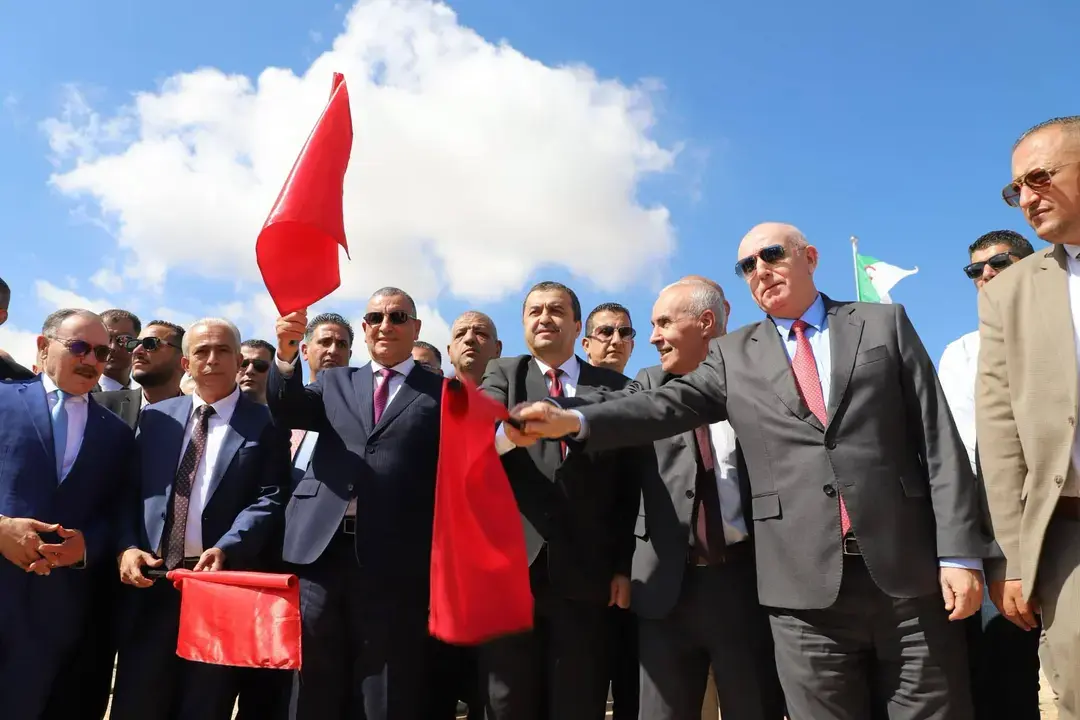
During an inspection visit to the mining and processing complex (Nezhinsky GOK) in Lyubansky district, Belarusian leader Aleksandr Lukashenko personally backed the completion of construction by the end of this year.

“We will finish the construction this year, as the construction manager promises… in the spring, at such a time, next year, we will already, as he says, drink champagne here,” said Lukashenko, the Sputnik news agency reported

“A private investor, investing his money, began construction. Then sanctions were imposed against him – Western sanctions – the Americans and Europeans. Then my decision was made: we will build ourselves,” Lukashenko added.

The Belarusian president inspected the construction of the mining and processing plant on 23rd May. Two production lines with a potassium chloride (MOP) design capacity of one million t/a tons are being built, with one line said to be about 90% complete. The project has also already commenced potash ore mining. More than three dozen Belarusian organizations are said to be involved in the construction efforts.

During the visit, Lukashenko also claimed that Belarusian potash fertilizer sales had now returned to their pre-sanction levels.

“They have imposed sanctions against potash fertilizers and what happened? Today [Belaruskali Director General] Andrei Rybakov reports that the potash fertilizer sales have reached the sales the pre-sanction levels. It is impossible to restrain the development of any country, even a small one, by sanctions. It is simply impossible,” Lukashenko said.

Latest in Commodity

Desulphurisation unit installed at Luján refinery

YPF says that its modernisation of the Luján de Cuyo refinery has taken a step forward with the installation of a hydrodesulphurisation reactor, designed to remove sulphur compounds from diesel fuel by means of a catalytic process using hydrogen. The installation forms part of the refinery’s New Fuel Specifications (NEC) project, intended to produce of fuels with a lower environmental impact. The new reactor was built in Mendoza by IMPSA. With a length of 38 meters and a weight of 456 tons, it was moved from Godoy Cruz to the YPF plant in a logistic operation that involved Vialidad Nacional, Mendoza Police and local authorities. It will now be integrated into the HDS II unit, designed to reduce sulphur content in diesel to 10 parts per million, in line with current environmental requirements. The NEC plan includes new process units, such as H2 II and SE33, the adaptation of existing facilities and the improvement of auxiliary services. The project, already 85% complete, will allow all the diesel oil produced in Luján de Cuyo to comply with the highest emission requirements.