Sulphur degassing – safety and economics
Sulphur degassing reduces hydrogen sulphide content in molten sulphur, which lowers toxic exposure risk, reduces the likelihood of explosive headspace conditions, and improves downstream handling.
Fluor discusses the unique challenges associated with transporting liquid sulphur through pipelines and presents key design considerations and operational strategies that enable safe, continuous and reliable long-distance operation.
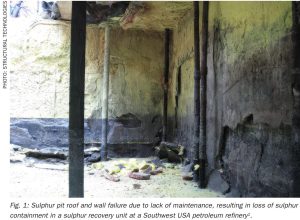
Structural Technologies outlines practical inspection, assessment, and repair strategies to maintain below-grade sulphur pits to help owner/operators maintain serviceability, extend asset life, and avoid costly process interruptions.
Retrofitting liquid sulphur treating into existing sulphur recovery units can significantly improve safety by reducing hydrogen sulphide in sulphur storage and handling, while also lowering the risk of toxic exposure and explosions. Worley Comprimo reviews proven treating technologies and retrofit options that can be implemented with minimal disruption to existing operations.
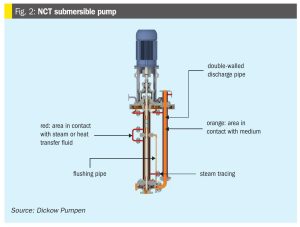
Liquid sulphur is a critical industrial feedstock, but its safe transfer is technically demanding. Dickow Pumpen maintains that reliable handling depends on a whole-system approach – integrating heating, piping, sealing, and operating procedures.
In sulphur handling facilities, deviations in product consistency are often an indication of issues impacting not only the quality of end product, but also the production process itself. In this article, IPCO explains why shape and quality really do matter.
A consortium of major oil companies lost another court appeal in Kazakhstan over an environmental fine of approximately $5 billion related to the storage of excessive amounts of sulphur, according to a court ruling on April 8th. The penalty was levied against the North Caspian Operating Co. (NCOC), operator of the giant Kashagan oil field, for allegedly violating environmental regulations by stockpiling sulphur.
The North Caspian Operating Company (NCOC), which operates the huge Kashagan oil field in Kazakhstan, has said that it is seeking international arbitration to resolve its ongoing dispute with the government of Kazakhstan. Kazakhstan has imposed a swingeing $4.6 billion fine for alleged violations of sulphur storage regulations at the NCOC site. In December, a special administrative court in Astana turned down an appeal by NCOC, although it also granted leave to appeal in a higher court. NCOC, a partnership between Shell, Eni, TotalEnergies, ExxonMobil, China National Petroleum Corporation, Inpex and Kazakh state oil and gas company KazMunayGaz, continues to maintain that its sulphur handling operations have been conducted in compliance with Kazakhstan’s laws and that it had the required permits in place.

The deficit in the sulphur market has led to a new focus on melting down and selling stockpiles of sulphur around the world. From Kazakhstan to Canada, stocks of sulphur have been shrinking.
Heartland Sulphur says that it has debottlenecked its crushed bulk sulphur remelting operations, increasing capacity by 40%. Heartland says that the increase boosts the company’s sulphur handling efficiency and service capability for producers and buyers. It has also completed a full feasibility study and retained engineering partners to add an additional 1,000 t/d of sulphur remelt capacity, slated to be fully operational by yearend 2026. Heartland Sulphur can form 4,500 t/d for offshore markets, transport molten sulphur by tank car to destinations across North America, and accept and condition sulphur in both molten and solid states. The company’s existing remelt capacity stands at 700 t/d and is projected to reach a total of 1,700 t/d (560,000 t/a) by the end of 2026.