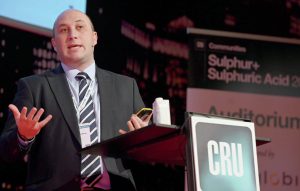
Sulphur+Sulphuric Acid 2024
A report on CRU’s annual Sulphur+Sulphuric Acid Conference, held in Barcelona, in early November.


A report on CRU’s annual Sulphur+Sulphuric Acid Conference, held in Barcelona, in early November.
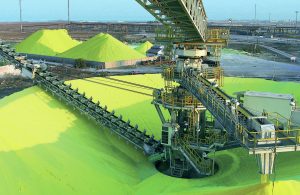
Transporting sulphur as a dry bulk solid can lead to it breaking into small particles which create dust. Over the years, various forming processes have been developed to try and minimise dust formation and produce the strongest, most resilient formed sulphur particles.
Join us at the CRU Sulphur + Sulphuric Acid 2024 Conference and Exhibition in Barcelona, 4-6 November, for a global gathering of the sulphur and sulphuric acid community. Meet leading market and technology experts and producers, network, share knowledge, and learn about market trends and the latest developments in operations, process technology and equipment.
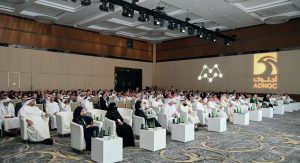
Representatives from across the global sulphur and sour gas community convened in Abu Dhabi from 20 to 23 May to discuss and debate the key strategic themes that are driving the industry. The Middle East Sulphur Conference (MEScon) is a premier event that brings together representatives from the entire sour gas and sulphur value chain to promote technology and innovation, lessons learned, best practices, knowledge transfer and R&D.

CRU and UniverSUL Consulting, together with the event host, ADNOC, are delighted to welcome you back for MEScon 2024 at the Conrad Abu Dhabi, Etihad Towers from 20 to 23 May 2024.
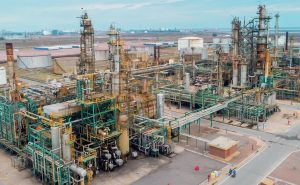
Tecnimont, part of MAIRE’s Integrated E&C Solutions business unit, has signed a letter of award with ADNOC for the onshore processing plant of the Hail and Ghasha Development Project. The award was signed at ADIPEC, the world’s largest energy summit. The project aims to operate with net zero CO 2 emissions, in part due to the facility’s CO 2 carbon capture and recovery units, which will allow the capture and storage of CO 2 . The project will capture 1.5 million t/a of CO 2 , taking ADNOC’s committed carbon capture capacity to almost 4 million t/a. The company recently announced its decision to double its carbon capture capacity to 10 million t/a by 2030. The Hail and Ghasha CO 2 will be captured, transported onshore and stored underground, while low-carbon hydrogen will be produced to replace fuel gas and further reduce emissions, according to ADNOC. The project will also use power from nuclear power plants and renewable sources from the grid.

A report on CRU’s annual Sulphur + Sulphuric Acid conference, held in New Orleans, USA, 6-8 November 2023.
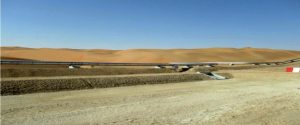
ADNOC Sour Gas highlights the best practices implemented in the newly commissioned liquid sulphur pipeline.
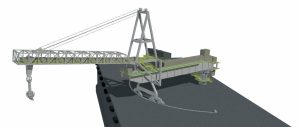
Bedeschi has been awarded a contract by Tecnicas Reunidas and Wison Engineering for the engineering and supply of new sulphur-handling equipment. Tecnicas Reunidas and Wison Engineering are working in a 70-30 joint venture partnership on the North Field Expansion Project (NFXP) Sulphur Project, which forms part of the overall Qatar North Field Expansion Project. Last year were awarded a $600 million contract to process and export sulphur from the projected expansion of the liquefied natural gas (LNG) facilities in Ras Laffan Industrial City. The new sulphur plant will have the capacity to process an average of 5,000 t/d of molten sulphur.
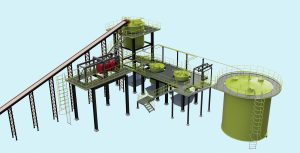
Sulphurnet discusses the importance of a whole life cycle cost analysis at the conceptual design phase when making investment decisions about new sulphur processing facilities.