Fertilizer Industry News Roundup
Preliminary engineering work has started on a renewable powerto-fertilizer plant in Kenya.

Preliminary engineering work has started on a renewable powerto-fertilizer plant in Kenya.

Polysulphate is an affordable, easy-to-use, multi-nutrient fertilizer with a low environmental impact. ICL’s chief agronomist, Patricia Imas, highlights the crop benefits of this natural and high-value product.

The European Union is seeking to create a climate-neutral and circular economy through its flagship Green Deal policy. The fertilizer industry can support these objectives by adopting inhibitor treatment technology (ITT) and controlled-release fertilizers (CRFs) based on biodegradable polymers. These two innovations have a vital role to play in improving nitrogen use efficiency and the shift towards more sustainable resource use, says Dr Matthias Potthoff of thyssenkrupp Fertilizer Technology.

Magnesium, a key constituent of chlorophyll, plays a vital role in plant photosynthesis and carbohydrate production. Commercial sources of this essential crop nutrient include Epsom salt, kieserite, langbeinite, magnesium chloride and magnesium nitrate.

We compare and contrast the 2020 financial performance of selected major fertilizer producers, following the publication of fourth-quarter results.

Although 2020 saw a contraction in GDP by 10% due to the impact of the coronavirus pandemic, the country had been one of the fastest growing of the world’s top 10 economies, with growth of 8.3% in 2016, although this had slowed to 4.1% in 2019. Its population is growing, and it is due to become the most populous country in the world by 2027 according to UN figures, with total population reaching 1.64 billion by 2050. The country thus continues to require more food, leading to rising sulphur/sulphuric acid consumption for the phosphate industry on the one hand, although increasing vehicle use and growth in domestic refining is also leading to some additional sulphur production.
Calgary-based Pieridae Energy Ltd says that it has hired a new Chief Operating Officer as from April 5th. Darcy Reding is a professional engineer with 30 years of experience in small and medium-sized private and public upstream oil and gas companies, 20 years of that in leadership roles. Reding spent the last decade at NAL Resources as VP of Operations and VP Operations & Geoscience. Prior to NAL, Reding held technical and leadership roles with Norcen Energy, Northrock Resources, Samson Exploration and Enterra Energy Trust.

Part 1 of a two part look at a potential sustainable future for the nitrogen industry, looking at sustainable nitrogen management and nutrient use efficiency.
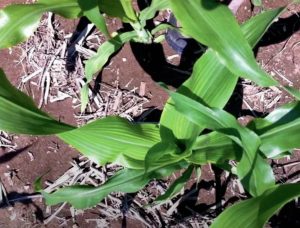
Ron Olson of The Sulphur Institute considers sulphur’s important role in plant health.

Kyle Lilly, senior product manager at Compass Minerals Plant Nutrition, outlines how a season-long approach to soybean crop nutrition can be created using a variety of tools. When combined together, these can optimise soybean fertilization and deliver impressive yields – as has been shown in both Brazil and the US.