Sulphur + Sulphuric Acid 2021
A look at papers presented at CRU’s annual Sulphur + Sulphuric Acid conference, which was once again held virtually, in November 2021.

A look at papers presented at CRU’s annual Sulphur + Sulphuric Acid conference, which was once again held virtually, in November 2021.
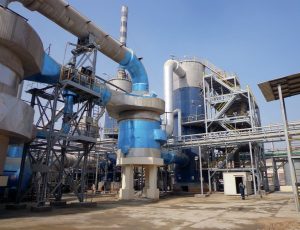
Developments in sulphuric acid technology and engineering know-how are highlighted by recent project case studies from DuPont Clean Technologies, Metso Outotec and thyssenkrupp Uhde.
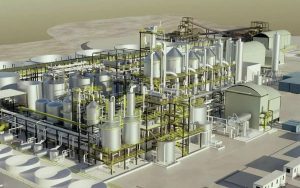
Lithium-boron miner ioneer Ltd has awarded DuPont Clean Technologies a contract for the license, engineering, and supply of proprietary equipment for a planned sulphuric acid plant at the company’s Rhyolite Ridge project in Nevada. DuPont will work with engineering partner SNC-Lavalin on the plant design, using MECS® sulphuric acid technology for the 3,500 t/d sulphur-burning unit, as well as controls that limit emissions to among the lowest in the world for this type of facility. DuPont will also supply its latest generation MECSSuper GEAR® ™ catalyst and other critical proprietary equipment. The contract is conditional on a final investment decision by the ioneer board of directors.
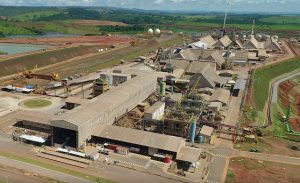
INEOS Enterprises has announced the completion of the sale of its Sulphur Chemicals business to International Chemical Investors Group, for an undisclosed sum. INEOS Sulphur Chemicals business is Spain’s largest dedicated manufacturer of sulphuric acid and oleum, serving clients in both agriculture and chemical intermediates via its 400,000 t/a plant in Bilbao. The business will become part of WeylChem’s advanced intermediates and reagents portfolio, which includes an existing sulphuric acid and oleum plant located in Lamotte, northern France. WeylChem is wholly owned by the International Chemical Investors Group (ICIG).
The International Fertilizer Association (IFA) says that Svein Tore Holsether has been elected as its new chair of the Association. IFA said in its press release that the selection of Holsether, the president and CEO of Yara International, is a continuation of the industry’s commitment to sustainability.
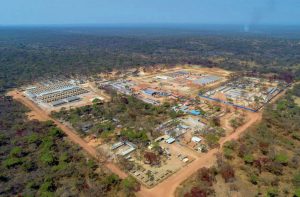
Production has begun at Ivanhoe Mines’ Kakula copper mine in the DRC. The company says that total production for this year is expected to be 80-95,000 t/a of copper in concentrate, with a phase two expansion to 400,000 t/a due to be completed by Q2 2022. Ivanhoe is working with China’s Zijin Mining on the development plan for phases 2 and 3 of the mine, as well as a feasibility study for the Kipushi zinc mine further to the east. Both projects lie close to the DRC’s southern border, with Angola and Zambia respectively. Phase 3 of Kamoa will lift capacity to an anticipated 600-800,000 t/a of copper in concentrate, making it the second largest copper mine in the world after Escondida in Chile. Canadian-based Ivanhoe expects to be digging 3.8 million t/a of ore at Kakula with 6% copper content in Phase 1.

The crushing and grinding of mined phosphate rock and potash ore is a vital preparatory step for subsequent beneficiation and chemical processing. Although often overlooked, the efficiency of downstream P & K fertilizer production is heavily reliant on successful particle size reduction upstream.
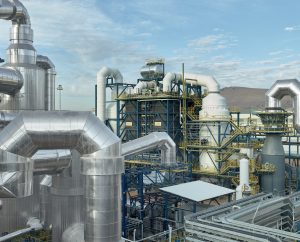
With declining ore grade feed to a metallurgical smelting process comes an increase in impurity load in the gas cleaning/acid process chain. K. Hasselwander, L. Skilling and C. Bartlett of Metso Outotec discuss a range of process solutions and how to maintain high productivity while keeping costs in check.
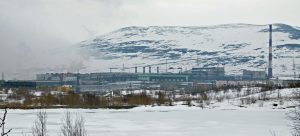
Ineos subsidiary Inovyn has announced the permanent closure of its ‘sulphur chemicals’ (mainly sulphuric acid) plant at its Runcorn site, and its withdrawal from the UK sulphur chemicals market. The company said in a statement that the decision follows a management review of the business in the light of recent events. Specifically, in October 2020, an unexpected interruption to the third-party power supply to the Runcorn site resulted in the plant being taken offline, and during restart, it was identified that a number of critical plant components had suffered significant damage. As a result, to ensure the safety and integrity of the plant it was taken back offline. Since then, in spite of significant effort and investment to rectify these issues, Inovyn says that it has become clear that it will not be possible to safely restart the plant for at least a further 18-24 months, and the company has decided to close the plant permanently.

Developments in sulphuric acid technology and engineering know-how are highlighted by recent project case studies from DuPont Clean Technologies, Metso Outotec and thyssenkrupp Uhde.