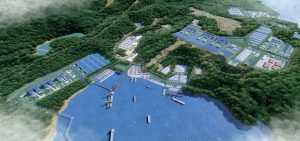
Indonesia’s nickel surge
The nickel market has been through a period of unprecedented change over the past few years due to demand for batteries for electric vehicles, with Indonesia becoming a centre for production via high pressure acid leaching.

The nickel market has been through a period of unprecedented change over the past few years due to demand for batteries for electric vehicles, with Indonesia becoming a centre for production via high pressure acid leaching.

KBR outlines some of the key modules of the KBR end-to-end digitalisation solution developed to overcome the challenges in green ammonia operation and achieve best in class, safe and reliable plant operation.

OCI Global says that it has reached an agreement for the sale of 100% of its interest in its large-scale nitrogen fertilizer subsidiary the Iowa Fertilizer Company LLC, located in Wever, Iowa, to Koch Ag & Energy Solutions for $3.6 billion. Completion of the transaction remains subject to US anti-trust approval and other customary closing conditions. The transaction is expected to close in 2024. Morgan Stanley & Co. International plc is serving as financial advisor to OCI on the transaction. IFCO produced 1.2 million t/a of urea ammonium nitrate (UAN) in 2021 and 700,000 t/a of anhydrous ammonia, as well as 700,000 t/a of diesel exhaust fluid (DEF).

Brazil is a powerhouse agricultural economy, ranking as a top three global exporter of soybeans, corn and sugar. It is also the world’s number one producer and exporter of oranges and orange juice – as highlighted in our current issue (p18).
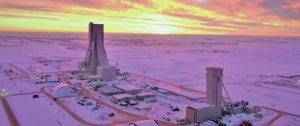
BHP has approved an investment of $4.9 billion (CAD 6.4 billion) in stage two of its Jansen potash project (Jansen Stage 2) in Saskatchewan, Canada.

Proman has signed a memorandum of understanding (MoU) with Mitsubishi Corp to collaborate on the development of a blue ammonia plant at Lake Charles, Louisiana. This new facility will aim to produce around 1.2 million t/a of low carbon ammonia, making it one of the largest of its kind in the world. The plant will incorporate carbon capture and sequestration technology. Proman says that this development aligns with the company’s commitment to sustainability and reducing greenhouse gas emissions. The proposed ammonia plant will be located at Proman’s existing site in Lake Charles, adjacent to its gas-to-methanol plant, which is also currently being developed.
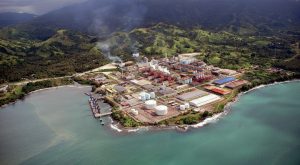
First Quantum Minerals Ltd. has contracted with MECS, Inc. (MECS), a subsidiary of Elessent Clean Technologies, for the Kansanshi smelter expansion at the Kansanshi mine at Solwezi. MECS’ scope of work will include a redesign of the existing sulphur-burning sulphuric acid plant into a copper smelter off-gas recovery sulphuric acid plant. This transition to a copper smelter off-gas recovery acid plant will enable First Quantum to reduce emissions from the existing copper smelter, increase production at the mine, and supply more copper to the global market, which will enable the adoption of greener technologies. MECS’ design for First Quantum incorporates proprietary technologies such as MECS® catalyst for low emissions and high conversion, Brink® mist eliminators, ZeCor® alloy towers and pump tank and UniFlo® acid distributor technology for operational reliability and efficiency.

The closure of CF Industries’ ammonia plant at Billingham, Teesside (see Industry News, page 8) marks the end of a long era for UK fertilizer manufacture. The facility was the last operating ammonia plant in the country, following CF’s decision to permanently close its site at Ince in Cheshire in June last year. Going forward, Billingham will now rely on imported ammonia as a feedstock to run the nitric acid and 625,000 t/a ammonium nitrate plants on the site.
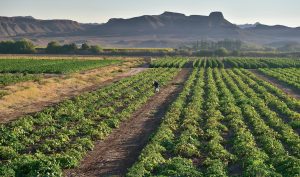
Prior to the covid pandemic, sub-Saharan Africa had been the fastest growing market for new fertilizer demand. However, the combination of pandemic related disruption, followed by the dislocations caused by the war in Ukraine, have pushed up prices and led to falling demand across the continent.

Ammonia production at Billingham in Teesside looks set to end, bringing to a close a history of production that dates back almost a century.