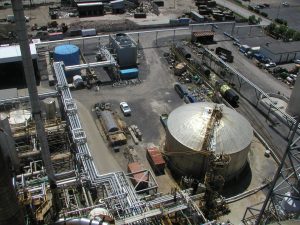
Sulphur degassing – safety and economics
Sulphur degassing reduces hydrogen sulphide content in molten sulphur, which lowers toxic exposure risk, reduces the likelihood of explosive headspace conditions, and improves downstream handling.


Sulphur degassing reduces hydrogen sulphide content in molten sulphur, which lowers toxic exposure risk, reduces the likelihood of explosive headspace conditions, and improves downstream handling.

Merichem Technologies has announced successful results from its ECOTREAT® field trial in the Permian Basin, demonstrating that its new hydrogen sulphide (H2S) removal process achieved sustained removal of > 99% of hydrogen sulphide gas without producing solid waste products. The new core technology uses an aqueous phase proprietary catalytic process that converts H2S into thiosulphate. […]
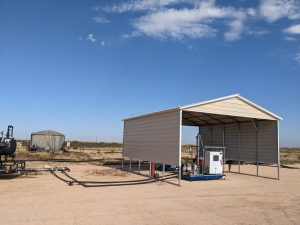
Thiozen Inc. has piloted a patented thermochemical process that removes hydrogen sulphide from sour gas while converting it into hydrogen.
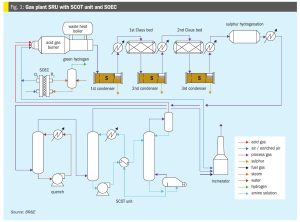
Rising hydrogen sulphide levels from souring reservoirs and high-sulphur crude oils are turning sulphur recovery units into major throughput bottlenecks in both gas plants and refineries. Bryan Research & Engineering presents oxygen enrichment as a practical debottlenecking strategy, with water electrolysis – especially alkaline water electrolysis and, to a lesser extent, solid oxide electrolysis – offering promising oxygen supply options.
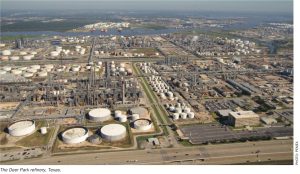
The US Chemical Safety and Hazard Investigation Board (CSB) has released its final investigation report into the fatal release of hydrogen sulphide at the PEMEX Deer Park Refinery in Texas in October 2024.

The Kuwait Oil Company (KOC) has awarded global oilfield services firm SLB a five-year integrated contract worth about $1.5 billion for the next phase of development at Kuwait’s Mutriba oil field. The contract covers design, development and production management work and builds on SLB’s existing subsurface studies of the Mutriba field. It includes development of high-pressure, high-temperature reservoirs with sour conditions, expanding SLB’s scope as the project moves into more technically complex stages. SLB says that the award reflects its long-standing partnership with KOC and gives the company end-to-end responsibility for planning and execution as field development progresses.
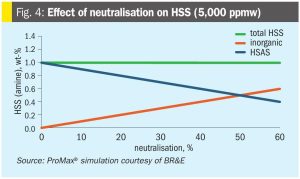
Bryan Research & Engineering (BR&E) and INEOS GAS/SPEC continue their review of neutralisation of heat stable salts. Part 2 focuses on how caustic (NaOH) affects amine chemistry and corrosion and the effects of adding too much NaOH.
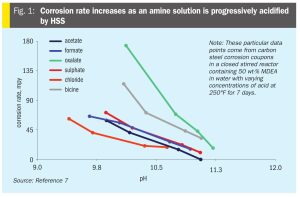
Joel Cantrell of Bryan Research & Engineering and Clay Jones of INEOS GAS/SPEC re-evaluate the historical practice of intentionally adding strong base such as caustic (NaOH) to amine with the purpose of improving performance and reducing corrosion by “neutralising” heat stable amine salts (HSAS) which have accumulated in the amine.
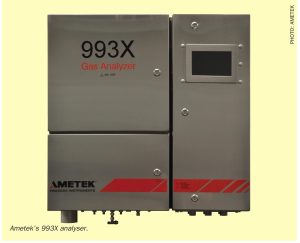
In other news, AMETEK says that its 993X series of analysers, encompassing the 993X and 9933, are now ATEX and IECEx Zones 1 and 2, and ETL (North America) Class I Division 2 compliant for use in hazardous locations with ambient temperature up to +60ºC. Built with IP66 rated enclosures, the 993X analysers can be installed outdoors, or in minimally temperature-controlled enclosures, reducing both capital and operating costs.
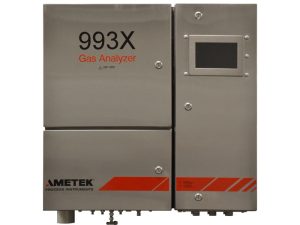
AMETEK Process Instruments - new certifications for 993X analyzer series