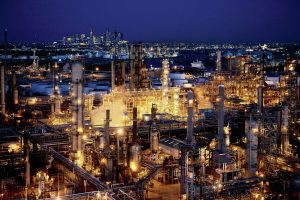
North American sulphur
Although North America is no longer the world’s largest sulphur exporter, it remains a major producer and consumer, and there are still significant exports and imports of sulphur into and out of the region.


Although North America is no longer the world’s largest sulphur exporter, it remains a major producer and consumer, and there are still significant exports and imports of sulphur into and out of the region.
China’s copper industry is facing difficulties caused by the coronavirus outbreak in the country. Prolonged factory closures, particularly in Hubei province, at the centre of the outbreak, as well as neighbouring Guangdong and Zhejiang, also badly affected, have caused a slump in demand for copper domestically as copper fabricators remain on extended closure. However, smelters have resisted cutting production. Daye Nonferrous, based in Huangshi at the centre of coronavirus outbreak, continues to operate at 80% of its 600,000 t/a capacity for 1Q 2020, according to the company, in spite of quarantine and transport restrictions which have reduced truck shipments to the smelter – Daye is reportedly still able to receive copper concentrate shipments via the Yangtze River to Huangshi port.

At the Nitrogen+Syngas Conference 2020, held in The Hague, Netherlands, Haldor Topsoe launched its new TITAN ™ series of steam reforming catalysts. The company says that the new series, which consists of the RC-67 TITAN and RK-500 TITAN catalysts, offers improved performance and longer catalyst lifetime thanks to the hibonite-rich composition. The addition of titanium promoters adds exceptional mechanical strength while a seven-hole cylindrical shape yields both a very low pressure drop and a high surface area. Pressure drop build-ups in syngas plants can cause unscheduled downtime and cost millions of dollars, while thermal instability during operation can lead to operational risk and reduce plant lifetime. Topsoe says that the catalysts can mitigate these risks, ensuring lower operating costs, increased profit margins, and reduced energy usage.
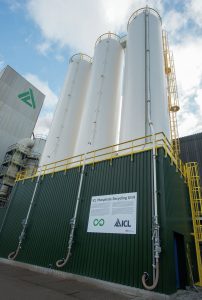
Leading nitrogen and phosphate producers, including ICL, OCP and Yara, have all launched major sustainable fertilizer production projects. The aim is to incorporate recovered nutrients or low-carbon feedstocks into their manufacturing processes.