People
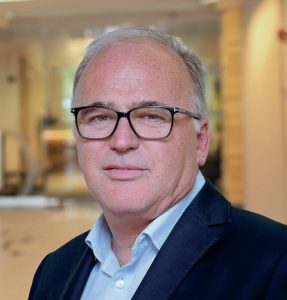
Leo Alders , the CEO of LAT Nitrogen, is the new president of Fertilizers Europe. He was elected with immediate effect at an extraordinary general assembly on 5th December last year.


Leo Alders , the CEO of LAT Nitrogen, is the new president of Fertilizers Europe. He was elected with immediate effect at an extraordinary general assembly on 5th December last year.

A summary of papers presented at CRU’s Nitrogen+Syngas conference, this year held at the Gothia Towers in Gothenburg, Sweden.

The US is experiencing a new boom in nitrogen projects, with a number of carbon capture ammonia plants under development.
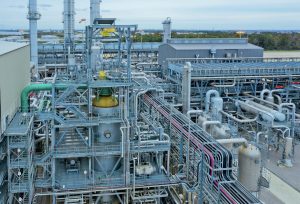
New blue production schemes are available to meet the need to significantly reduce the overall carbon intensity of high-volume hydrogen and ammonia production for a large-scale emerging market. KBR, Air Liquide, Mitsubishi Heavy Industries, Casale and Johnson Matthey report on their latest technologies.

Bruce Bodine will become the new CEO of The Mosaic Company from the 1st January 2024. He was unanimously elected by the company’s board of directors at the end of August. His appointment followed the announcement that the current CEO Joc O’Rourke will retire next year. Mr Bodine was also elected company president in August and appointed as a member of Mosaic’s board with immediate effect. He was previously the company’s SVP -North America.

CF Fertilisers UK Limited, a subsidiary of CF Industries, says that it plans to permanently close the ammonia plant at its Billingham fertilizer complex in order to secure the long-term sustainability of its business in the UK. The Company intends to continue to produce ammonium nitrate (AN) fertiliser and nitric acid at the Billingham site using imported ammonia, as it has for the last 10 months following its decision to temporarily idle the plant in August 2022.
Mining, metals and fertilizer business intelligence company CRU has launched a new low-emissions ammonia (LEA) price assessment in its Fertilizer Week price reporting service. The price takes a value-based approach, whereby a premium on the Northwest European ammonia price is calculated on an emissions-mitigated basis, and leverages CRU’s proprietary nitrogen asset emissions data combined with weekly European carbon prices to calculate the value of emissions mitigated. CRU says that it has leveraged its Emissions Analysis Tool to develop the premiums on an emissions-mitigated basis as opposed to a cost basis, allowing end-users to assess how the switch to LEA can deliver value to their business while contributing to their decarbonisation strategies. The Emissions Analysis Tool is a comprehensive asset-byasset emissions dataset for the nitrogen industry.

Continuing growth in energy uses indicate robust demand for methanol over the coming years, but the current slate of new projects does not look sufficient to meet it. Is methanol approaching a supply crunch?
Stamicarbon has won a contract for a large-scale urea project in China. The urea plant, with a production capacity of 3,800 t/d, will be the largest ever licensed by Stamicarbon in the country. The customer, the plant’s location and the value of the contract have not been disclosed.
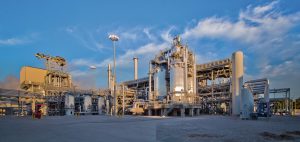
Air Liquide presents the results of an internal study to identify preferred natural gas-based plant configurations at a methanol capacity of 250 t/d. Delivering small capacity plants requires a focus on the total cost of ownership (TCO) for the economics to be successful, in addition to the CO 2 footprint of the operation. As found by this study, SMR concepts are naturally power balanced for standalone greenfield operations and show no particular advantage for power import in a brownfield setting. POX and ATR cases are greatly improved and even advantaged in a brownfield setting compared to SMR when shifting from power balance to power import cases.