
Codelco warns Chile’s copper output could stagnate
Copper production in Chile may stall at around 5.5 million t/a because of the growing challenges mining companies face, according to Maximo Pacheco, chairman of state-owned Codelco.


Copper production in Chile may stall at around 5.5 million t/a because of the growing challenges mining companies face, according to Maximo Pacheco, chairman of state-owned Codelco.
ADNOC Gas PLC has reported $1.39 billion in net income for 2Q 2025, up 16% year on year and a quarterly record for the company. Last year, the gas processing and sales arm of Abu Dhabi National Oil Co. logged its highest annual net earnings - $5 billion - due to rising natural gas demand in the United Arab Emirates. In particular, revenue from ADNOC Gas’s sulphur sales more than doubled to $96 million from $43 million.

YPF says that its modernisation of the Luján de Cuyo refinery has taken a step forward with the installation of a hydrodesulphurisation reactor, designed to remove sulphur compounds from diesel fuel by means of a catalytic process using hydrogen. The installation forms part of the refinery’s New Fuel Specifications (NEC) project, intended to produce of fuels with a lower environmental impact. The new reactor was built in Mendoza by IMPSA. With a length of 38 meters and a weight of 456 tons, it was moved from Godoy Cruz to the YPF plant in a logistic operation that involved Vialidad Nacional, Mendoza Police and local authorities. It will now be integrated into the HDS II unit, designed to reduce sulphur content in diesel to 10 parts per million, in line with current environmental requirements. The NEC plan includes new process units, such as H2 II and SE33, the adaptation of existing facilities and the improvement of auxiliary services. The project, already 85% complete, will allow all the diesel oil produced in Luján de Cuyo to comply with the highest emission requirements.

Topsoe has been selected as the renewable diesel technology partner for CountryMark’s Mount Vernon, Indiana refinery. Located in southwestern Indiana, the refinery processes 35,000 bbl/d of crude oil. With the addition of Topsoe’s HydroFlex technology, CountryMark aims to produce up to 250,000 barrels of renewable diesel annually. The new unit is expected to enable an emission avoidance of approximately 84,500 t/a of CO2 e. CountryMark, a farmer-owned cooperative, will use local soybean oil as the primary feedstock to produce renewable diesel, helping create a locally sourced renewable fuel economy in Indiana.

Marimaca Copper Corp. says that it has recently executed a binding asset purchase option agreement to acquire a used sulphuric acid plant in Chile from CEMIN Holding Minero. Sulphuric acid is one of the key input costs for the Marimaca Oxide Deposit, and the ability to produce a significant amount of its own supply will reduce exposure to a volatile acid market. The agreement has an exclusivity period of three months to allow further detailed technical and engineering reviews including capital and operating cost estimates for the installation and operation of the 150,000 t/a sulphuric acid plant, whose output would represent approximately 30-40% of total acid consumption at the Marimaca Oxide Deposit, depending on the phase of development. Marimaca says that, based on market research and quotations received, the estimated equipment cost of a new sulphuric acid plant of similar capacity is approximately $35-40 million, with a total installation cost of $50-60 million. The cost of breaking down and relocating the plant to the site at Mejillones and the start-up costs of the used plant are expected to be materially lower than cost of new equipment. Indicative operating costs show the potential for an approximately 30% reduction in acid cost relative to current long-term forecast and normal historical spot and contract acid prices delivered to Mejillones.
CSV Midstream Solutions says that startup of the Albright gas plant in Alberta is likely to be delayed due to issues with the sulphur recovery plant. Commissioninf began in June 2025, with expectations of full-scale operations to commence in July 2025. However, a faulty valve at the SRU has necessitated a root cause analysis for its failure. The plant will process 150 million cfd of sour gas once operational.
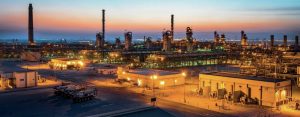
Saudi Aramco has signed an $11 billion lease and leaseback deal involving its Jafurah gas processing facilities with a consortium of international investors, led by funds managed by Global Infrastructure Partners (GIP), a part of BlackRock.
A formal signing ceremony has been held between senior company executives from KMG PetroChem, Tecnimont and the Kazakh government for the construction of the new Tengiz Gas Separation Complex (GSC) project. The ceremony was held at KMG PetroChem headquarters, in the Atyrau region of Kazakhstan. The Tengiz GSC project’s scope of work includes engineering, procurement, construction and commissioning works, with Tecnimont mainly responsible for the EPC works. Completion is expected by the first quarter of 2029. Once completed, the gas processed by the GSC will feed the Silleno petrochemical plant, another project currently being executed by Tecnimont in the region. The GSC is designed to recover at least 98% of ethane from dry gas, while the Silleno complex is expected to deliver high-quality petrochemical products. KMG PetroChem is a fully owned subsidiary of Kazakhstan’s national oil and gas company KazMunayGas.
Egypt’s Mineral Resources and Mining Industries Authority (MRMIA) has signed a memorandum of understanding with China’s Asia-Potash International Investment (Guangzhou) Co., Ltd. The MoU is designed to strengthen joint cooperation in exploring and assessing phosphate ore reserves. The objective is to maximise the added value of this crucial resource.

The El Teniente mine, located in the O'Higgins region, suffered a collapse on 31 July. The collapse in the Andesita sector of the mine is understood to have been as a result of seismic activity that registered 4.2 on the Richter scale. It remains unknown whether the seismic activity was caused by the mining operations or natural activity, according to industry sources. Underground operations are to be halted for an unknown period of time while the open air sector, which represents around 10% of the total production, will remain open, according to industry participants.