The Sulphur Institute at 65
The Sulphur Institute celebrates its 65th anniversary this year. In this article the organisation describes its lasting legacy and global impact.
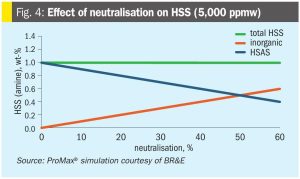
Joel Cantrell of Bryan Research & Engineering and Clay Jones of INEOS GAS/SPEC re-evaluate the historical practice of intentionally adding strong base such as caustic (NaOH) to amine with the purpose of improving performance and reducing corrosion by “neutralising” heat stable amine salts (HSAS) which have accumulated in the amine.
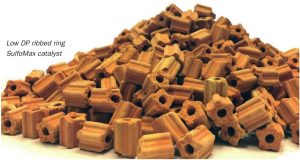
Platinum-promoted honeycomb catalyst bricks offer function as total oxidation catalysts that convert all oxidisable species under appropriate temperature and oxygen conditions. P&P Industries presents a case for a H2S-rich gas stream – relevant to the fibre industry, Claus offgas treatment, and other chemical sectors.
A full sulphur pit turnaround and rehabilitation is typically a once in a lifetime experience for refinery personnel. Specialists in sulphur pit turnarounds, Gavin Palmer of Brindley Engineering, Tom Kline and Bob Hall of Structural Technologies have compiled a database based on multiple sulphur pit turnarounds to identify typical deficiencies in mechanical systems, along with improvements to enhance operability, restore functionality and meet all codes/standards and best practices.
Continuous monitoring of sulphur recovery units (SRUs) has proven to be an excellent tool for energy optimisation and emissions reduction, yielding financial incentives in the form of CO2 credits and sustainability. Even in markets with limited CO2 credits, significant economic benefits can still be realised through reduction in utility consumption, as demonstrated by a recent collaboration between Worley Comprimo and PRefChem in Malaysia.
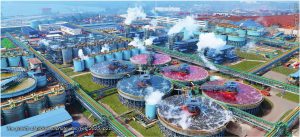
While sulphuric acid production is dominated by sulphur burning or metallurgical acid routes, pyrite roasting remains a niche sector, particularly in China.
Smelter outages and tight concentrate markets ease an oversupplied market.
While north Africa’s sulphur demand is dominated by its phosphate industry, south of the Sahara it is copper, cobalt and uranium mining, leaching and smelting that hold sway over acid production and demand.
Join us at the 2025 Sulphur + Sulphuric Acid Expoconference in The Woodlands, Texas, 3-5November, for a truly global gathering of the sulphur and sulphuric acid community, where leading market and technology experts and producers will gather to connect, share knowledge, exchange ideas and learn about market trends and the latest developments in operations, technology, processes and equipment.
Almost one third of sulphuric acid production, and a much greater share of globally traded acid, comes from smelting of base metal sulphides and the recovery of SO2 from flue gases. Smelter acid production continues to increase, particularly from copper, creating an imbalance in the sulphuric acid market.