
KPIs for blue hydrogen technology selection
NextChem compares KPIs and overall costs to evaluate the performance of several low carbon (blue) hydrogen production technologies. A detailed comparison of SCT-CPO, SMR and ATR technologies is reported.

NextChem compares KPIs and overall costs to evaluate the performance of several low carbon (blue) hydrogen production technologies. A detailed comparison of SCT-CPO, SMR and ATR technologies is reported.
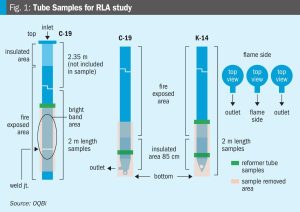
Muhammad Faisal Faraz and Abdullah Al Balushi of OQBi explain how by implementing a series of technical and process improvements, OQBi has successfully extended the lifespan of its reformer tubes by six years beyond the original design life of 100,000 hours.
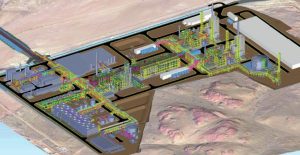
To cope with higher demand for green and blue ammonia, new ammonia terminals will be required and must be designed with respect to social and environmental challenges, as well as local permitting regulations and safety requirements. Saipem has developed a wide range of solutions to tackle those challenges and requirements by offering large-scale liquid ammonia storage and import/export terminal facilities supported on gravity based structures.

While green hydrogen and green ammonia promise to be important clean energy carriers in future, there are significant challenges to be overcome not only in production storage and transport, but also financially realising the project. Innovate technology from thyssenkrupp Uhde, embodied in standardised, pre-integrated, modularised plant can deliver low cost of ownership and de-risks execution.

M.J. Cousins of Johnson Matthey and K. Nölker of thyssenkrupp Uhde discuss the integration of LCHTM technology and the uhde® ammonia process in providing low carbon ammonia at scale, efficiently, reliably and safely today.

Risk analysis tools such as hazard identification (HAZID), is often a first step in broader risk management and is especially valuable for green ammonia, where new technologies and processes introduce novel risks. This article explores various aspects of HAZID, from the basics of hazard identification to unique considerations specific to green ammonia facilities.

A review of papers presented at CRU’s Nitrogen+Syngas 2025 Expoconference, held in Barcelona from February 10th-12th 2025.

A European ammonia plant, has successfully restarted following a revamp of the process gas cooling section, executed by Casale. Casale replaced the outdated boilers located downstream of the secondary reformer with three new double-tube type boilers supplied by Arvos. The new boilers were installed in the same location as the previous ones, minimising investment costs and plant modifications. The more robust and reliable design of the Casale-Arvos boilers has resulted in enhanced overall performance and reliability of the ammonia plant.

Paralloy has developed Omega technology, an advanced reformer tube design that enhances heat transfer, gas turbulence, and process efficiency. Dr Dominique Flahaut of Paralloy explores the real-world implications of Omega reformer tubes.

Esben Sørensen and Glenn Rexwinkel of Plug Power review the safety aspects of integrating hydrogen production by electrolysis into existing ammonia processes. Novel safety risks associated with such changes are surmountable and the analysis presented shows that green ammonia production can be no more hazardous than traditional ammonia production.