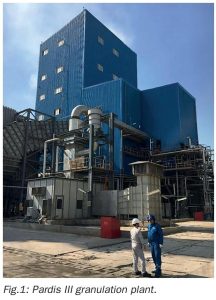
Optimising the finishing strategy for urea products
Stamicarbon has optimised urea granulation to meet rising global fertilizer demands by improving product robustness, reducing capital and operating costs through a simplified design.

Stamicarbon has optimised urea granulation to meet rising global fertilizer demands by improving product robustness, reducing capital and operating costs through a simplified design.
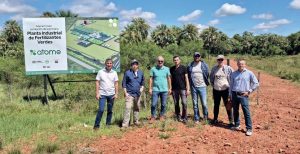
Casale’s high-performance finishing technologies combine flexibility and innovation with seamless integration and sustainability across the nitrogen fertilizer value chain. Gabriele Marcon and Ken Monstrey of Casale present the latest developments in Casale’s comprehensive portfolio of fertilizer finishing technologies and highlight recent projects.
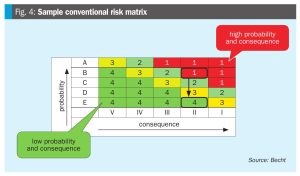
Becht’s Risk Based Work Selection (RBWS) process is a structured, data-driven method that uses risk and benefit-to-cost analysis to optimise turnaround and maintenance work in industrial facilities, resulting in significant cost savings and improved reliability.
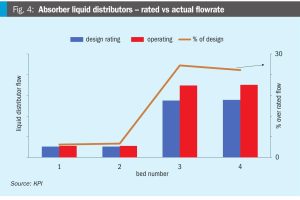
KPI describes the systematic revamp of a Benfield CO2 removal unit at a high-throughput ammonia plant, emphasising simulation-driven diagnostics and customised engineering solutions.
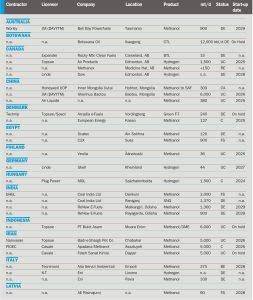
A round-up of current and proposed projects involving non-nitrogen synthesis gas derivatives, including methanol, synthetic/substitute natural gas (SNG) and gas- and coal to liquids (GTL/CTL) plants.
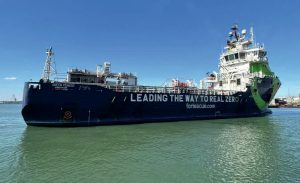
As well as a recent US Chemical Safety Board report on an ammonia release incident, the past year has seen considerable focus on safety of ammonia at sea, in preparation for its possible use as a clean burning maritime fuel.

This year’s International Methanol Technology Operators’ Forum (IMTOF) was held at the Holiday Inn Regents Park hotel, London, from June 15 to 18.
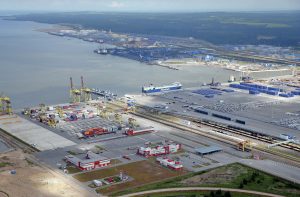
Increased merchant ammonia capacity over the next few years may lead to longer term price declines.
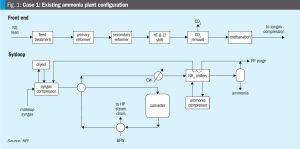
VK Arora of KPI examines the technical and operational challenges of decarbonising legacy and new ammonia plants, drawing on a European case study of full-scale conversion supported by robust process and integration design. It also presents three US case studies exploring partial strategies, such as green hydrogen blending and oxygen enrichment, to reduce CO2 emissions and improve throughput. Together, these examples highlight a phased, cost-effective approach to decarbonisation, with blue hydrogen serving as a near-term transitional feedstock.
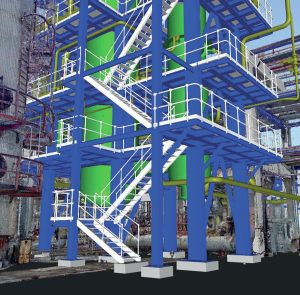
Casale is specialised in revamping natural gas-based methanol plants. Decarbonisation of methanol plants is a goal for many producers achievable with a proper revamping strategy. Pietro Moreo of Casale discusses how Casale’s innovative technologies and extensive experience ensure reliable efficient capacity and performance enhancements together with CO2 emissions reduction tailored to meet revamping project targets.