Category: Technology

Impact of heat recovery arrangement on package reliability

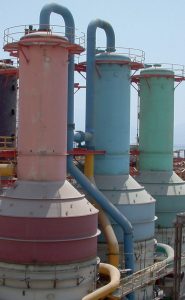
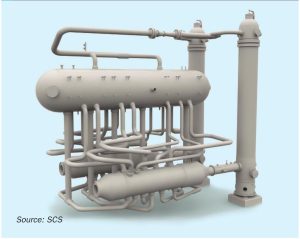
Dr M. Olbricht and Dr J. Weidenfeller of Schmidtsche Schack | ARVOS (SCS) discuss the impact of the heat recovery equipment arrangement in an ammonia plant downstream of the secondary reformer on reliable boiler operation. A detailed investigation was performed by SCS in response to an operator experiencing difficulties in maintaining water quality in this critical equipment. Water quality has a crucial impact on the lifetime and reliability of the equipment.
Hydrogen for fuel cell vehicles and stationary power

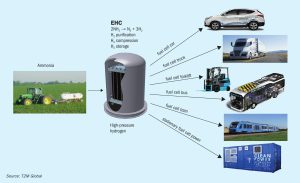
As the world focuses on clean fuels for the 21st century, there is an emerging opportunity to use ammonia as a source of hydrogen. Hydrogen fuel cells are expected to play a significant role as part of a clean energy portfolio. T2M Global and its development partner, SAFCell, are collaborating to develop a modular system to produce hydrogen from ammonia using a novel solid state separation system that does not require pressure or solvents. P. Patel of T2M Global, C. Chisholm of SAFCell and V. Pattabathula of Incitec Pivot explain the challenges, the opportunities and the current status of this new technology.

Degradation of chemical additives under downhole conditions

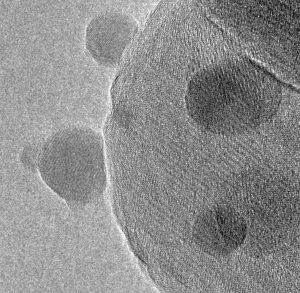
When producing from shale reservoirs, technologies such as horizontal drilling and hydraulic fracturing have been used successfully to access hydrocarbons that otherwise could not be. A less publicised issue in producing from certain hot shale gas reservoirs (T > 100°C) is the presence of H2 S and organo-sulphur compounds in the production fluids. In trying to understand the non-biogenic sources of H2 S, Alberta Sulphur Research Ltd has been involved in studying the decomposition of chemicals used in hydraulic fracturing when exposed to high temperature and high pressure.R.A. Marriott, J.J. Marrugo-Hernandez and R. Prinsloo of ASRL discuss the findings of the study.

Sustainable production of nitrates from renewable energy

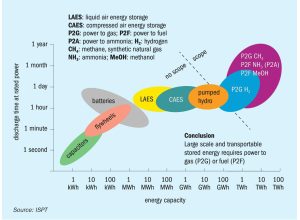
Paving the way for commercially attractive, sustainable, decarbonised fertilizer production, J. Dobrée of Stamicarbon BV discusses the latest developments for nitrate fertilizer production based on renewable feedstocks sourced from solar and wind energy. Stamicarbon has upgraded plant designs used in the past to create a new type of small-scale fertilizer plant capable of producing a product mix that can be adjusted to meet specific local requirements with maximised output value, thereby maintaining a competitive position towards imported products and large-scale producers.