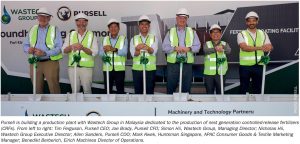
Pioneering Pursell goes international
Fertilizer International interviews Joe Brady, Pursell's Chief Financial Officer, ahead of the Southwestern Fertilizer Conference in Nashville in mid-July.

Fertilizer International interviews Joe Brady, Pursell's Chief Financial Officer, ahead of the Southwestern Fertilizer Conference in Nashville in mid-July.
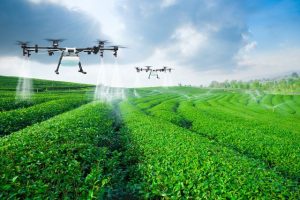
Vatren Jurin of DunhamTrimmer proposes a sophisticated methodology that accurately tracks the global value-added fertilizer market.
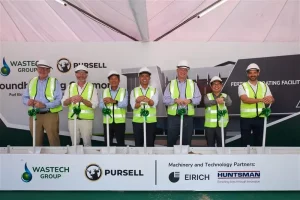
Pursell Agri-Tech is to build and operate a controlled-release fertilizers (CRF) plant in Malaysia.

The Sulphur Institute (TSI) held its World Sulphur Symposium in Florence from April 8th-10th.

Axens says that it has completed the expansion of its Axens Catalyst Arabia Ltd site, aimed at providing local and regional partners with the latest tail gas treatment catalysts, in addition to the site’s legacy catalyst hydroprocessing manufacturing capacity. This makes Axens is the first and only company to produce tail gas treatment catalysts in the Middle East. The company says that the expansion consolidates its capacity to serve its regional customers to meet regulatory requirements and maximise sulphur recovery by up to 99.9%, minimising SOx emissions. The production site supplies the region’s refining and gas industries with the latest generation of Axens’ catalysts, capable of operating at lower temperatures than conventional catalysts, and resulting in lower energy consumption.

Dr M.P. Sukumaran Nair, Director of the Centre for Green Technology & Management, Cochin, India and former Secretary to the Chief Minister of Kerala discusses the challenges facing India’s agriculture and fertilizer industry.
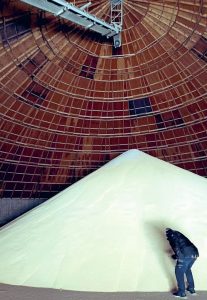
Mark Brouwer of UreaKnowHow.com reviews the main production options for incorporating sulphur into urea
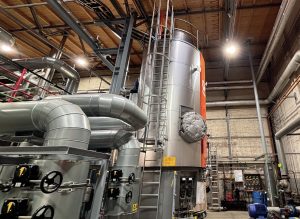
For the first time, K+S is offering farmers low-carbon potash and magnesium fertilizers.

Fertilizer International talks with Jakob Liedberg, the CEO of innovative potassium sulphate producer Cinis Fertilizer.

We compare and contrast the 2024 financial performance of selected major fertilizer producers following the publication of fourth quarter results.