Fertilizer Industry News Roundup
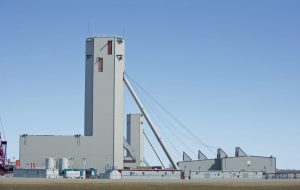
BHP has finally given the go ahead for stage one of its Jansen potash mine project in Saskatchewan, Canada.


BHP has finally given the go ahead for stage one of its Jansen potash mine project in Saskatchewan, Canada.

OCI subsidiary Fertiglobe says that it has partnered with the Abu Dhabi National Oil Company (ADNOC), to enable the sale by ADNOC of the first cargo of blue ammonia to Itochu in Japan, for use in fertilizer production. Fertiglobe, a 58% − 42% partnership between OCI and ADNOC respectively, will produce the blue ammonia at its Fertil plant at Ruwais in Abu Dhabi for delivery to ADNOC’s customers in Japan. This represent the first production milestone of a planned scale-up of blue ammonia production capabilities in Abu Dhabi, which is expected to include a low-cost debottlenecking program at Fertil. In addition, it was announced in June that Fertiglobe will join ADNOC and sovereign wealth fund ADQ as a partner in a new world-scale 1.0 million t/a blue ammonia project at Ta’Ziz in Ruwais, subject to regulatory approvals. The design contract for this project has been awarded, with a final investment decision expected in 2022 and start-up targeted for 2025. A feasibility study was also agreed in July betweenh the state-owned Japan Oil, Gas and Metals National Corp. (Jogmec), Inpex and JERA as well as ADNOC to explore the possibility of producing 1.0 million t/a of blue ammonia in Abu Dhabi and transporting it to Japan.
The UK has published its Hydrogen Strategy, setting out the government’s ambition to create a low carbon hydrogen sector, with up to one third of the UK’s energy consumption being hydrogen-based by 2050. The commitments set out in the strategy unlocks £4 billion of government investment by 2030. The government plans 5GW of low carbon hydrogen production capacity and the establishment of carbon capture, use and storage (CCUS) in four industrial clusters by 2030, as well as blending of hydrogen into the existing gas network and a ‘twin-track’ approach to hydrogen production, using both electrolytic and CCUS-enabled low carbon hydrogen production in order to scale up production in time to meet the UK’s 2030 and 2050 carbon emissions targets.
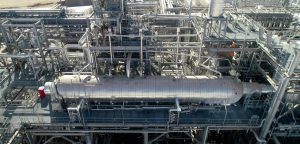
Although the stranded gas boom that led to the construction of the region’s nitrogen capacity in the 1980s-2000s may be largely over, the Middle East remains the largest nitrogen exporting region in the world.
India’s power and renewable energy minister RK Singh has placed draft plans before the cabinet for the country’s refining and fertilizer sectors to switch to renewable ‘green’ hydrogen feeds. Other energy intensive sectors such as steel and transport are likely to follow. The policy suggests that refiners must have 10% of their hydrogen consumption generated from renewable electricity by the end of financial year 2023-24, rising to 25% by 2030. The comparable figures for ammonia/urea production are 5% and 20%, respectively. India is pursuing some of the world’s most ambitious renewable energy targets of 175 GW of renewable energy capacity by the end of 2022 and 450 GW by 2030.
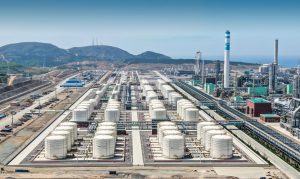
China is the world’s largest importer of sulphur, mainly to feed domestic phosphate production. Sour gas in Sichuan and new refinery production, coupled with rationalisation in the phosphate sector are all leading to reduced imports, while new smelters are increasing sulphuric acid production and reducing the need for pyrite-based and sulphur burning acid production.
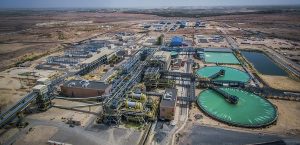
As well as Morocco, Egypt, Algeria and Tunisia all have major phosphate industries, and all of these countries have plans to expand their capability to extract and process phosphates, though Algeria and Tunisia remain hampered by political instability.
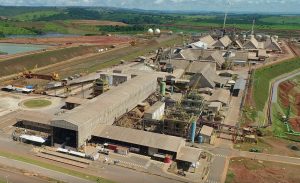
INEOS Enterprises has announced the completion of the sale of its Sulphur Chemicals business to International Chemical Investors Group, for an undisclosed sum. INEOS Sulphur Chemicals business is Spain’s largest dedicated manufacturer of sulphuric acid and oleum, serving clients in both agriculture and chemical intermediates via its 400,000 t/a plant in Bilbao. The business will become part of WeylChem’s advanced intermediates and reagents portfolio, which includes an existing sulphuric acid and oleum plant located in Lamotte, northern France. WeylChem is wholly owned by the International Chemical Investors Group (ICIG).
Preliminary engineering work has started on a renewable powerto-fertilizer plant in Kenya.

A consortium has unveiled plans to build one of the largest green hydrogen plants in the world in a bid to make Oman a leader in renewable energy technology. The $30 billion project is being developed by Oman’s state-owned oil firm OQ, green fuels developer InterContinental Energy and Kuwait government-backed renewables investor EnerTech. Construction is scheduled to start in 2028 in Al Wusta governorate on the Arabian Sea. It will be built in stages, with the aim to be at full capacity by 2038, powered by 25 GW of wind and solar energy. Two years has already been spent on solar and wind monitoring analysis for the development. According to the consortium, the site chosen has the optimal diurnal profile of strong wind at night and reliable sun during the day, and is also located near the coast for seawater intake and electrolysis.