
Nitrogen+Syngas Expoconference 2025
A review of papers presented at CRU’s Nitrogen+Syngas 2025 Expoconference, held in Barcelona from February 10th-12th 2025.

A review of papers presented at CRU’s Nitrogen+Syngas 2025 Expoconference, held in Barcelona from February 10th-12th 2025.

P r esident Trump’s flurry of activity in his first month of office has not only upended the global political order that has existed, more or less, since the US rearranged it to its satisfaction in 1945, but has also had a seismic impact on world trade. How the various strands of US policy will play out remains highly uncertain, but some clear trends are beginning to emerge.

New carbon capture-based plants could see US nitrogen capacity jump over the next few years, but Trump attacks on IRA tax credits may scupper some ongoing projects.

Glencore says it is working with the Queensland government to secure the future of the Mount Isa copper smelter. The company had previously indicated that it would close the smelter in 2030, but recent media reports suggest that the government is looking at assistance to keep the smelter operational, which currently treats more than 1 million t/a of copper concentrate and supplies sulphuric acid to other industries locally, including phosphate production.
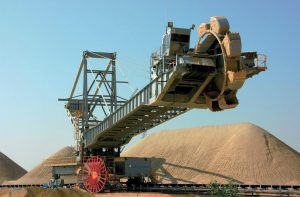
Tight supply limits availability as China maintains export restrictions.
The Chinese government has issued a development plan for the country’s copper smelting industry covering the years 202527 which is looking to reduce the level of overcapacity in the sector. New copper smelters must now control sufficient copper mine supply via ownership or equity stakes to cover their production requirements, something few smelters do at present. Chinese smelter output has reached record levels, with treatment charges falling to historically low levels as producers compete for copper concentrate – China imports around 85% of its copper concentrate. Meanwhile more smelter capacity is planned, with around 1 million t/a of new capacity scheduled for 2025. The country aims to boost domestic copper mine resources by 5% to 10% in three years to secure raw material supply, according to the government plan. China will also encourage copper smelters to sign long-term purchase agreements with global miners, boost imports of copper blister and anode, and encourage scrap imports.
The past few weeks have seen sulphur prices spiking after a steady rise since 3Q 2024. At time of writing, delivered prices to a variety of locations were around $280/t c.fr, their highest level since mid-2022 when the price of commodities of all kinds jumped in the wake of the Russian invasion of Ukraine and subsequent sanctions. Steady buying from Indonesia and China, the two largest importers of sulphur, appears to have supported the market, in China’s case mainly for phosphate production as well as a variety of industrial processes, and in Indonesia’s case to feed the high pressure acid leach (HPAL) plants that are producing nickel for the battery and stainless steel industries. Although Chinese buying has dropped off slightly since Lunar New Year, and demand has also slackened in India, Indonesia’s appetite continues unabated, having tripled its nickel production since the start of the decade to become the world’s largest producer, representing 60% of global supply in 2024.
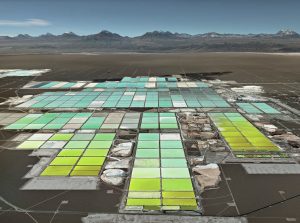
Rapidly increasing lithium production is projected to require several million t/a of sulphuric acid in the next few years, with China, the USA and Australia the main consumers.
Russia is considering limiting potash exports from the second quarter of 2025.
The European Commission is proposing to place tariffs on EU fertilizer imports from Russia and Belarus.