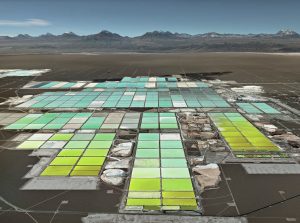
Lithium production and acid demand
Rapidly increasing lithium production is projected to require several million t/a of sulphuric acid in the next few years, with China, the USA and Australia the main consumers.

Rapidly increasing lithium production is projected to require several million t/a of sulphuric acid in the next few years, with China, the USA and Australia the main consumers.

We profile North America's phosphate and potash industries – focusing in on Florida and Saskatchewan, those two centres of P&K excellence.

Nitrogen+Syngas went to press just a few days before Donald Trump’s swearing-in as the next president of the United States. While it is sometimes difficult to sort the truth from the hyperbole in his public pronouncements, nevertheless, if taken at face value, they would seem to indicate that we may be in for a turbulent four years in commodity markets in particular. While he is an avowed military non-interventionist, on the economic policy side he has emerged as a firm believer in the power of tariffs to alter markets in the favour of the US, and has promised 20% tariffs on all goods entering the US, potentially rising to 25% for Canada and Mexico, and 60% for his particular bugbear, China, sparking a scramble for wholesalers to stock up in the last few weeks of the Biden presidency. Trump previously raised tariffs on Chinese goods entering the US to 20% during his first term, and the Biden administration made no attempt to reverse this, and even added some additional ones, for example 20% on Russian and Moroccan phosphate imports.

Dr Karl Wyant of Nutrien outlines how the phosphorus and potassium removed during soybean/corn rotations are best replenished.

Soybean growers are increasingly turning to biostimulants and micronutrients such as boron to achieve yield gains.
NextChem has been awarded two contracts to upgrade and expand the capacity of the Heydar Aliyev Oil Refinery (HAOR) industrial complex in Baku by state oil company SOCAR. As part of the contract, NextChem will conduct a technological assessment and deliver a process design package to upgrade the existing sulphur recovery unit (SRU) with oxygen enriched air, a cost-effective and flexible solution for expanding its current sulphur production capacity. Additionally, NextChem will provide the licensing and the process design package based on its proprietary NX SulphuRec TM technology for a new SRU. NX SulphuRec TM is a portfolio of proprietary sulphur recovery technologies, based on the integration of modified Claus and tail gas treatment processes, aimed at reducing the environmental impact of acid and sour gases produced during the refining process.
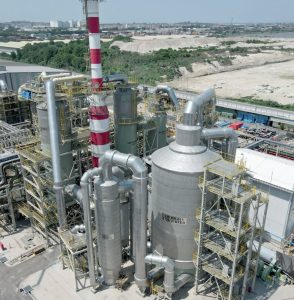
Short term supply constraints are dominating acid markets at present, but increasing smelter production across Asia may lead to oversupply in the longer term.

QatarEnergy has announced its decision to build a new, world-scale urea production complex that will more than double Qatar’s urea production. The project is aiming to construct three ammonia production lines which will supply four new world-scale urea production trains in Mesaieed Industrial City. Total capacity for the new complex is projected to be 6.4 million t/a, more than doubling Qatar’s annual urea production from about 6 million tons per annum currently to 12.4 million tons per annum. Production from the project’s first new urea train is expected before the end of this decade.
OCP Group has launched what it calls the Mzinda-Meskala Strategic Programme, aimed at significantly expanding fertilizer production in the country. Initially announced in December 2022, the program is set to enhance production capacity in two key regions: the Mzinda-Safi Corridor and the Meskala-Essaouira Corridor. This initiative is part of OCP’s broader strategy to meet growing global demand for fertilizers while committing to long-term sustainability goals, including achieving carbon neutrality by 2040.

Methanex Corporation has entered into a definitive agreement to acquire OCI Global’s international methanol business for $2.05 billion. The transaction includes OCI’s interest in two world-scale methanol facilities in Beaumont, Texas, one of which also produces ammonia. The transaction also includes a low-carbon methanol production and marketing business and a currently idled methanol facility in the Netherlands.