
Morocco’s new acid capacity
Morocco’s OCP is continuing to expand its phosphate fertilizer production capacity. This includes the construction of new sulphur-burning acid capacity to support phosphate production and provide carbon-free power.


Morocco’s OCP is continuing to expand its phosphate fertilizer production capacity. This includes the construction of new sulphur-burning acid capacity to support phosphate production and provide carbon-free power.

CRU and UniverSUL Consulting, together with the event host, ADNOC, are delighted to welcome you back for MEScon 2024 at the Conrad Abu Dhabi, Etihad Towers from 20 to 23 May 2024.

Although global ammonia supply is set to increase this year, there is a shortage of new merchant capacity after 2024 which may lead to rising prices in the medium term.
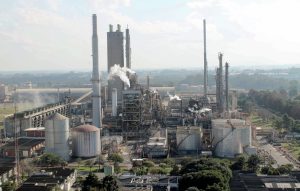
The board of Petrobras has approved the resumption of operations at the company’s Araucária Nitrogenados SA (ANSA) site at Araucaria, Parana state. The plant, which has the capacity to produce 475,000 t/a of ammonia and 720,000 t/a of urea, has been idled 2020.
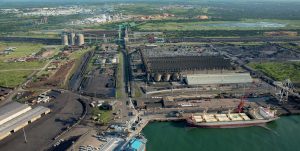
Qatar construction services company UCC Holding has signed a memorandum of understanding with the Kazakh Ministry of Energy for a gas treatment plant at the Kashagan field with a capacity of 6 billion cubic meters as part of the Phase 2B expansion. The memorandum was signed by Minister of Energy Almassadam Satkaliyev and Mohamed Moutaz Al Khayyat, chairman of UCC Holding.

In January, Kazakh uranium producer Kazatomprom warned of potential adjustments to its 2024 uranium production due to challenges with sulphuric acid availability and construction delays at new uranium mining operations. In a statement the company said that its projected uranium output for 2024 will be between 21,000 t/a and 22,500 t/d U3 O8 , around 20% lower than the amount it had been expecting to be able to mine. Kazatomprom’s uranium output was 21,100 t/a U3O8 in 2023, down 1% on 2022 figures, with output flat during 4Q 2023. While it said it had sufficient inventory in stock to cover contracted deliveries in 2024, there could be problems for 2025 deliveries.

Paradeep Phosphates Limited (PPL) and Mangalore Chemicals & Fertilizers Limited (MCFL) have agreed to merge.
Indian fertilizer producers Mangalore Chemicals & Fertilizers (MCFL) and Paradeep Phosphates (PPL) have announced that the companies intend to merge, allowing them to consolidate their operations, according to a company statement. The new merged company, to be called PPL, will have a total production capacity of 3.6 million t/a of fertilizers.
Freeport Indonesia has inaugurated the $250 million expansion at its PT Smelting copper smelter in Gresik, East Java, in a ceremony attended by Indonesian president Joko Widodo. Smelting, a joint venture between Freeport McMoRan and Mitsubishi Materials, has increased copper concentrate processing capacity to 1.3 million t/a, up from the previous figure of 1.0 million t/a, with copper cathode production of 300,000 t/a.
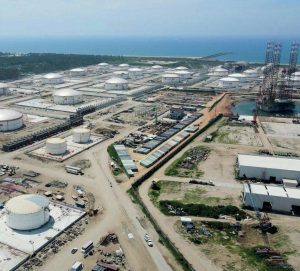
US domestic oil production has surged during 2023, reaching 13.3 million bbl/d in December, a record not just for the US but for any single country’s oil production. Adding in natural gas liquids and biofuels takes overall liquids production to 21.4 million bbl/d. Exports are also running at record levels, around 6 million bbl/d. This is a remarkable turnaround from 2008, when production was less then 5 million bbl/d and exports essentially zero. Furthermore, non-OPEC production is continuing to expand, with Brazil reaching 3.4 million bbl/d of oil production and 4.2 million bbl/d of liquids, and Canada producing 4.8 million bbl/d of crude and 5.7 million bbl/d of total liquids, keeping oil prices moderated in spite of OPEC+ production cuts. Global oil production is expected to reach a record level in 2024, with non-OPEC+ liquids growth projected to increase by 2.7 million bbl/d, far more than demand growth of 1.6 million bbl/d. n