
Merchant-grade acid (MGA) preparation and logistics
Avoiding solids settling and sludge formation during MGA transport is vital, say Jan Tytgat , Process Engineering Manager, De Smet Agro.


Avoiding solids settling and sludge formation during MGA transport is vital, say Jan Tytgat , Process Engineering Manager, De Smet Agro.
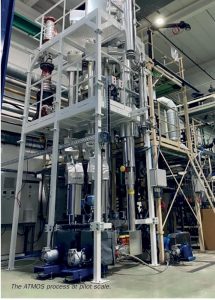
Co-developed by GEA and Yara, the ATMOS process is an advanced heat integration technology for concentrating phosphoric acid.

Your complete conference guide including technical programme highlights, the full conference agenda, plus exhibition plan and exhibitor profiles.
CRU will convene the 2026 Phosphates+Potash Expoconference in Paris, France, at the Paris Marriott Rive Gauche Hotel, 13–15 April.
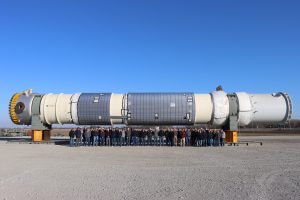
A huge CASALE converter has been installed at Koch's Beatrice, Nebraska, fertilizer plant, after completing a mammoth 6,000-mile journey.
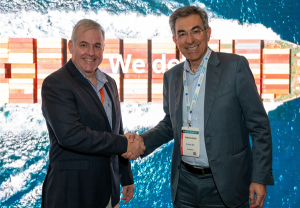
Casale and Paralloy Group have signed a strategic Memorandum of Understanding (MoU) at the recent CRU Nitrogen+Syngas 2026 Conference in Barcelona to jointly commercialise ...

Day two of CRU’s Nitrogen+Syngas Expoconference 2026 saw the conference move into its technical sessions, run in three parallel streams covering everything from low carbon hydrogen production, sustainable plants, emissions reductions, carbon capture, ammonia plant operations, syngas and methanol production to asset safety and maintenance. Blue ammonia One of the things that struck me most, […]
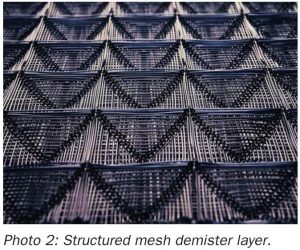
Begg Cousland Envirotec reviews different mist eliminator types and some of the operational problems encountered which can be managed by correct installation, targeted cleaning or replacement, and selecting appropriate corrosion-resistant materials.
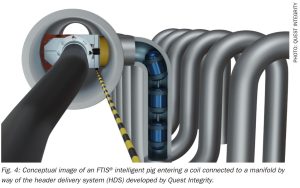
The convection section of a syngas reformer is vulnerable to creep, corrosion, erosion, fretting and fouling which can cause deformation, local metal loss and failures that risk plant shutdown. Inspection access is limited, but solutions are available. Quest Integrity discusses life management of the reformer convection section to reduce unplanned outages.

Greene Tweed, a leader in advanced materials and high-performance solutions, says it has achieved a significant advancement in hydrogen compression technology. The company’s newly engineered composite closed impeller set a record-breaking tip speed of 688 m/s in testing – nearly double that of traditional metallic impellers. The innovation highlights the potential of advanced composite materials to enhance performance, reduce costs, and improve efficiency in critical hydrogen pipeline infrastructure, specifically the transportation, storage and utilisation market segments.