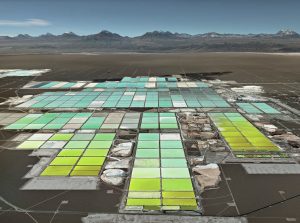
Lithium production and acid demand
Rapidly increasing lithium production is projected to require several million t/a of sulphuric acid in the next few years, with China, the USA and Australia the main consumers.

Rapidly increasing lithium production is projected to require several million t/a of sulphuric acid in the next few years, with China, the USA and Australia the main consumers.

ADNOC Gas has appointed Fatema Al Nuaimi as its new Chief Executive Officer, effective January 1st, 2025. This appointment follows the resignation of Ahmed Alebri, who led the company for nearly two years and has assumed the role of CEO at ADNOC Sour Gas. Al Nuaimi, an accomplished industry leader with extensive experience within ADNOC’s gas and energy sectors, is tasked with steering ADNOC Gas’ ambitious growth strategy focused on business expansion, decarbonisation, and future-proofing operations.

Days 2 and 3 of the CRU’s 38th Nitrogen+Syngas 2025 Expoconference turned to the technical sessions, organised in three parallel streams covering: green ammonia technology, nitric acid and ammonium nitrate, plant operations and reliability, urea technology, digitalisation, carbon capture, emissions reduction and sustainable fertilizer production, and fertilizer finishing.

Ammonia markets saw a slow start to 2025, with further transparency needed on both sides of the Suez to determine the extent to which prices are expected to fall through January amid healthy supply and only limited pockets of demand.

High energy storage costs for renewable-based technologies are likely to make European long term carbon prices considerably higher than their present levels.
A foundation laying ceremony attended by Qatar’s Deputy Amir Sheikh Abdullah bin Hamad Al Thani has been held at Qafco’s new blue ammonia facility at Mesaieed Industrial City on Qatar’s east coast. The plant, which is scheduled to be completed in 4Q 2026, will be the largest blue ammonia facility in the world. Speaking at the ceremony, energy minister Saad Sherida Al-Kaabi said the facility will have a capacity of 1.2 million t/a, along with CO2 injection and storage facilities with a capacity of 1.5 million t/a. QatarEnergy will also provide the new plant with more than 35 MW of electricity from the solar power plant currently being built in Mesaieed. Completion of the complex will see Qatar become the world’s largest exporter of urea, producing 12.4 million t/a, according to Qafco.

Prices in most markets should register declines through January, though the extent to which benchmarks will ease is yet unclear. Chinese suppliers have seen significant price declines in recent weeks.

Carbon Recycling International (CRI), which operates a geothermally powered green methanol plant at Svartsengi, 40km southwest of Reykjavik, had to evacuate its site in late November when a 3km fissure opened in the earth a few kilometres away and lava began spilling across adjacent land. Satellite photos of the area taken on November 24 show a large field of molten and cooled lava to the north, west, and south of Svartsengi, though the plant itself remained undamaged. CRI’s Iceland facility runs on CO2 , water, and renewable electricity from the Svartsengi geothermal power station. CRI says the low-carbon energy source allows it to produce 4,000 t/a of methanol with a greenhouse gas footprint just 10–20% that of conventional methanol.
The International Fertilizer Association (IFA) elected four new board members to its Board of Directors during the organisation’s Strategic General Meeting in London in November. The new board members are: Fahad Al-Battar, SABIC Agri-Nutrients Company; Youssef El Bari, OCP Nutricrops; Ahmed El-Hoshy, Fertiglobe plc; and Marc Hechler, EuroChem Group AG. The Strategic General Meeting also re-elected Marcos Sabelli, CEO of Profertil Agro for the second term.

Expensive feedstock, overseas competition and tightening environmental regulations all pose potential threats to Europe’s nitrogen industry.