Nitrogen+Syngas 402 Jul-Aug 2026
10 July 2026

Boosting nitric acid production
REVAMPING
Boosting nitric acid production
Morteza Hadian of Stamicarbon, the nitrogen technology licensor of Nextchem (MAIRE Group), outlines key strategies and considerations for successful nitric acid plant revamps, including capacity enhancement, emission control, energy optimisation, and safety improvements. The importance of a structured approach to feasibility studies and project execution to ensure that all process units operate as an integrated system is also highlighted.

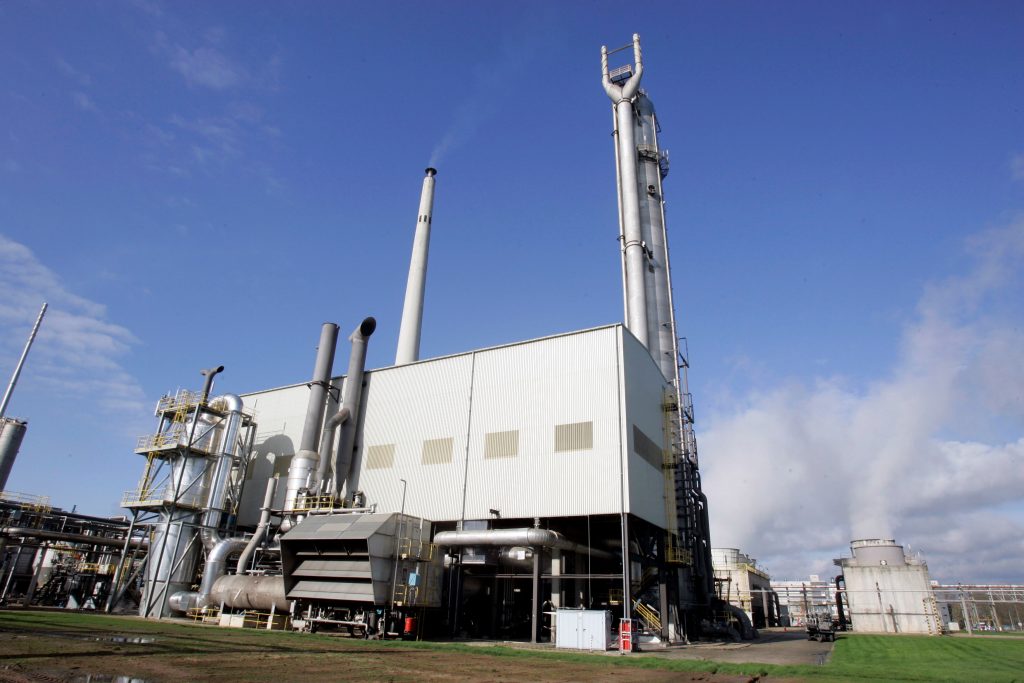
OCI Nitrogen nitric acid plant designed with Stamicarbon technology.
Nitric acid plants play a critical role in the production of fertilizers and various industrial chemicals, making their efficiency, reliability, and environmental performance essential for sustainable operations. Over time, market demands, stricter environmental regulations, and rising energy costs drive the need for plant revamps.
Revamping nitric acid plants is a strategic approach to enhance production capacity, reduce environmental impact, improve energy efficiency, and ensure operational safety. The process of increasing the capacity begins with a comprehensive evaluation of the existing facility to identify bottlenecks and opportunities for improvement. Key measures include increasing feedstock and air supply, implementing oxygen enrichment, and upgrading critical equipment. Emission reduction focuses on controlling nitrous oxide (N2O) and nitrogen oxides (NOx) through advanced abatement systems, which can deliver significant cost savings under carbon pricing schemes. Energy efficiency improvements are achieved by restoring heat exchanger performance and optimising heat integration, supported by digitalisation for precise process control. Safety enhancements target corrosion prevention, and in even higher standards in robust control systems, and safer operational procedures. A structured feasibility study underpins successful revamp projects, involving data collection, mass and energy balance analysis, and capex estimation, while ensuring collaboration among licensors, equipment suppliers, and plant operators. This comprehensive approach enables reliable, efficient, and sustainable nitric acid production aligned with modern environmental and economic requirements.
Capacity increase
The first step in increasing the capacity of an existing nitric acid plant is a thorough evaluation of the current facility. Logically, boosting capacity requires increasing the feedstock. In most cases, raising the ammonia (NH3) feed is not a major challenge, as this is typically addressed at the outset of any revamp project.
The main bottleneck is often the air supply. Several options exist to increase air flow, depending on the specific project and plant configuration and conditions:
- upgrading the existing air compressor;
- adding a booster compressor;
- cooling the air inlet to the compressor;
- or installing an auxiliary compressor.
If oxygen (O2) is available on site, it can be used to partially or fully replace the secondary air from the air compressor, or by recycling part of the tail gas and mixing it with O2 for use in the burner. Utilising O2 not only increases capacity but also helps reduce emissions.
Beyond increasing feed rates, it is essential to assess the impact of higher capacity on all plant equipment. Key considerations include:
- Can the burner handle the increased load, and is the effect on precious metal losses from the gauzes acceptable?
- Is the existing heat exchanger network sufficient for the additional duty?
- Can the absorption column accommodate the higher throughput? If O2 is available, it can be used here to improve efficiency.
- Is the N2O/NOx abatement reactor capable of managing the increased flow, or does it require upgrading?
- Is it necessary to add a bypass to the tail gas expander to avoid back pressure, or should the expander rotor be replaced?
- A complete and comprehensive evaluation ensures that all process units can reliably and safely support the new, higher capacity.
Emissions reduction
The main emissions to be controlled in a nitric acid plant are nitrous oxide (N2O) and nitrogen oxides (NOx). While most plants are equipped with deNOx systems, N2O abatement is not universally regulated, though more countries are adopting such policies. In the European Union with a carbon price of 80 euros per ton of CO2 (as of November 2025), reducing N2O emissions from an 800 t/d nitric acid plant can result in savings of up to 33 million euros per year.
Stamicarbon offers a range of tertiary abatement solutions tailored to client requirements, capable of removing both N2O and NOx in a single reactor. These solutions include radial-flow reactors with extrudate catalysts, available in single- or double-bed configurations, as well as axial-flow reactors with monolith catalyst blocks.
For high-temperature tail gas, typically around 450°C or above, N2O is thermally decomposed, enabling efficient removal of both N2O and NOx using only ammonia (NH3) as the reducing agent for NOx. In this case, there is no risk of NH3 slippage and no need for natural gas addition.
When tail gas remperatures are in the range of 340 to 450°C, ammonia or a mixture of ammonia and natural gas is required as reducing agent for both N2O and NOx.
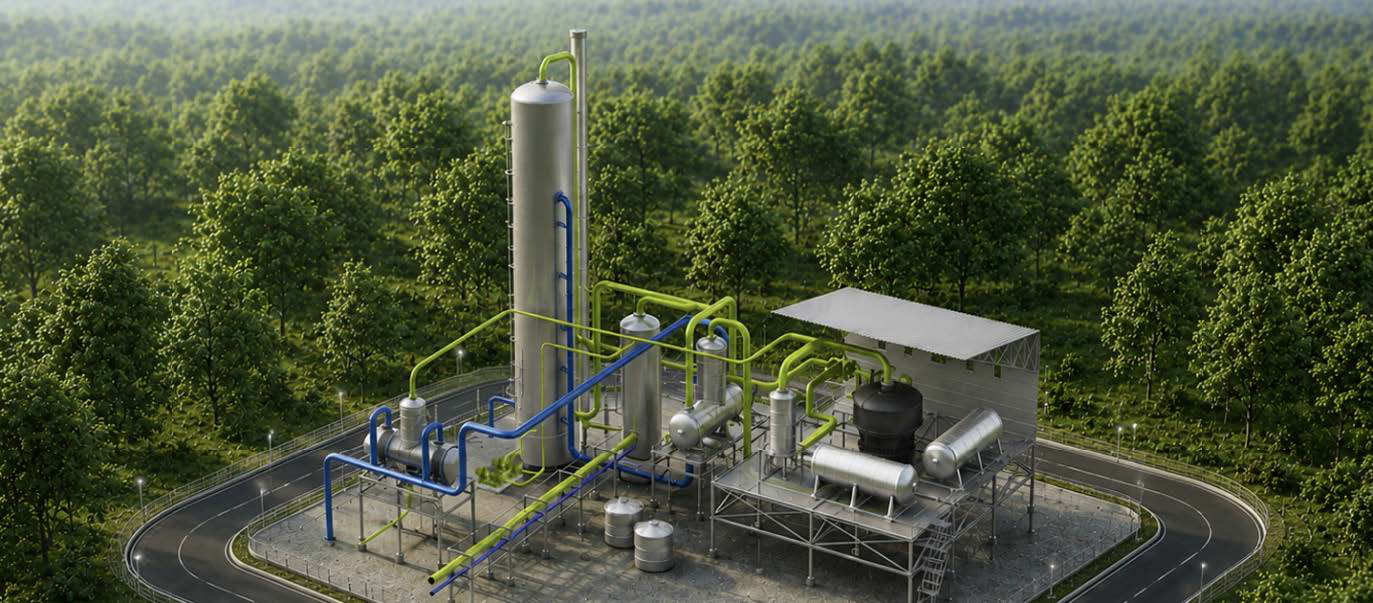
For lower-temperature tail gas, the stream must be conditioned using a custom-designed solution before entering the tertiary abatement reactor. In plants requiring very high emission reductions, above 90%, tailor-made solutions are necessary. Although the temperature must be increased, the maximum operating temperature of the expander must not be exceeded. To achieve this, a recuperator heat exchanger is used to maintain the required inlet conditions to the expander while minimising the duty of an additional heater upstream of the tertiary abatement reactor. The type of heater selected depends on client requirements and the availability of utilities at the site. Fig. 1 shows a schematic example of such a system.

Another solution for a plant with low-temperature tail gas could be a secondary catalyst, intended for N2O removal only. Secondary abatement requires a reliable, well-maintained catalyst basket in the NH3 oxidiser. However, the amount of catalyst that can be incorporated into an existing burner is limited by the height constraints imposed by the NH3 oxidiser design. Even when the burner is mechanically sound, the available vertical space may still be insufficient to achieve optimal N2O conversion.
Higher energy efficiency
Over time, the heat transfer capacity of heat exchangers declines due to fouling and the build-up of unwanted deposits. Proper cleaning restores heat transfer efficiency and directly improves the plant’s overall energy performance. In addition, reviewing the heat exchanger network for opportunities to improve heat integration can further increase efficiency by maximising heat transfer between process streams, reducing the load on cooling water systems, and increasing steam export.
To ensure the plant is operating close to its optimum, it is also important to analyse key process parameters such as NH3 yield, NH3/air temperature and ratio, gauze temperature, oxidation and absorption tower operation, and oxygen content in the tail gas. Digitalisation of plant operations enables more precise monitoring and optimisation, allowing operators to run the plant more smoothly and efficiently. It also enables the integration of historical and live data, supporting trend analysis and data-driven improvements to process stability and energy efficiency.
By leveraging tools such as distributed control systems (DCS) and automated alarms, operators can gain deeper insights into process behaviour and quickly identify deviations from optimal conditions. Continuous monitoring of critical variables supports timely troubleshooting and together with historian data analytics facilitates predictive maintenance, reducing unplanned downtime and extending equipment life. Further automation and control can be achieved via utilising advanced process control (APC).
In addition, performance dashboards can help prioritise operator attention, ensuring that corrective actions are taken promptly when process parameters drift outside target ranges. This approach to process control supports consistent product quality, minimises energy consumption, and helps the plant meet increasingly stringent environmental regulations. Ultimately, the combination of robust process parameter analysis and digitalisation forms the foundation for a modern, efficient, and sustainable nitric acid production facility.
Safety
Safety in nitric acid plants can be improved through several key approaches. The first is enhancing equipment reliability, particularly in areas prone to severe corrosion. Corrosion is mainly caused by condensation and re-evaporation effects, with heat exchangers operating near the dew point of process gases being especially vulnerable. As a result, cooler condensers often need to be replaced several times over a plant’s lifetime. Managing the inlet temperature to the cooler condenser and proper design of equipment is crucial, as lower temperatures and proper design help minimise corrosion risk. In addition, monitoring outlet temperature and oxidation rates is important, and in dual-pressure plants, evaluating droplet separator performance is essential. Stamicarbon has significant experience in this area, having recently designed and replaced several cooler condensers with improved thermal and mechanical reliability.
Another important method is implementing robust process control in critical areas such as the ammonia oxidation reaction, absorption tower performance, waste heat recovery, and emission control. Proper instrument and device selection like advanced sensors, distributed control systems (DCS), emergency shutdown systems (ESD) and emission monitoring can all contribute to safer and more stable plant operation.
Finally, safer operating procedures, especially during start-up and shut-down, are vital. Special attention should be given to the chemistry of ammonium nitrite (NH4NO2), ensuring that its formation is prevented in unwanted locations to avoid safety risks.
Approach to revamp projects
Revamp opportunities in nitric acid plants are typically evaluated through a structured feasibility study. The process begins with a clear definition of the objectives: what is the aim of the study, what outcomes are achievable – such as increased capacity or reduced emissions – what is the timeline and what are the expectations?
Once the objectives have been set, the next step is to collect the relevant information and data. This includes DCS data and plant measurements, plant documentation and equipment datasheets, and isometric drawings. These inputs are then used to prepare an “as-is” mass and energy balance that accurately reflects the current plant condition.
This baseline is analysed to identify bottlenecks and areas for improvement. Based on the findings, a new mass balance is developed, together with a list of modified and/or new equipment required and a corresponding capex estimate.
It is important to recognise that several key parties are involved in the design and revamp of a nitric acid plant, including the technology licensor, compressor, NH3 burner and waste heat boiler manufacturer, and catalyst suppliers. The plant must be studied as an integrated system, since focusing on individual items alone can lead to revamp failure. A comprehensive approach ensures that all components work together efficiently and reliably.

Conclusion
Revamping a nitric acid plant is a complex but highly rewarding when approached comprehensively. Increasing capacity, reducing emissions, improving energy efficiency, and enhancing safety are interconnected objectives that require careful planning and execution. A successful revamp begins with a detailed feasibility study, supported by accurate data and a clear understanding of plant limitations. By leveraging advanced technologies – such as oxygen enrichment, tertiary abatement systems, optimised heat integration, and robust process control – plants can achieve significant performance gains while meeting stringent environmental and safety standards. Ultimately, collaboration among licensors, equipment suppliers, and plant operators ensures that all components function seamlessly, delivering a reliable, efficient, and sustainable nitric acid production process.