Nitrogen+Syngas 400 Mar-Apr 2026
19 March 2026
The power of integrated catalyst and digital solutions
LOW TEMPERATURE SHIFT
The power of integrated catalyst and digital solutions
Christian Berchthold, Anton Kariagin and Felicitas Cokoja of Clariant demonstrate how ammonia plant performance can be maximised through advanced low temperature shift solutions. Clariant’s combination of ShiftMax 217 Plus and CLARITY Prime delivers benefits that neither superior catalysts nor digital tools could achieve alone.
In today’s competitive ammonia production landscape, the low temperature shift (LTS) converter is a critical factor in plant profitability and operational excellence. As one of the highest total cost catalysts in ammonia and hydrogen facilities, the shift catalyst’s performance directly influences plant economics, energy efficiency, and environmental compliance.
The strategic importance of LTS performance
The stakes in LTS operations are remarkably high. A mere 0.1% improvement in CO conversion translates to approximately 1% additional ammonia production – particularly significant for plants without purge gas recovery systems. Superior LTS catalyst performance reduces inert concentration in the ammonia synthesis loop, minimising costly purge gas losses while optimising overall energy efficiency. Conversely, subpar performance carries substantial risks: methanol by-product formation consumes valuable hydrogen, with each tonne of methanol produced resulting in a loss of approximately 1.1 tonnes of ammonia. Additionally, operators face the constant threat of condensation, sulphur poisoning, and temperature control challenges that can lead to production losses and increased pressure drop, ultimately shortening catalyst lifetime.
Introducing next-generation solutions
Clariant addresses these critical challenges with two breakthrough innovations: Shift-Max™ 217 Plus and CLARITY Prime Shift Optimizer. ShiftMax 217 Plus represents the evolution of proven LTS technology, delivering ultra-low methanol formation – achieving 40-50% reduction compared to previous generations – without compromising the high activity that ammonia producers demand. Its enhanced mechanical strength ensures lower pressure drop increase over time, extending catalyst lifetime and maintaining optimal performance even under harsh operating conditions.
Complementing this advanced catalyst technology, CLARITY Prime Shift Optimizer harnesses the power of artificial intelligence and machine learning to provide real-time insights into catalyst performance. The digital platform CLARITY has already demonstrated its value at leading ammonia facilities.
Together, these innovations empower ammonia producers to maximise production, minimise energy consumption, extend catalyst life, and reduce operational risks.
ShiftMax 217 Plus
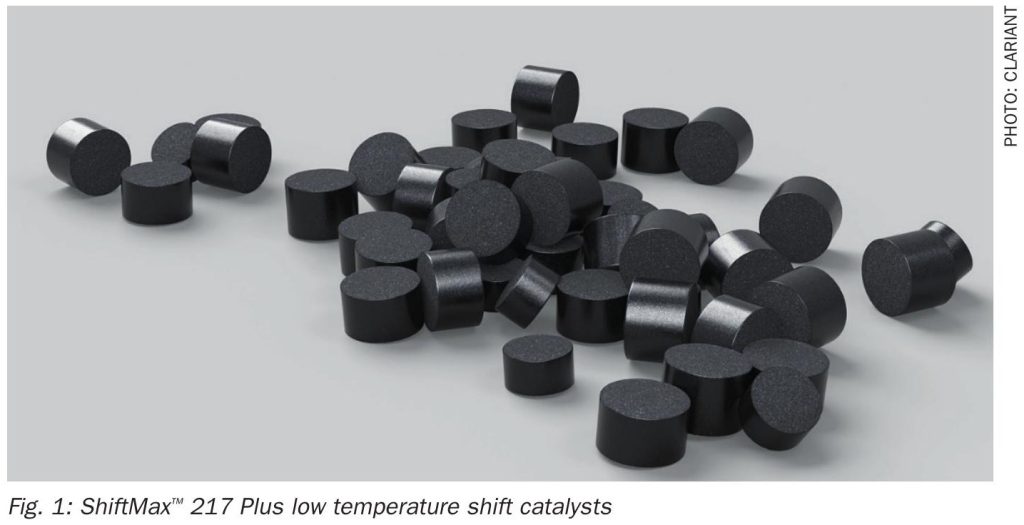
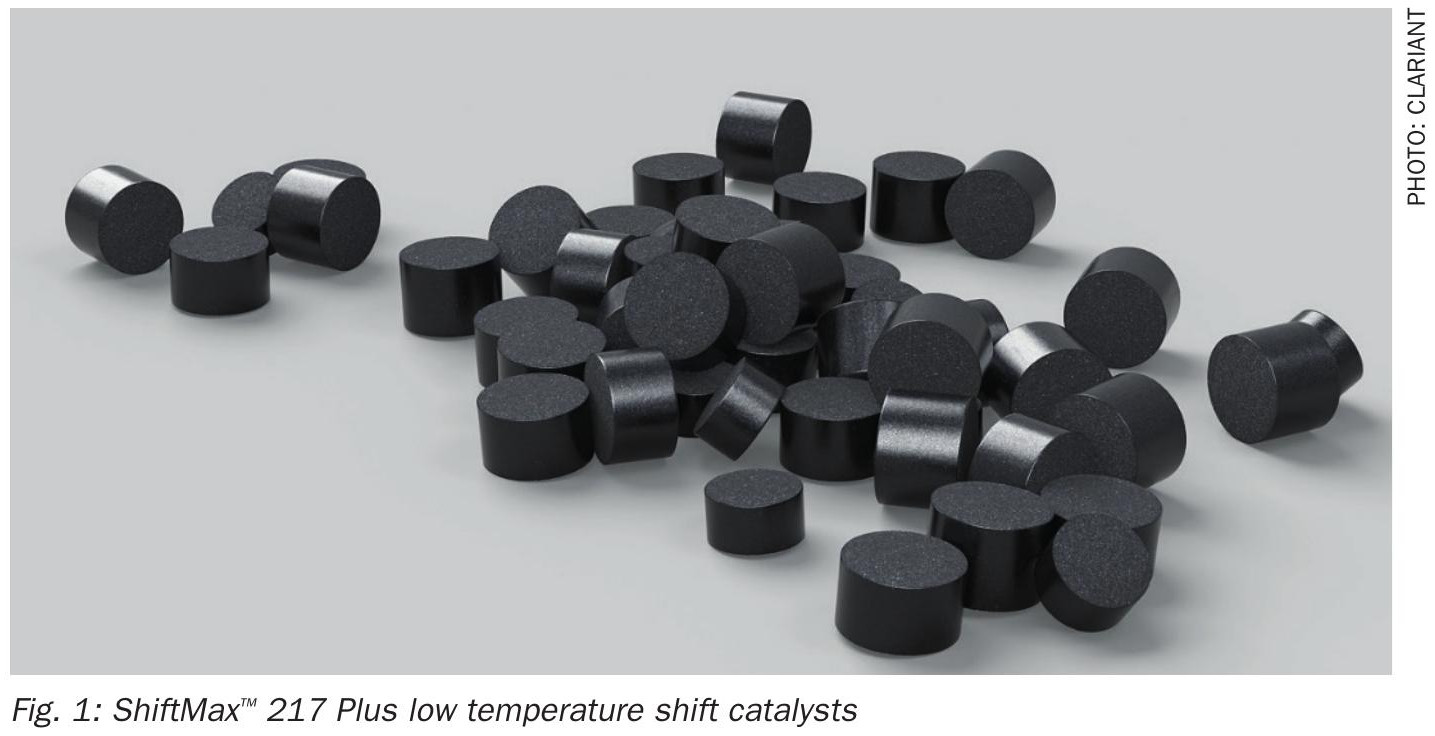
ShiftMax 217 Plus represents an evolution of Clariant’s ShiftMax 217 catalyst, which has demonstrated exceptional performance since 2010, serving over 60 global customers. Clariant’s development team built upon this proven foundation, utilising the same trusted chemical composition that made ShiftMax 217 an industry standard. The breakthrough came through an optimised production process that achieves a more homogeneous distribution of active metals and promoters within the catalyst matrix, unlocking superior selectivity and reduced by-product formation while maintaining the high activity operators depend on (Fig. 1).
Three pillars of performance
Ultra-low methanol formation
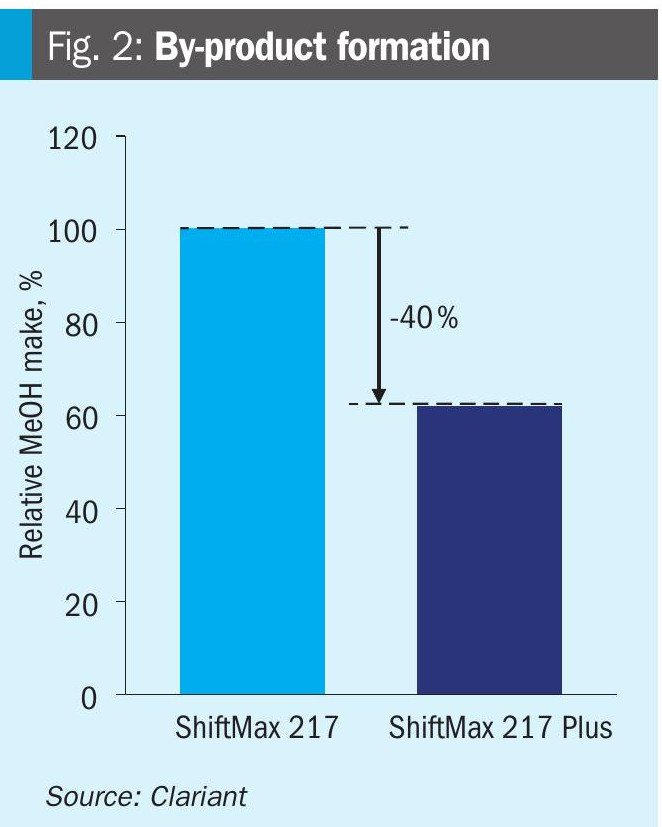
ShiftMax 217 Plus delivers a game-changing 40% reduction in methanol formation compared to its already impressive predecessor – without any compromise on activity. Laboratory testing confirmed that the catalyst provides the same high level of CO conversion while dramatically minimising this costly by-product (Fig. 2). The benefits cascade throughout plant operations: increased ammonia production and energy savings, reduced costs in downstream treatment systems, including condensate handling and solvent regeneration, lower VOC/COD emissions for environmental compliance, and elimination of capacity increase limitations caused by emission constraints. Given that each tonne of methanol produced represents a loss of 1.1 tonnes of ammonia, this improvement directly impacts plant performance.
Superior mechanical robustness
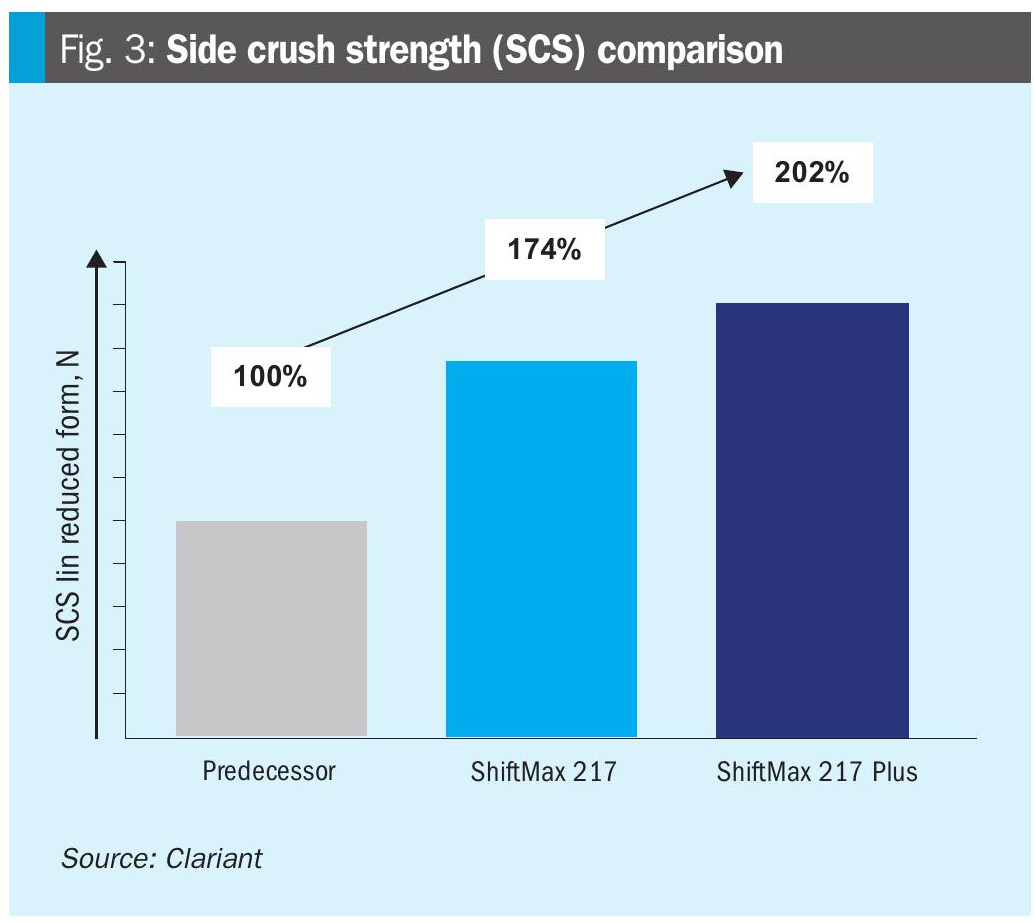
Beyond selectivity improvements, ShiftMax 217 Plus exhibits significantly enhanced mechanical strength, demonstrated by its impressive 202% relative side crush strength in reduced form – compared to 174% for ShiftMax 217 and 100% for earlier generation catalysts (Fig. 3). This superior physical integrity translates directly to operational advantages: lower pressure drop increase over time on stream, extended catalyst lifetime, and sustained performance even under challenging operating conditions. For plants operating above design capacity, where even minimal pressure drops of 0.1 bar impact energy consumption, this robustness proves invaluable.
Uncompromising high activity
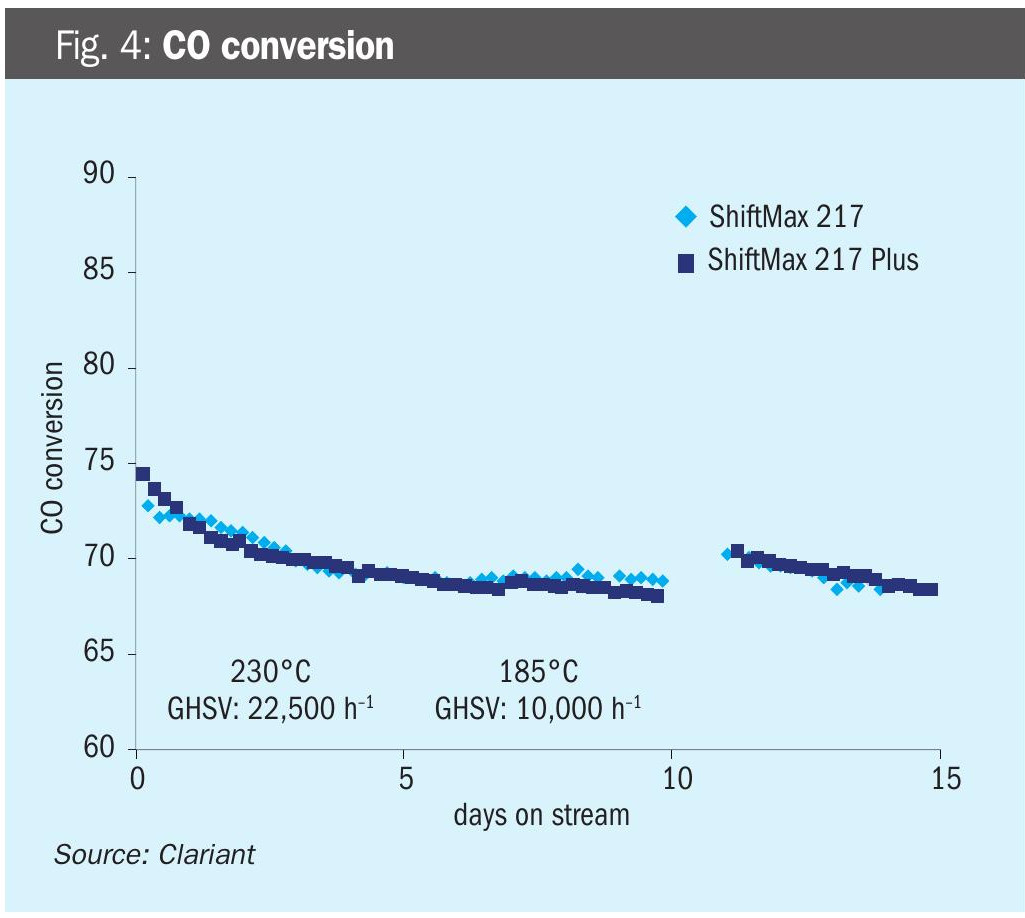
ShiftMax 217 Plus maintains the same exceptional CO conversion performance like ShiftMax 217 (Fig. 4). The catalyst demonstrated in a laboratory test consistently high activity across a wide operating window, performing effectively at both 230°C (GHSV: 22,500/h) and low inlet temperatures below 200°C (GHSV: 10,000/h). This versatility ensures optimal performance whether plants are operating at standard conditions or pushing for maximum efficiency at equilibrium.
Proven commercial success
Since its commercial introduction, Shift-Max 217 Plus has been successfully installed in over 20 plants worldwide, building on the strong foundation established by its predecessor’s presence in more than 60 facilities.
Case study
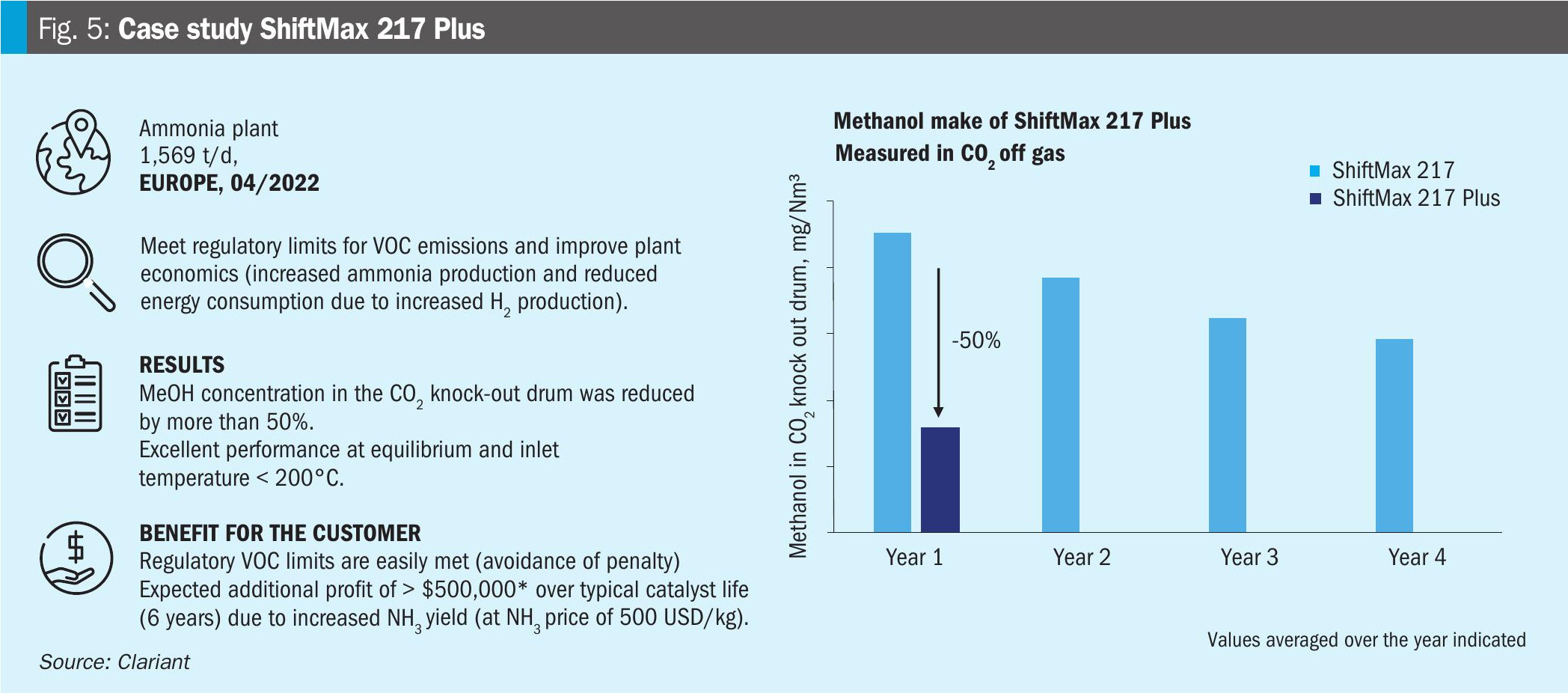
European ammonia producer achieves regulatory compliance and economic gains A European ammonia producer faced strict VOC emission limits with significant penalties for non-compliance, and despite installing ShiftMax 217 in 2018, methanol concentrations remained challenging to manage during the high-activity start-of-run phase. In 2022, amid escalating energy costs, the producer upgraded to ShiftMax 217 Plus. The results were remarkable: ShiftMax 217 Plus achieved more than 50% reduction in methanol concentration in the CO2 knock-out drum during start-of-run compared to its predecessor, enabling easy compliance with emission limits and eliminating penalty risks (Fig. 5). The catalyst also demonstrated exceptional performance at equilibrium, maintaining superior selectivity even at low inlet temperatures below 200°C while minimising hydrogen losses and improving plant economics.
Digital intelligence for optimised catalyst performance
While ShiftMax 217 Plus delivers exceptional catalyst performance, Clariant recognises that this is only part of the equation. To help customers maximise their catalyst operations, Clariant developed CLARITY – a digital platform powered by Navigance that offers plant operators real-time insights into catalyst performance, helping optimise plant efficiency, sustainability, and safety. Built on machine learning algorithms combined with internal kinetic models, CLARITY features a web-based interface that ensures easy access to plant data alongside Clariant catalyst experts’ comments, evaluations, and recommendations for optimising catalyst operations. Since its market introduction in 2023, more than 220 plants have been onboarded to the CLARITY platform, taking advantage of digitalisation’s benefits.
CLARITY Prime: AI-powered optimisation
CLARITY Prime represents the evolution of this digital platform, employing sophisticated AI and machine learning technologies that enable predictive maintenance, enhanced performance insights, and advanced technical support. The platform uses machine learning to project catalyst performance throughout its lifecycle, allowing production plants to adjust operating parameters proactively and schedule maintenance more effectively. This advanced system transforms how operators interact with their catalysts, moving from reactive troubleshooting to proactive optimisation.
The Shift Optimizer
At the heart of CLARITY Prime for syngas plants lies the interactive Shift Optimizer, a powerful tool that combines first-principle models with plant-specific machine learning to enable independent optimisation of shift section performance. This feature allows operators to quickly optimise set-points after load changes to minimise CO slip and maximise production, ensuring the shift reactors operate at peak efficiency regardless of operating conditions.
Case Study 1
Yara achieves substantial energy savings
Yara has adopted CLARITY across its worldwide network of ammonia production facilities, with one plant transitioning to CLARITY Prime to access advanced capabilities including innovative soft sensors, catalyst lifetime projection tools, and the interactive Shift Optimizer. The results have been impressive: retrospective analysis of operating data using the Shift Optimizer has resulted in daily energy savings of 20-40 GJ at a single plant, translating to annual cost reductions of €100,000-200,000. Additionally, when a gas chromatograph experienced technical issues, CLARITY Prime’s soft sensors – which use mathematical models, existing sensor signals, and process knowledge to estimate critical variables – provided reliable CO concentration estimates at the LTS reactor outlet, allowing the plant to maintain optimal shift reactor performance despite the instrument failure. The enhanced availability and accuracy of measurements have allowed Yara’s plants to safely operate closer to design limits, maximising production efficiency.
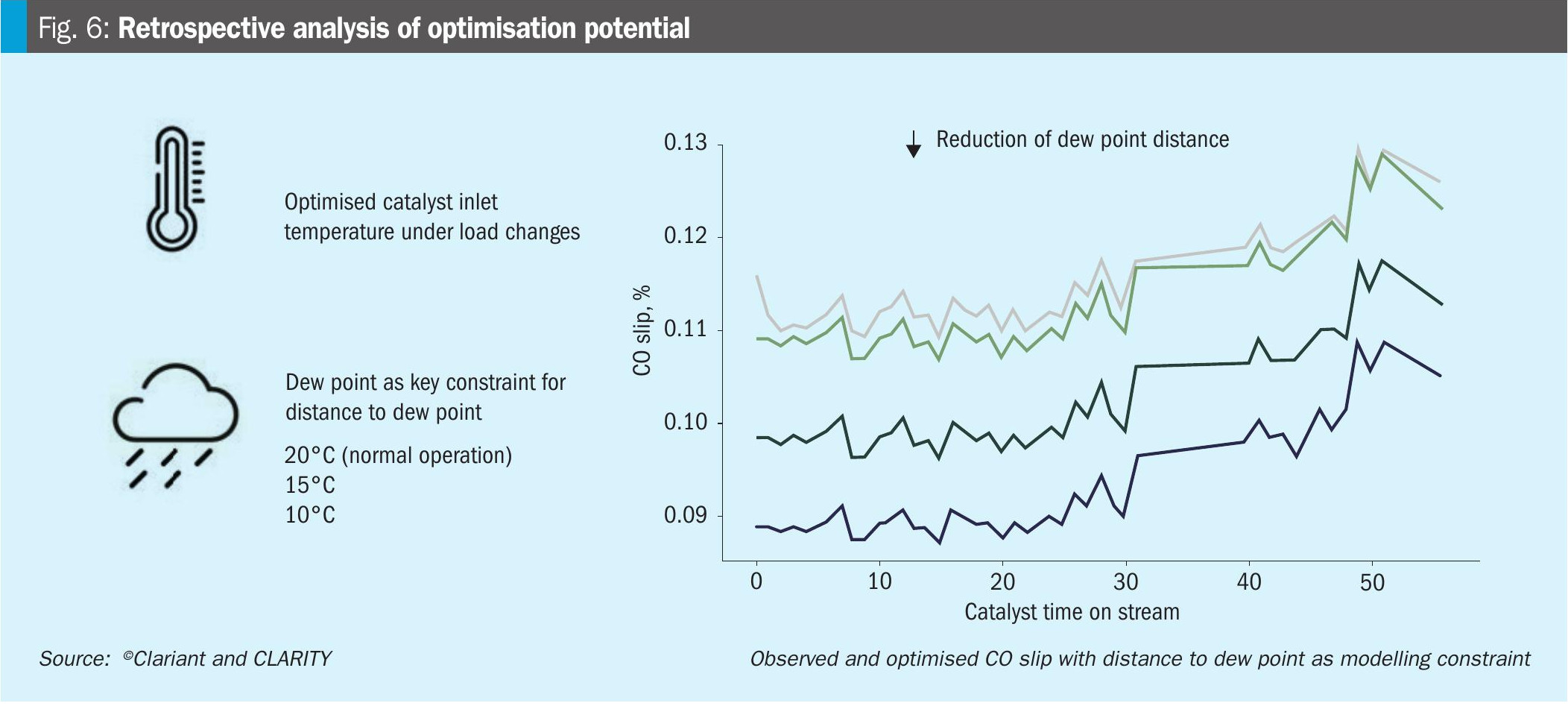
Retrospective analysis showing optimisation potential in Yara’s ammonia plant through intelligent dew point constraint management illustrates how CLARITY Prime’s predictive analytics can optimise CO slip while maintaining safe operating parameters (Fig. 6).
Case study 2
Indorama optimises HTS performance
CLARITY Prime was first adopted at Indorama’s world-scale fertilizer manufacturing facility in Port Harcourt, Nigeria, in one of their ammonia trains. The implementation delivered immediate value through automated health alerts that provide real-time performance indicators, enabling proactive measures to maintain production stability. These automated alerts helped Indorama’s team collaborate with Clariant technical experts to optimise the high temperature shift (HTS) reactor’s inlet temperature, improving carbon monoxide (CO) slip performance and preventing production losses. Furthermore, the catalyst performance projection capability has significantly enhanced decision-making for turnaround planning based on economic considerations, allowing for more strategic resource allocation.
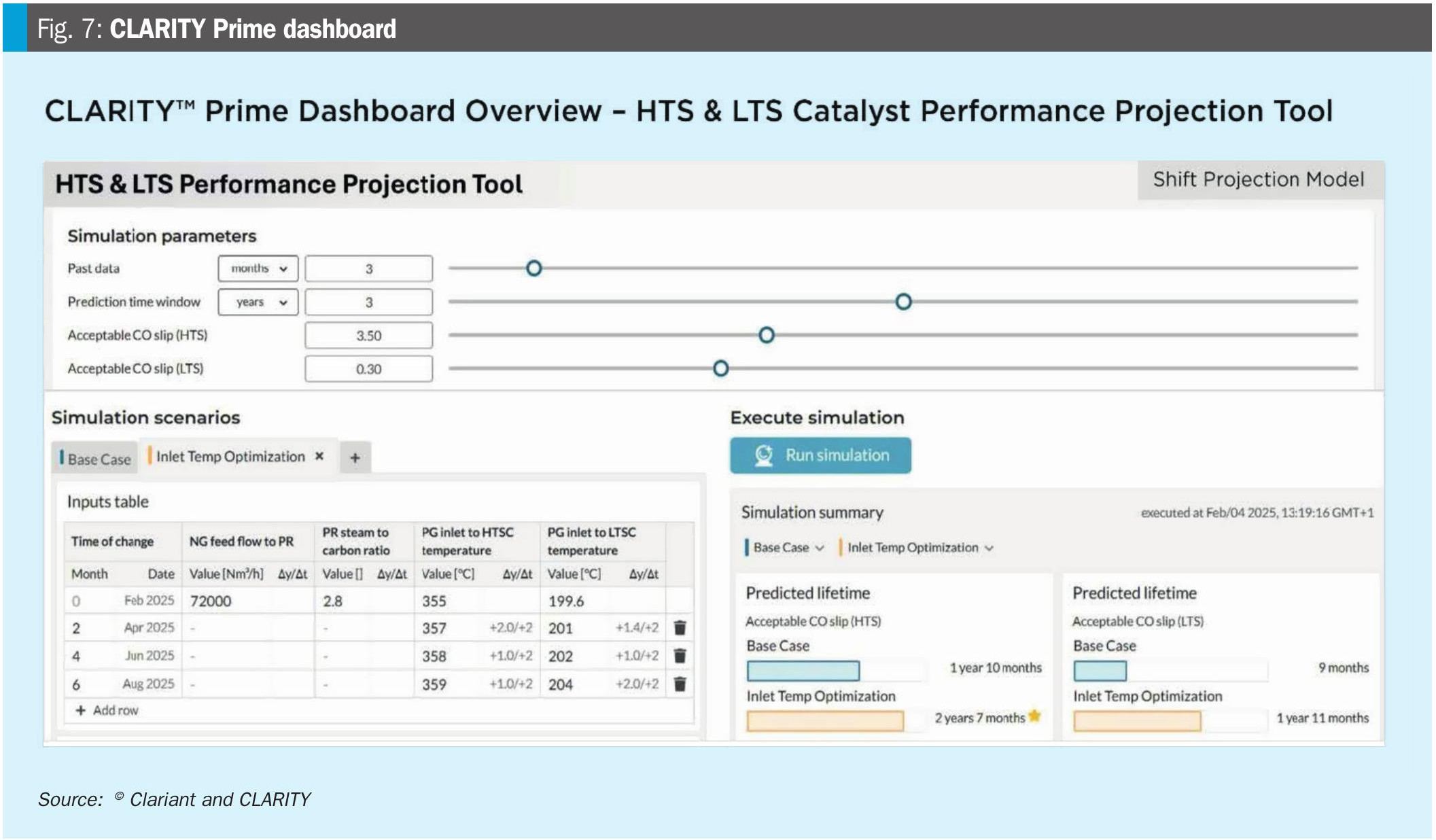
In Fig. 7 the CLARITY Prime dashboard shows the HTS and LTS catalyst performance projection tool used at Indorama’s ammonia plant. The modelling interface enables data-driven decision-making for catalyst lifecycle management and maintenance planning.
Conclusion
Clariant’s combination of ShiftMax 217 Plus and CLARITY Prime represents a paradigm shift in ammonia plant optimisation, delivering benefits that neither superior catalysts nor digital tools could achieve alone. ShiftMax 217 Plus provides the foundation with its ultra-low methanol formation, exceptional mechanical robustness, and high activity, while CLARITY Prime’s AI-powered Shift Optimizer ensures these capabilities are fully leveraged through real-time performance insights and proactive setpoint adjustments. Together, this integrated approach enables ammonia producers to simultaneously maximise production, minimise energy consumption, ensure regulatory compliance, and extend catalyst lifetime – translating to annual cost savings of €100,000-200,000 or more per plant. The synergy between advanced catalyst technology and digital intelligence empowers operators to move from reactive troubleshooting to predictive optimisation, maintaining peak performance throughout the entire catalyst lifecycle. As the industry faces increasing pressure to improve efficiency and sustainability, Clariant’s holistic solution positions ammonia producers to meet these challenges while maximising profitability and operational excellence.