Fertilizer International 531 Mar-Apr 2026
19 March 2026
Merchant-grade acid (MGA) preparation and logistics
PHOSPHATES & POTASH INNOVATION
Merchant-grade acid (MGA) preparation and logistics
Preparing merchant-grade phosphoric acid for transport requires the right storage and handling equipment. Jan Tytgat, Process Engineering Manager, De Smet Agro, discusses the most effective options for reducing solids settling and sludge formation, and how best to meet mandatory cleaning requirements in storage tanks and transport vehicles.
Introduction
Phosphoric acid leaving the filtration section of wet-process production plants is typically generated at 26-28% P2O5 (di-hydrate process) or at 40-42% P2O5 (hemi-hydrate process). This acid is further adjusted in a concentration loop to the required fertilizer-grade or merchant-grade acid (MGA), usually up to 52-54% P2O5 .
Concentrated phosphoric acid (CPA) typically leaves the concentration loop at around 85°C and contains 2-4 % solids. If this CPA is used to produce granulated fertilizers, such as MAP, DAP and NPK, on-site or near the phosphoric acid plant, then no further treatment is required. Generally, an agitated storage tank, to keep the solids suspended within a homogenous solution, will suffice as buffer storage.
Effective storage and handling for transport
However, there are other situations where CPA needs to be transported over long distances, for example, to another fertilizer production plant – or when it is sold as MGA to a third party. In these circumstances, several precautions need to be considered before MGA can be transported by road and rail tankers or loaded onto shipping vessels.
Because vehicles, rail cars and ships are not equipped with agitators, the solids content of the CPA must be reduced to the lowest possible value to avoid settling and sludges forming at the bottom of transportation containers. While regular cleaning will always be required, cleaning efforts can be reduced by taking the following precautions.
In storage tanks, CPA cools down naturally and more solids are formed as post-precipitation occurs. These need to be removed before loading. The post-treatment of CPA and handling of MGA usually includes the following equipment:
• One or more agitated maturation tanks which receive the CPA from various concentration lines in the plant and prepare a homogenous solution.
• Water-cooled heat exchangers, fitted in a loop at the maturation tanks, which cool down the CPA to about 45°C.
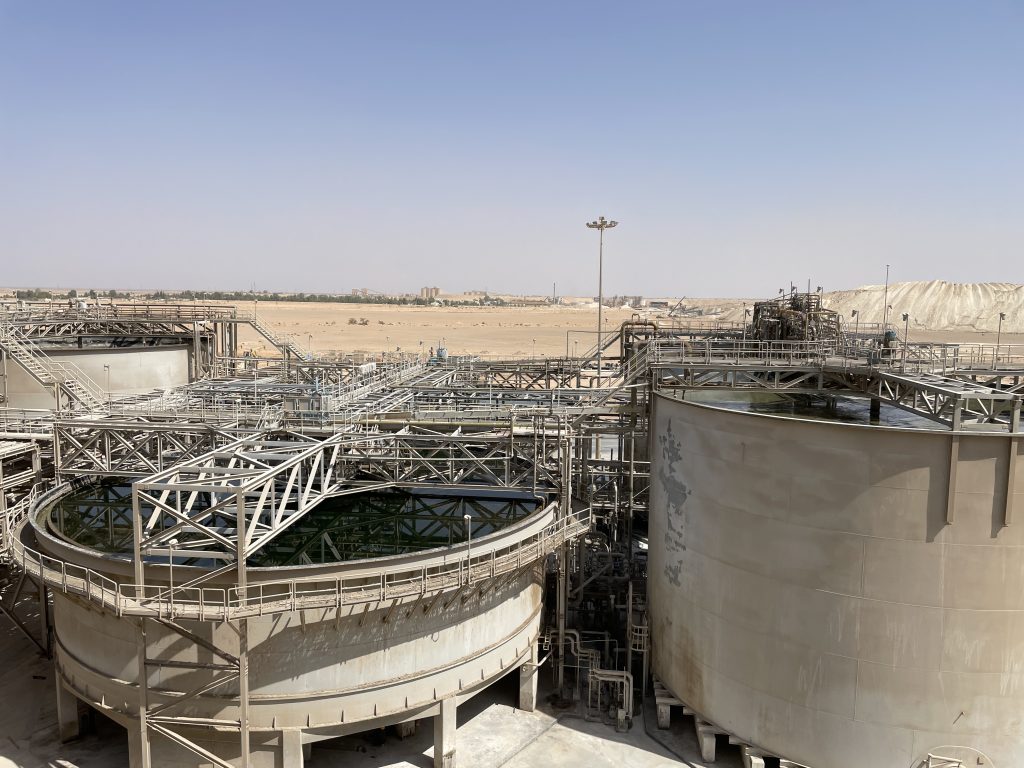
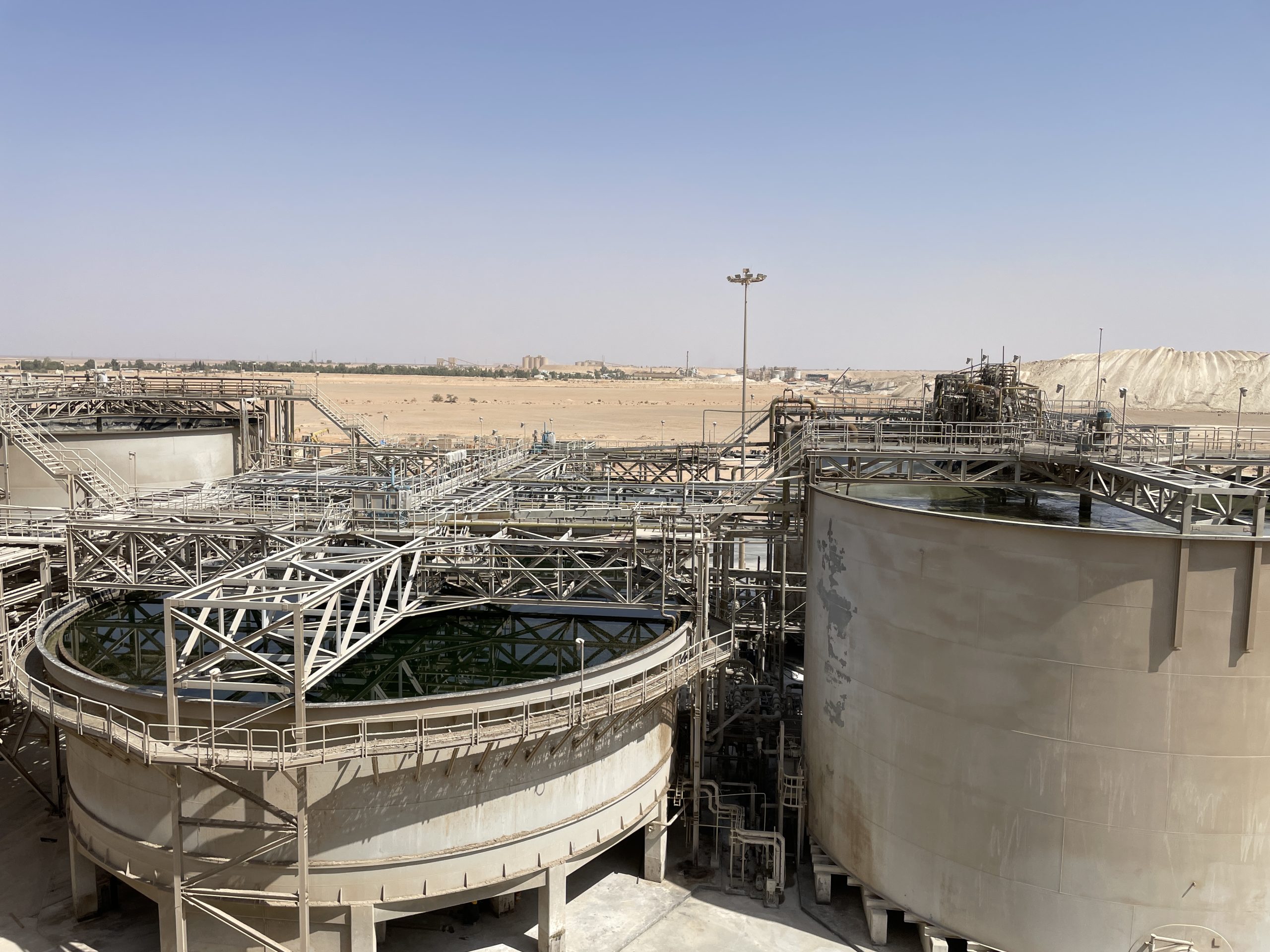
• One or more clarifiers which receive the cooled down CPA by gravity from the maturation tanks. A well-tested flocculant is often added at this stage to enhance the precipitation of the solids, while a rake is installed to collect the sludges at the bottom of the clarifier. The clarifier’s base can have a horizontal or a conical geometry.
• A reliable sludge evacuation system, preferably located at the centre of the clarifier. This usually sends the sludges back to the weak acid clarifier, where they join with the weak acid sludges and are returned to the reaction tank. Alternatively, sludges can be treated by a centrifuge or a press filter to separate the solids from the MGA.
• Flat-bottomed MGA storage tanks – designed to receive the MGA with 0.5-1% solids maximum – equipped with agitators or rakes and export pumps.
The size of the MGA storage tanks and export pumping facilities needs to be able to cope with the volumes of MGA being loaded. For example, the port loading of a 20,000-tonne P2O5 shipping vessel in 48 hours will require much larger MGA storage tanks and export pumps compared to those facilities filling a 20-tonne P2O5 road tanker.
The loading of rail wagons, meanwhile, requires a set of multiple loading arms to allow the filling of many wagons simultaneously. The required MGA storage capacity will also be determined by factors such as the number of on-site movements of road tankers per day, or the number of rail wagons and their frequency of loading per week or month.
After loading has ended, the export pipelines and load arms need to be flushed, emptied and inspected ready for the next loading operation. Road tanker or rail wagon cleaning facilities must therefore be provided for regular flushing and cleaning purposes.
CRU Phosphates+Potash Expoconference 2026
Jan Tytgat, Process Engineering Manager, De Smet Agro, will be presenting on ‘Merchant Grade Acid Preparation and Logistics’ at the conference in Paris on Tuesday 14 April at 16:00–16:30. Register now at: events.crugroup.com/phosphates/register