Fertilizer International 531 Mar-Apr 2026
19 March 2026
Lancaster Products and Bradley Pulverizer – a perfect US-UK partnership
MIXING, GRINDING AND GRANULATION
Lancaster Products and Bradley Pulverizer – a perfect US-UK partnership
In this exclusive interview, Fertilizer International sat down with Curt Snyder, CEO, Lancaster Products, and Ian Hancock, Vice President, Sales and Operations, Bradley Pulverizer, ahead of CRU’s Phosphates+Potash Expoconference in Paris in April.
Introduction
Lancaster Products and its sister company Bradley Pulverizer are highly regarded and well known businesses within the fertilizer industry and allied sectors. In terms of complementary expertise and equipment capabilities, it’s an almost perfect partnership.
Lancaster Products, with the Lancaster Mixer, is a market leader in one-step mix-granulation – a process that precisely mixes and granulates materials within a single machine (Fertilizer International 508, p34).
Its sister company, Bradley Pulverizer, is equally well known for the Bradley Broadfield Den. This phosphate fertilizer manufacturing process dates from the 1930s, yet still has great relevance for single superphosphate (SSP) and triple superphosphate (TSP) manufacturing (Fertilizer International 517, p53).
Air-swept mill systems for the phosphate industry are another notable Bradley Pulverizer equipment offering (Fertilizer International 525, p68).
Better together
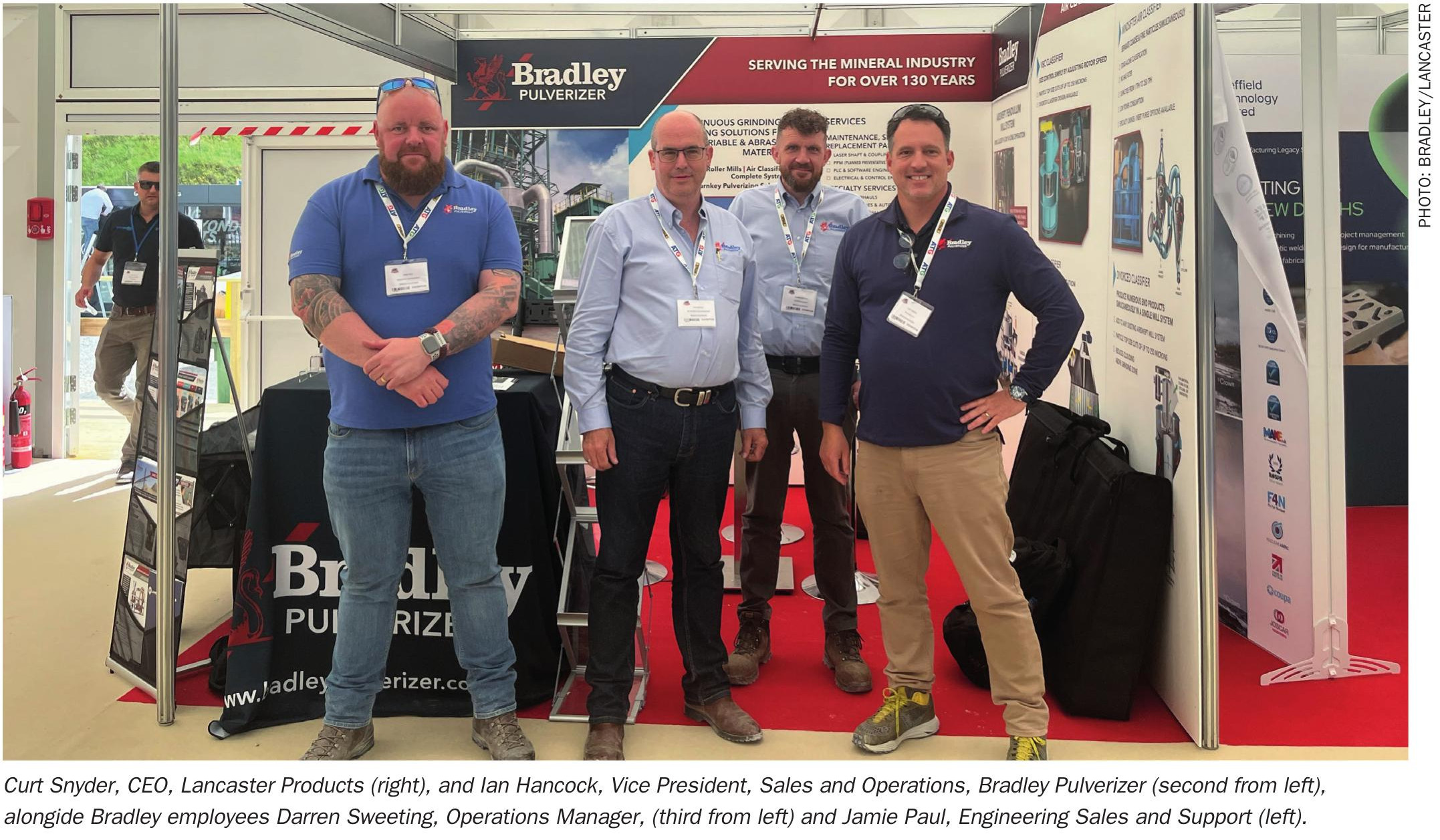
Curt and Ian, it’s a privilege to have the opportunity to speak to you both while Curt is visiting the UK. Could you provide our readers with the lowdown on the acquisition of Bradley Pulverizer in 2020 and how that complements ownership of Lancaster Products?
CS: “It’s Bradley Pulverizer’s 140th anniversary this year. From their beginnings in Boston in 1886, the company has endured nearly a century and a half – a testament to Bradley’s people and products
“Bringing together the two businesses made sense. In April, it will be 10 years since I acquired Lancaster. I’ve been busy building out from the day I bought what was a low-growth, family-owned company, turning the business around and creating a thriving industrial mixer manufacturer.
“Through a common customer, and working together with Bradley Pulverizer in the US, I realised there were a lot of synergies between the two companies – both of us having our equipment in the same process lines, having a manufacturing footprint, and a similar identity and philosophy.
“I also knew Bradley had a UK office. I thought that would help Lancaster do more international sales and establish itself In the UK and Europe.
“It became a good idea to acquire Bradley because there were so many advantages to owning both companies. So fast forward and the acquisition deal that was supposed to close in 2019 got slightly delayed and we ended up buying Bradley in January 2020 – right before Covid hit! Guiding a newly acquired business through a global pandemic was certainly a difficult ordeal.
“It was the right decision, as we’re thriving now. There’s so many opportunities for both businesses – currently we’re working together on another joint project in North America. There’s a lot of benefits from having both product lines in lockstep and now, with the licensing agreement, it’s not just common ownership either – it’s having the ability to manufacture, sell, fulfil warranty obligations and do marketing through the UK.”
IH: “I think the combination of the two companies has been great for Bradley. We’re not the company we were six years ago when Curt bought us, that’s for sure. We’ve seen wonderful growth through the acquisition and the combination of the two businesses.”
Best-in-class mix-granulation
What operational and product quality advantages does one-step mix-granulation offer fertilizer manufacturers?
CS: “The Lancaster Mixer starts with simply being an excellent mixer. It’s a high shear, counter current, vertical shaft mixer that we make in a variety of sizes, from lab size all the way up to large production scale, to serve a variety of industries – everything from glass, ceramics to fertilizers, of course.
“It’s a really good at homogenising mixes very quickly. It’s a best-in-class technology that excels at mixing and distributing uniformly ingredients of different densities, shapes and sizes. That’s number one if you’re going for a very rapid high-quality mix – because in some industries it’s absolutely essential to get that correct at the start.
“Then, as an additional bonus, the Lancaster Mixer can also granulate. We’re able to granulate with less liquid and binder than other equipment and be very precise on size. We can also alter the size range from batch to batch.
“We achieve very high granulation yield at what most consider ‘difficult’ size ranges – so less waste versus conventional granulation. We’re typically getting greater than 85% on-size for 2-4 mm granules.
“We can also shift the granulation size: if you’re making different products you can go from 1-2 mm in one batch and then go to 2-4 mm. So, essentially, it’s got that flexibility in terms of granule size from batch-to-batch.
“We have a high level of confidence in our ability to make really top-notch product in the mixer. An additional point I’d make to your readers is that we’re using a lot less binder and liquid. When producing green pellets, that means a lot less drying and therefore less energy use.
“Your inputs are generally less because our mixer is a lot more efficient. You’re able to distribute the binder or liquid much more efficiently than you would with other mixing or granulation technologies and [therefore] use less of these expensive added ingredients.
“There’s also less cost because there’s less to dry. We might be wetting the material to say 15% – and then dry it to 2% or less – whereas conventional mixing granulation, competing technologies, would need to go to possibly 25-30%. So, what you can save on [drying] energy, just by using less water and binder, is a tremendous opportunity.
“The Lancaster Mixer is especially good with thick, viscous, difficult-to-mix materials as well. It’s a perfectly versatile machine. With some materials we can start with a very wet mix and can granulate right from that point to create a green pellet – we don’t need to pre-dry to a lower moisture level and then add water back in.”
The gold standard in acidulation
The Bradley Broadfield Den has a long and proud history. Why does it continue to be relevant and adaptable to modern circumstances – such as minimising heavy metal content, for example?
IH: “Part of the reason the Broadfield Den, particularly the mixer, has stayed relevant is its flexibility. It can handle such a wide range of rocks, especially low grade rocks, and we’re also finding new markets for it outside of the fertilizer industry.
“So, it’s the flexibility, its ability to reinvent itself, to make other products, that’s what’s kept it alive. It’s very well known for SSP. But if you’ve got a powder and an acid, if you want to mix them, you can do it in the Broadfield.
“It’s really good for blending because you’ve got the flexibility of the paddle mixer. With vertical pot mixers, you haven’t got enough residence time. So, if you’re using low-grade rocks or you’re blending rocks, you don’t get a good acidulation, you don’t get good coating of the particles.
“Whereas with the Broadfield, with its long length and its ability to change speed, you can customise it to do what you want. For example, in blending to reduce heavy metals, we’re doing work where we’re successfully adding phosphoric acid to a low-grade rock to bring it back up to a full SSP spec.”
Equipment wear – a critical issue
Bradley Pulverizer notably offers robust air-swept mill systems. Wear during size reduction is becoming a critical issue for the phosphate industry as it shifts towards lower-grade, high-silica phosphate rock – how is the company meeting this challenge with advances in lining materials and component design?
IH: “We’re doing a lot to eliminate wear and, as you rightly say, silica is the biggest issue. Certainly, in the phosphate industries, silica at the moment is a big problem. There’s lots of things that can be done and it’s going to become more and more important as rock quality declines.
“As we move into a world where many developing countries are pursuing local fertilizer manufacturing, we know without a doubt that rock quality is dropping. For example, we’re doing some jobs in Egypt now where we’re lining with chrome carbide – in the mill, the cyclone and the ducts – where we’ve rubber lined before.
“There’s a massive focus on buying equipment these days on the capex cost, not on its opex. There’s got to be a shift to look at the overall cost of life and, at the moment, that is proving to be a difficult message. Yes, you can buy [a lower capex mill] but the trade off is more than likely you’ll be replacing it in five years. We’ve got mills that have been running for 70-80 years!”
New expanded UK base brings extra capabilities
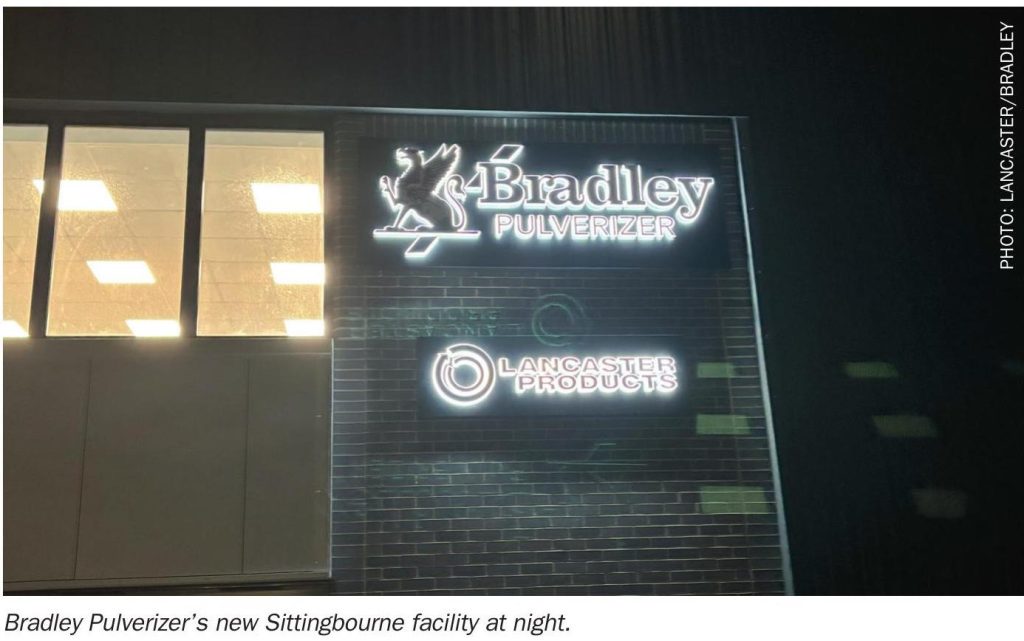
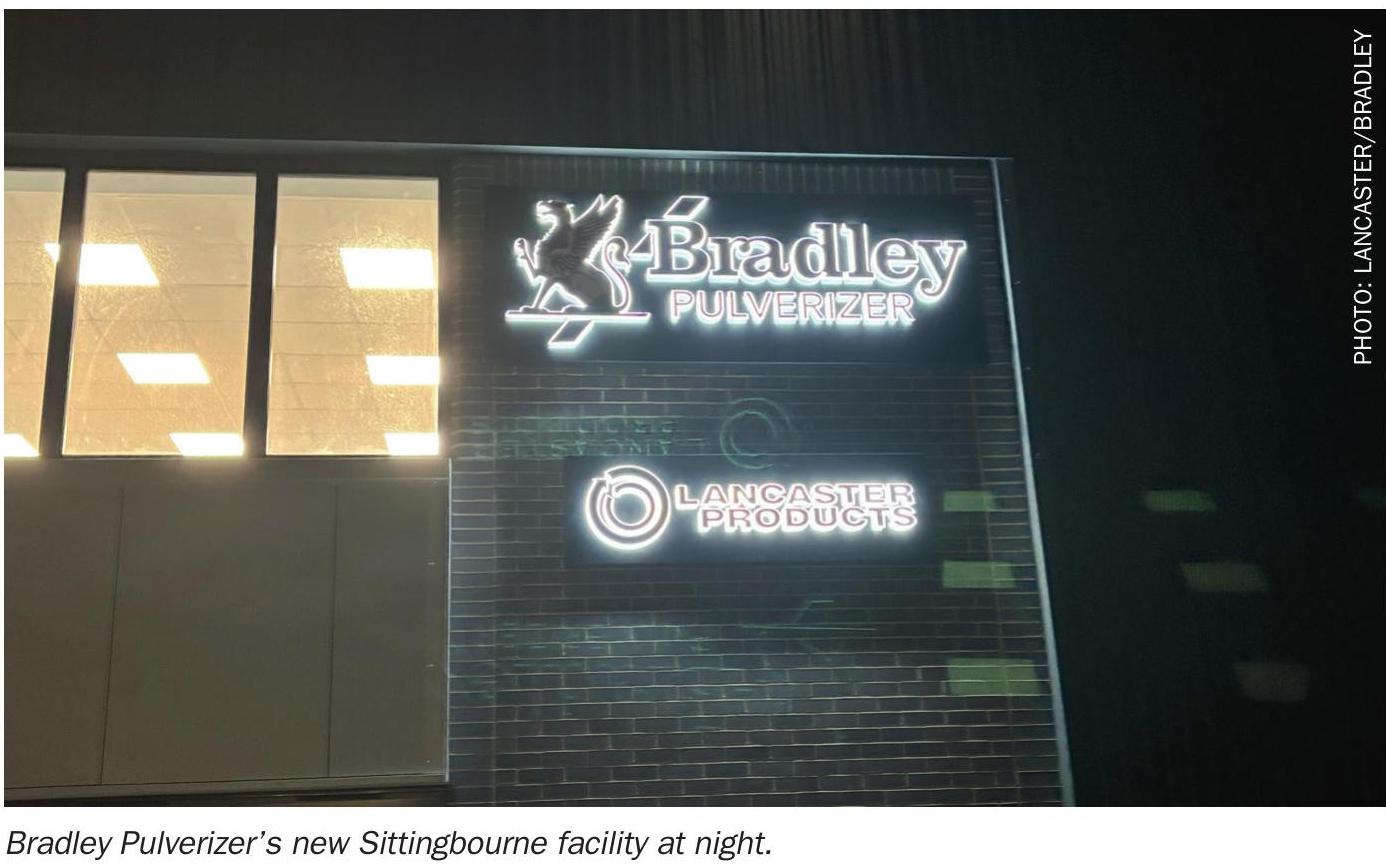
Bradley Pulverizer recently moved to a new 18,500-square-foot facility in Sittingbourne, Kent. The site is significantly larger and better equipped than the company’s previous UK location, providing scope for larger-scale manufacturing, rebuilds and overhauls, supported by overhead cranes.
Tell us more about the Sittingbourne site and what its enhanced manufacturing capabilities will mean for the company.
CS: “This facility has been in planning for around two and a half years. We realised pretty early on in my ownership that Bradley’s Dartford site was not sufficient in size to be able to expand, or have the capability in terms of what my aspirations for this business were.
“We then found Sittingbourne, kept on coming back to this facility, and thought it was perfect. It took a while to modernise and update the building, as it needed to be totally retrofitted for our needs. But we started slowly moving in and were able to take over the shopfloor mid-summer 2025.
“The majority of our employees transferred here from a couple of different UK office locations in November. Then I came to the UK from the US in December to officially dedicate the building.
“I knew from the get-go this facility could handle our expansion. It’s also located in a less crowded part of the UK with a really strong industrial base, which is good for workforce hiring and partnering with other manufacturers. So, there’s a lot of synergies just from being located here.
“We have tests facilities for both Bradley and Lancaster equipment. We have a Lancaster mixer here, we have a lab-size classifier, and we have an acidulation testing capability here as well.”
IH: “Sittingbourne has given us the capability to do more and expand what we’re doing. It’s giving us the ability to do our own fabrication and machining all under the one roof, as well as the assembly. We’ve also got an absolutely stunning lab facility building here, which has allowed us to do a lot of prototype testing. We’ve also got larger offices and taken more people on. If you go back five years, there was nine of us in the UK, now there’s 21.”
Deeper collaboration and a more integrated business
I understand that a new licensing agreement is now in place between Bradley and Lancaster Products.
CS: “Yes, we’d been dabbling in cross-selling Lancaster equipment through Bradley UK and testing the markets it works in – Europe, the Middle East and North Africa – and we discovered there was a good appetite for the things that Lancaster sold. Especially if we were able to cross market in one overall system, combining a mill and a classifier from Bradley Pulverizer and a mixer from Lancaster Products all in one process line. We found there is a market and an appetite for these [combined systems], and also for standalone Lancaster mixers, in the global markets that Ian typically sells in.
“So, we decided to formalise the arrangement and have an official partnership, not just common ownership, with a lot more collaboration and operational level coordination. The licensing agreement allows us to do that. Bradley can now manufacture and repair products and parts on behalf of Lancaster and engage in marketing and sales too.
“Now we have the Sittingbourne site we’re able to do a lot more Lancaster repair work here in the UK, as well as mixer final assembly and testing. These extra capabilities in Sittingbourne are putting us closer to our non-US customers. It gives them confidence that they can send a mixer to the UK for service, or we can have somebody come out and fix their issues in the field, if necessary.
“Sam Eastgate, a UK-based Bradley employee, will be embedded in a full-time sales role for Lancaster. There’s a lot of opportunities now that Sittingbourne is fully operational. It expands Bradley’s capability and capacity to do more work and bring in different types of work to the UK, including for Lancaster Products.”
Meeting customers, old and new, and looking to close deals
What are the company’s objective for the CRU Phosphates+Potash Expoconference in Paris in April?
CS: “Phosphates, as you know, is a very important market for us. We’re doing the majority of our non-US global work with phosphate customers. So, there’s a lot of opportunity.
“For the conference, we’re hoping to meet with existing customers, potentially close some deals, promote our technology and our capabilities, and meet potential new customers we can work with. It’s going to be an excellent event all around and, in phosphate, squares exactly with one of our main focus industries.”
IH: “The target, for me personally, is to find out what the new innovations and the new markets are. TSP is making a comeback, while DAP seem to be getting less popular, and, of course, SSP has always been a mainstay: it’s the only phosphate fertilizer you don’t need phosphoric acid for.
“With phosphoric acid demand for LFP batteries, SSP is looking attractive to a lot of producers again. It still gives them a way of making a fairly low-cost fertilizer. So, I’d be interested in talking to people to see if the trend is still moving that way.”
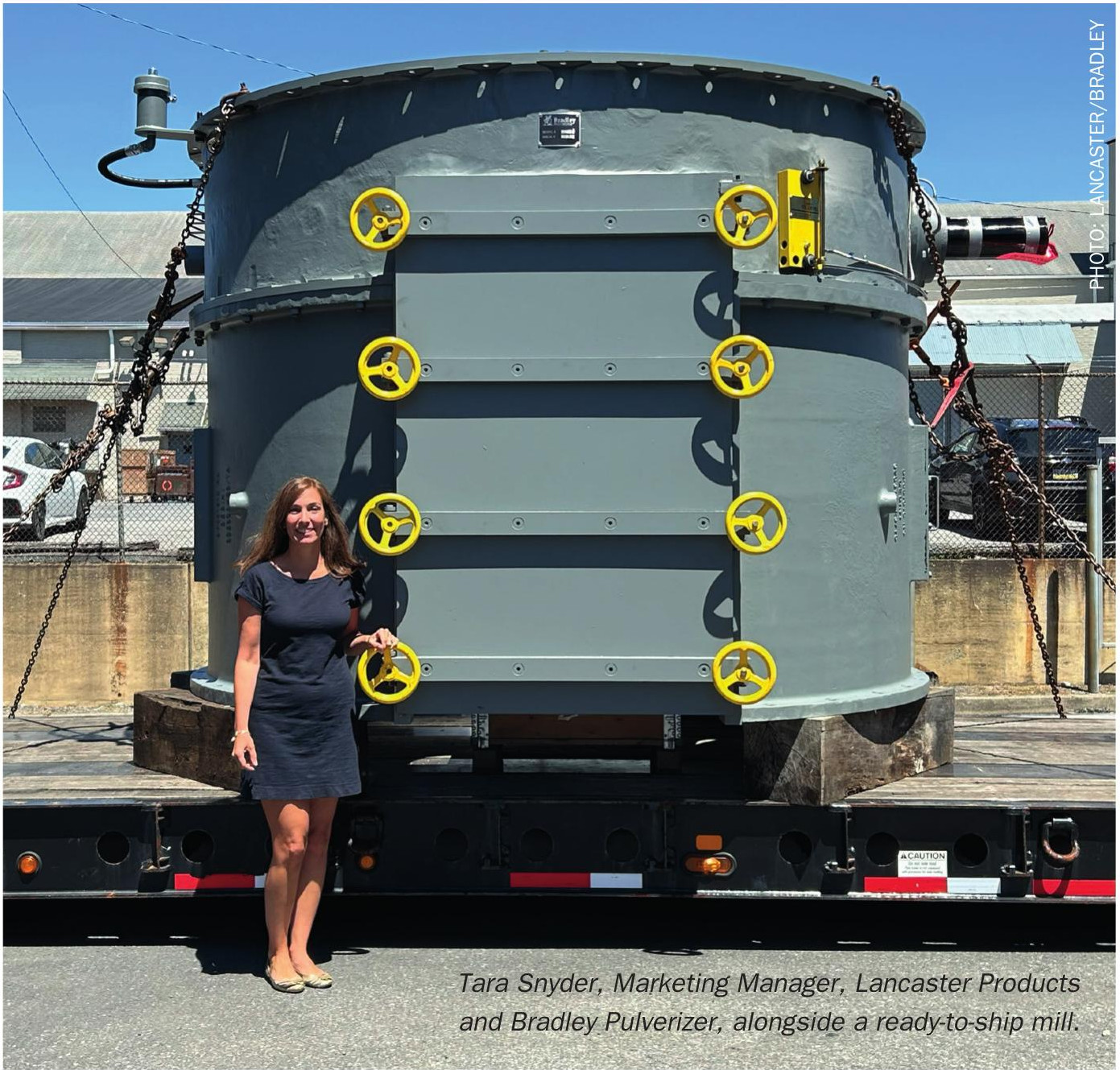
Tara Snyder, Marketing Manager at Lancaster Products and Bradley Pulverizer has the last word: “Let me just add that the minerals industry, and phosphates in particular, is part of the backbone of our long-storied history. We have more than 100 years of acidulation processing experience and our Broadfield Den is the gold standard in that area. So, it’s part of our heritage and we’re happy to be there in Paris!”