Nitrogen+Syngas 400 Mar-Apr 2026
ACME looking at green methanol


INDIA

ACME looking at green methanol

Indian renewables developer ACME says that it will partner with the Industrial Promotion and Investment Corporation of Odisha Ltd (IPICOL) to set up a green methanol plant in Kendrapada, Odisha state. He proposal is for a 200,000 t/a plant, with ACME taking a stake via its ACME Akaysha Energy subsidiary, part of its green hydrogen business. ACME says that the project forms part of its plans to develop multiple low carbon hydrogen plants and downstream chemical production. The company is planning a large green ammonia facility in Gopalpur through a joint venture with Japan-based IHI Corporation. It is also developing a 2,200 t/d green ammonia project in Paradip with cooperation from the Solar Energy Corporation of India. The output of the facilities will be used both for domestic applications and for export.

“Odisha, with a strong green energy ecosystem and deep industrial and port infrastructure, is fast emerging as an important centre for manufacturing green molecules, including green methanol,” said Anil Kumar Taparia, chief operating officer of ACME Green Hydrogen.


Latest in Asia

GIZ and thyssenkrupp to support green hydrogen and power-to-X developments in India

The Deutsche Gesellschaft für Internationale Zusammenarbeit (GIZ) and thyssenkrupp nucera have entered into a new agreement to accelerate the development of green hydrogen and Power-to-X markets in India. Announced at India Energy Week in Goa, the partnership brings together international development cooperation and private-sector technological expertise to unlock opportunities along the country’s hydrogen value chain.

BHEL to supply syngas purification plant

Bharat Heavy Electricals Ltd says that it has secured a $305 million contract from Bharat Coal Gasification and Chemicals Ltd (BCGCL) for a syngas purification plant at Lakhanpur, Odisha. The lump sum turnkey package includes design, engineering, equipment supply, civil works, commissioning and 60-month operation and maintenance services. The project, part of BCGCL's planned 2,000 t/d ammonium nitrate facility, has a 42-month execution timeline. BCGCL is a joint venture between Coal India Ltd, with a 51% stake and BHEL with a 49% shareholding.

Government moving forward with coal-based urea plant

The government of Pakistan has published a ‘strategic roadmap’ for the country’s major Coal-to-Fertiliser (C2F) initiative. The project is being executed by the publicly-owned Fauji Fertiliser Company (FFC), and will use local coal reserves at Thar as feedstock for the ammonia plant, which will in turn feed 720,000 t/a of urea capacity. The $1.1 billion project aims to strengthen the country’s fertiliser security as well as add value to local resources. A bankable feasibility study was completed in November 2025, and the project is now in the Front-End Engineering Design (FEED) and project agreements phase. Under the proposed timeline, financial closure is expected between late 2026 and 2027, while commercial operations are targeted to commence in January 2031.

Start-up for green ammonia demonstrator plant

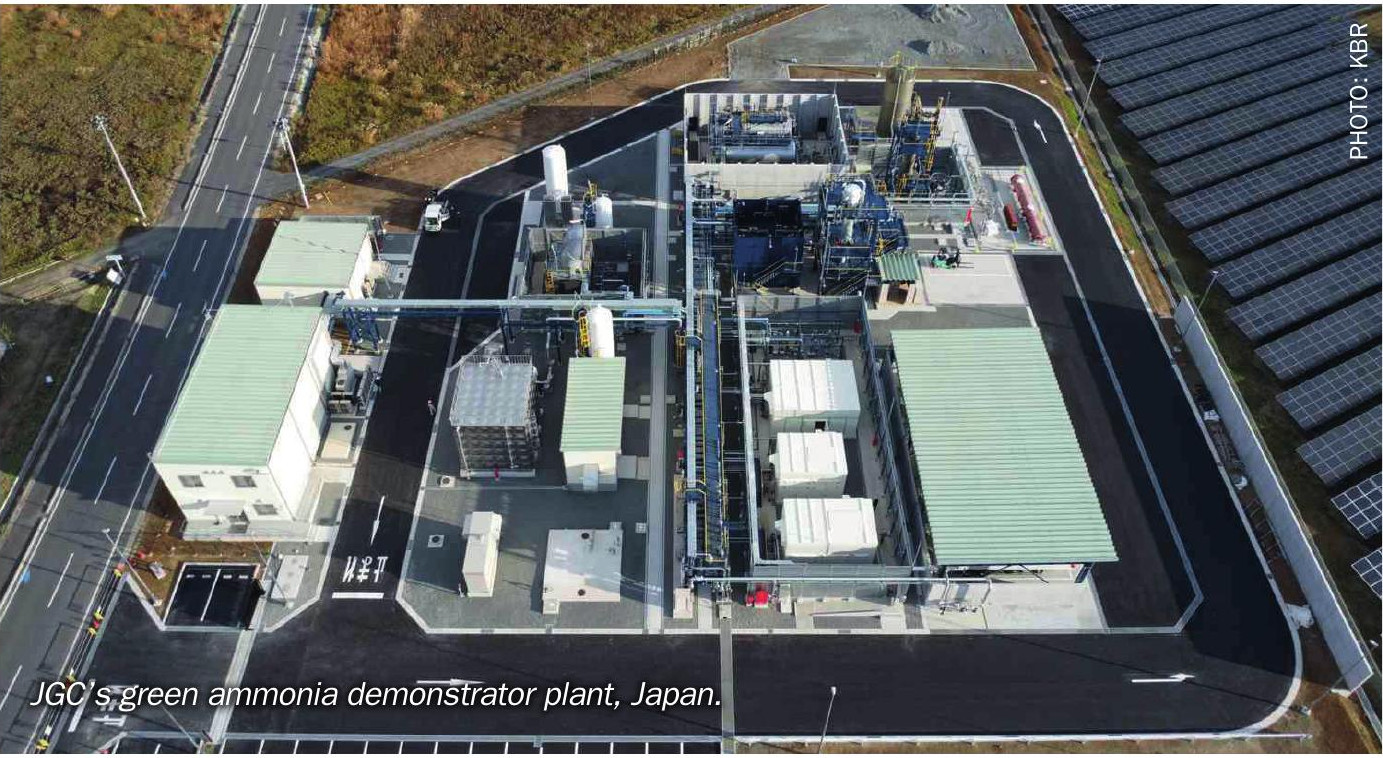
Asahi Kasei Corp says that it has begun operations at a demonstration plant using green ammonia production technology in January 2026, using hydrogen manufactured by Asahi Kasei. The plant, built by JGC, and using KBR’s K-GreeN® ammonia production technology, is part of Japan’s NEDO (New Energy and Industrial Technology Development Organisation) Green Innovation Fund project. The hydrogen feedstock comes from a 10MW alkaline water electrolysis system at the adjacent Fukushima Hydrogen Energy Research facility, which Asahi Kasei has operated since 2020. Leading the design and construction of the ammonia plant, JGC will conduct the demonstration operation during the fiscal year 2026 to advance process optimisation and commercialisation studies.

Ammonia plant revamp for Kaltim

PT Pupuk Kalimantan Timur (Pupuk Kaltim) says that it has begun work on a revamp to its number 2 ammonia plant. The plant, which was originally constructed in 1984, has a capacity of around 1,500 t/d of ammonia. The revamp, which is being carried out internally by Pupuk Kaltim, aims to improve energy efficiency at the ageing plant and reduce carbon emissions, according to the company. The revamp is expected to extend the plant’s operational life, improve production reliability, and support Indonesia’s long-term fertilizer supply amid rising domestic demand.